Why Your Brakes Talk - And Why You Should Listen
Brakes are one of the most safety-critical systems on any vehicle, yet many drivers wait until a problem becomes obvious - or expensive - before acting. The good news is that brake systems are remarkably communicative. Long before a catastrophic failure occurs, your car will signal that something needs attention through sounds, sensations, and dashboard indicators.
Understanding what these signals typically mean puts you in a better position to act quickly and confidently. It doesn't require mechanical expertise - just awareness of what's normal versus what's not. The signs below cover the most common brake symptoms everyday drivers encounter, along with what each one generally indicates and why it matters. As always, any brake concern should be evaluated by a qualified mechanic - brake repairs are not a task suited to guesswork or delay.
For related context on fluid-level warning signs that can accompany brake issues, see Car Fluids Every Driver Should Know About.
High-pitched squealing when braking
That sharp, high-pitched squeal when you press the brake pedal is almost always intentional. Most modern brake pads include a small metal wear indicator - a thin strip designed to contact the rotor and produce exactly this sound when the pad material wears down to a certain threshold. Think of it as a built-in warning alarm.
Squealing doesn't mean your brakes have failed - it means they're telling you it's time for an inspection. Pads typically still have some usable life remaining at this stage, but continuing to drive without addressing the issue accelerates wear and can lead to rotor damage. Note that squealing can also occur briefly in cold or wet weather and then stop - that's usually surface rust burning off, not a wear issue.
That squeal is a built-in alarm - your pads are engineered to make that noise before they fail.
Grinding or growling sounds
If squealing is a warning, grinding is the next chapter - and it's more serious. A grinding or growling noise during braking typically indicates that the brake pad material has worn away almost entirely, leaving metal brake hardware contacting the rotor directly. This metal-on-metal friction can damage the rotor rapidly and significantly increases stopping distances.
Grinding can also occur if debris - a stone or road grit - becomes lodged between the pad and rotor. That type of grinding often resolves on its own. But if the sound persists across multiple brake applications, assume pad wear is the likely cause and get an inspection scheduled without delay.
Grinding means metal-on-metal contact - rotor damage can occur quickly if you keep driving.
Soft, spongy, or low brake pedal
A brake pedal that feels unusually soft, sinks closer to the floor than normal, or requires extra pressure to engage is a sign that something in the hydraulic system may be off. The most common causes include low brake fluid, air in the brake lines, or a failing master cylinder.
Brake fluid is hygroscopic - meaning it absorbs moisture over time - which can lower its boiling point and affect performance. Air in the lines compresses when you press the pedal, reducing the firm, immediate feel a healthy system provides. Either way, this symptom warrants prompt professional attention. For context on checking and understanding brake fluid, Car Fluids Every Driver Should Know About covers the basics.
A spongy pedal points to a hydraulic issue - the system that creates stopping power may be compromised.
Vehicle pulling to one side when braking
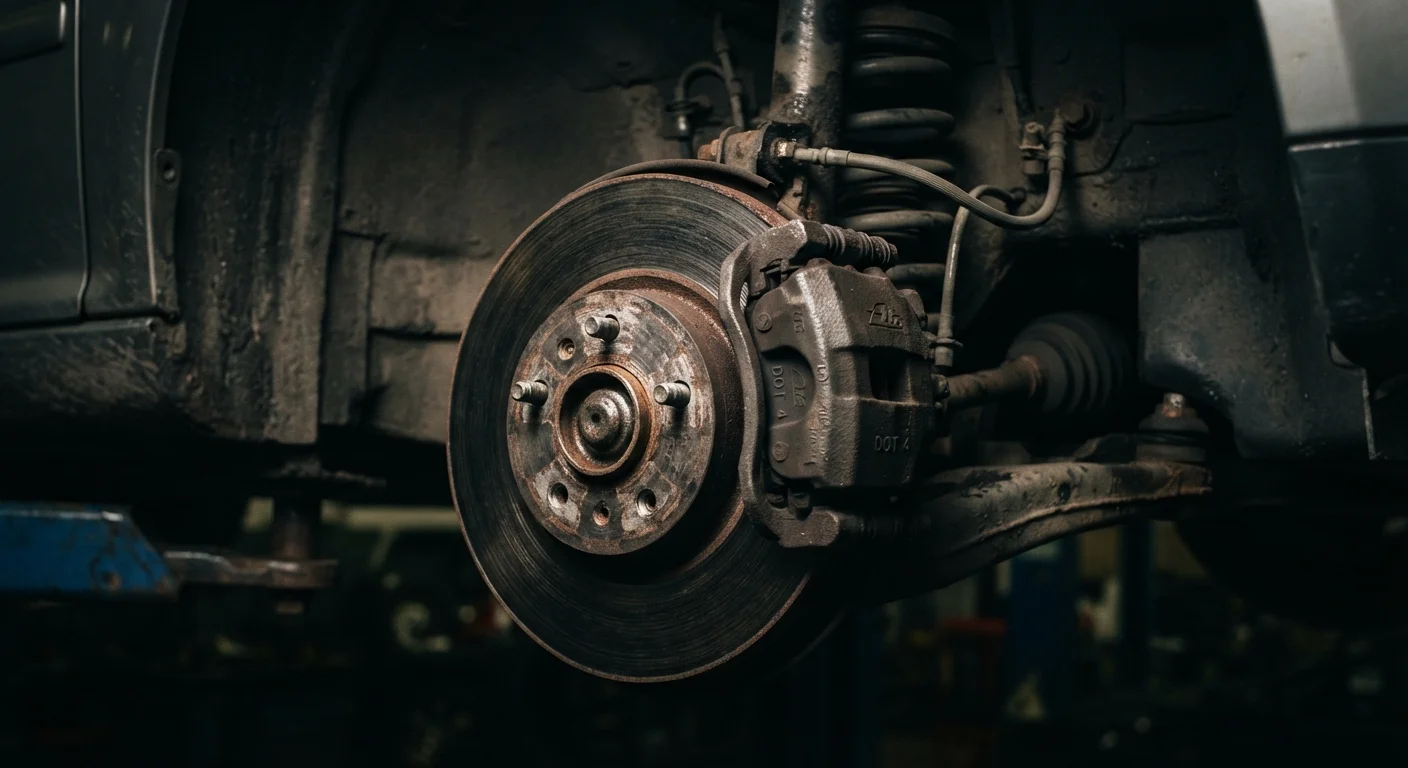
If your car pulls noticeably left or right when you apply the brakes - rather than tracking straight - it suggests uneven braking force between the left and right sides. Common causes include uneven brake pad wear, a seized or sticking caliper on one side, or uneven rotor wear.
A sticking caliper can also cause the affected wheel to run hotter than the others and may produce a burning smell after driving. Pulling during braking is different from pulling during normal driving (which may indicate a wheel alignment or tire issue), so noting exactly when the pull occurs helps a mechanic narrow down the cause efficiently.
One-sided pulling during braking often points to a seized caliper or uneven pad wear.
Vibration or pulsing through the pedal or steering wheel
Feeling a rhythmic pulsing or vibration through the brake pedal - or through the steering wheel when you brake - is a common indicator of warped rotors. Rotors can warp due to excessive heat, heavy and repeated braking (such as long downhill descents), or having the wheels torqued unevenly. As the warped rotor surface makes uneven contact with the pad, you feel it as a pulse.
It's worth noting that ABS (anti-lock braking system) activation during emergency stops produces a very similar pulsing sensation - that's normal and expected. The difference is that ABS pulsing occurs only in hard-braking emergencies, while warped-rotor vibration appears during routine stops. If you're unsure whether your warning lights are trying to tell you something related, Your Car's Warning Lights, Decoded is a helpful reference.
Pedal pulsing during normal stops usually means warped rotors - not your ABS activating.
Burning smell after heavy braking
A sharp, acrid smell - similar to burning chemicals or scorched rubber - after repeated heavy braking can indicate that your brakes have overheated. This is especially common on steep downhill stretches when drivers ride the brake pedal continuously rather than using engine braking or intermittent brake applications.
Overheated brakes can experience fade - a temporary reduction in stopping effectiveness - which is a genuine safety concern. If you detect this smell and notice reduced braking response, pull over safely and allow the brakes to cool before continuing. If the smell occurs during normal, everyday driving without heavy braking, have the system inspected - a stuck caliper that keeps the pad pressed against the rotor could be generating constant friction heat.
A burning smell after heavy braking signals overheating - continued driving risks brake fade.
When to Stop Waiting and Get an Inspection
Any single symptom from the list above warrants a professional inspection - not a wait-and-see approach. Brake systems are interconnected, meaning a problem in one component often accelerates wear in another. Addressing a squeal early might mean replacing brake pads; ignoring it might mean replacing pads and rotors.
Schedule Inspections Before Symptoms Appear
Most mechanics recommend having brake components inspected at least once a year or every 12,000 miles - whichever comes first. Many tire rotation appointments include a visual brake check at no extra charge. Building brake inspections into your regular maintenance routine means you're far more likely to catch wear early, before it becomes a repair rather than a simple pad replacement.
If your dashboard warning light illuminates alongside any of these symptoms, treat it as urgent. For help interpreting dashboard alerts, Your Car's Warning Lights, Decoded breaks down what each indicator actually means. And for broader context on staying safe on the road, the Safe Driving hub is a practical starting point.
This article is for general informational purposes only. Brake system diagnosis and repair should always be performed by a licensed, qualified mechanic. Do not attempt brake repairs without appropriate training, tools, and safety precautions.