What Each Material Actually Does
Grout is a cement-based (or sometimes epoxy-based) filler mixed to a paste and pressed into the gaps between tiles. Once cured, it becomes rigid and stone-like. It holds tiles in alignment, resists light abrasion, and creates a continuous, easy-to-clean surface. Sanded grout - which contains fine aggregate - is used for joints wider than about 1/8 inch. Unsanded grout is used for narrower joints and on surfaces like polished stone that could be scratched by the aggregate.
Caulk is a flexible sealant - most commonly silicone, latex (acrylic), or a silicone-latex blend. Instead of hardening to a rigid solid, cured caulk stays slightly pliable. That elasticity lets it compress and stretch as building materials expand and contract with temperature changes or structural movement. For wet areas, 100% silicone caulk or a siliconized latex caulk rated for kitchens and bathrooms is the appropriate choice because of its mold and mildew resistance.
| Criterion | Grout | Caulk |
|---|---|---|
| Flexibility when cured | Rigid | Stays slightly pliable |
| Primary location | Between tiles on flat surfaces | Corners, edges, transitions |
| Handles movement | No - cracks under stress | Yes - stretches and compresses |
| Common base material | Cement or epoxy | Silicone or acrylic latex |
| Wet-area formulations | Yes, with sealer applied | Yes, mold-resistant versions |
| Replaceability | Requires grout saw to remove | Cut and peel for removal |
The Rule of Plane Changes and Movement Joints
The single most useful rule in tile work is this: wherever two planes meet or wherever movement is likely, use caulk - everywhere else, use grout.
A change of plane means any corner where a floor meets a wall, or where a wall meets a ceiling. Even if the surfaces look perfectly still, buildings settle subtly over time, and water weight causes bathtubs to flex measurably. Rigid grout in these joints will crack, typically within a year or two, and that crack becomes a pathway for water to reach the substrate - leading to mold, rot, or tile delamination.
Movement joints also occur anywhere two different materials meet: tile transitioning to wood flooring, tile meeting a window sill, or tile ending at a vanity cabinet. Each material has its own rate of thermal expansion. Locking them together with grout creates stress that one of the materials will eventually lose.
When Grout Lines Seem to Crack on Their Own
If you notice cracking along interior tile corners even though grout was correctly applied in field joints, the culprit is almost always that grout was used where caulk was needed. The fix is to carefully remove the grout from those corners using a grout saw or oscillating tool, clean the joint thoroughly, and apply a flexible, wet-area caulk. This is standard practice in tile repair and does not require retiling the entire surface.
How to Tell Them Apart in Practice
When you are standing in front of a tile project deciding which product to reach for, ask yourself two questions:
- Is this joint between two tiles on the same flat surface? If yes, use grout.
- Is this joint in a corner, along a tub or pan edge, or where tile meets a non-tile surface? If yes, use caulk.
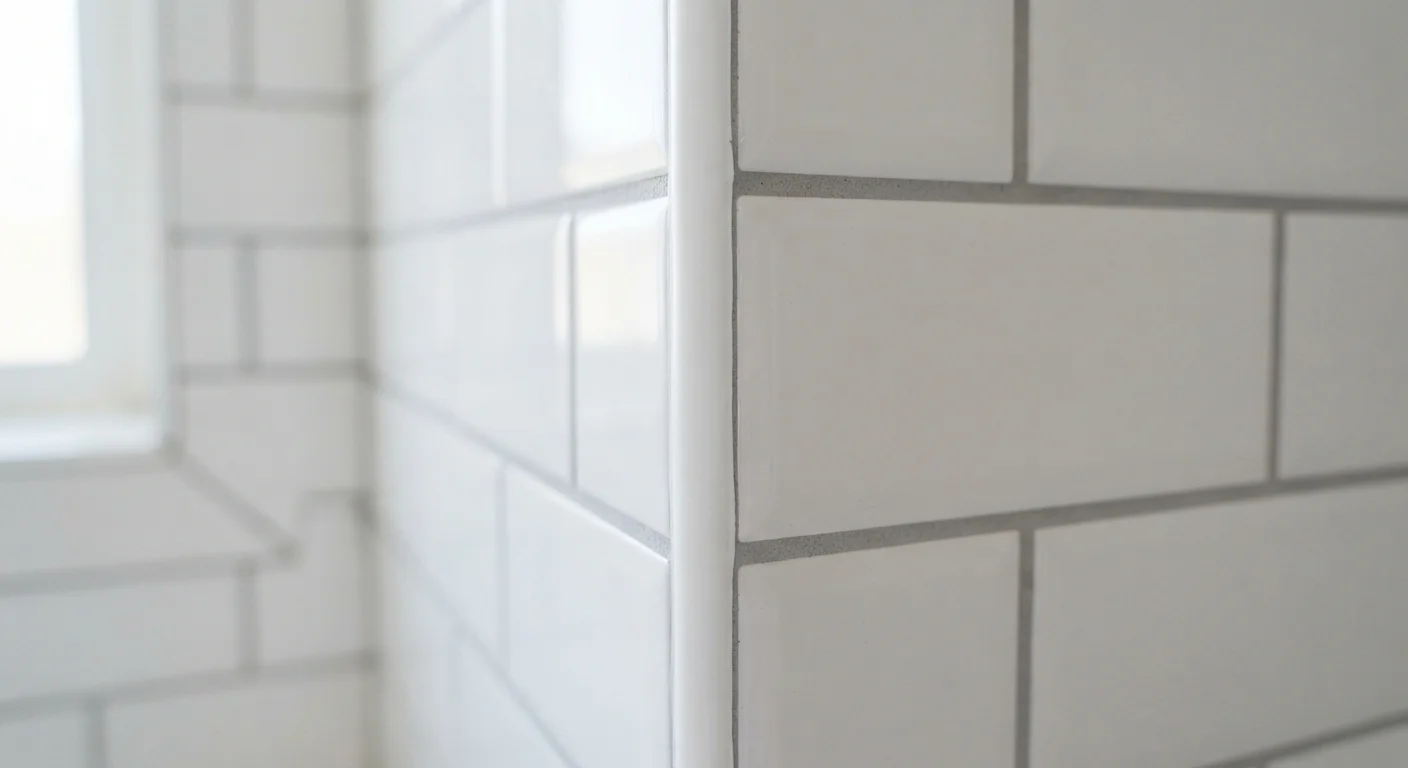
In a typical shower installation, grout fills every joint across the wall tiles and floor tiles. Caulk goes in four specific locations: the inside corner where two walls meet, the corner where the wall meets the shower floor, the joint where the shower pan or tub rim meets the wall tile, and the joint at any built-in shelf or bench edge.
Color matching is easier than it used to be. Many caulk manufacturers offer colors that coordinate with popular grout shades, so the finished look remains consistent even though you are using two different materials.
Understanding why each product fails when misapplied helps reinforce the right habit. For a deeper look at what goes wrong when caulk is pushed past its limits, see our guide to caulk failure causes. And if your tub perimeter already shows lifting or moldy caulk, our walkthrough on recaulking a bathtub covers the full process from removal to a clean finish.