
Why a Shared Vocabulary Helps
When you start researching home organization, the terminology can feel like a second language. Articles mention corralling, videos reference decanting, and method names like KonMari appear without explanation. Learning what these terms actually mean is the fastest way to evaluate which systems are worth trying in your home.
This glossary covers the words and phrases that come up most often - in guides, on labels at storage stores, and in conversations about keeping a home functional. Each definition is written for someone encountering the concept for the first time.
For a broader look at how zones and labeling work together in practice, see Zones, Bins, and Labels: The Language of an Organized Home.
These Terms Describe Systems, Not Rules
Home organization vocabulary reflects common practices, not universal standards. Every household is different, and no single method or term represents the only correct approach. Use these definitions as a starting point, then adapt any system to fit your space and the people who live in it.
The Glossary
The terms below are grouped loosely by where they tend to appear - whole-home concepts first, then room-specific and maintenance terms. Use this as a lookup reference as you encounter unfamiliar words in other guides.
Zone
A defined area within a room dedicated to a single activity or category of items. Zones prevent unrelated objects from drifting together and reduce the mental effort of finding things later.
Capsule Closet
A curated wardrobe built around a small set of versatile, interchangeable pieces. The goal is to own fewer items that work together well, rather than a large collection of rarely worn clothing.
KonMari Method
A decluttering approach developed by organizing consultant Marie Kondo that sorts belongings by category rather than room, and asks whether each item 'sparks joy' before keeping it.
FIFO
First In, First Out - a pantry and storage principle where older items are placed at the front so they get used before newer purchases. Widely used in food storage to reduce waste.
Negative Space
Empty, unused area left deliberately on a shelf or surface. Leaving negative space prevents visual clutter and makes it easier to put items back in their correct place.
Decanting
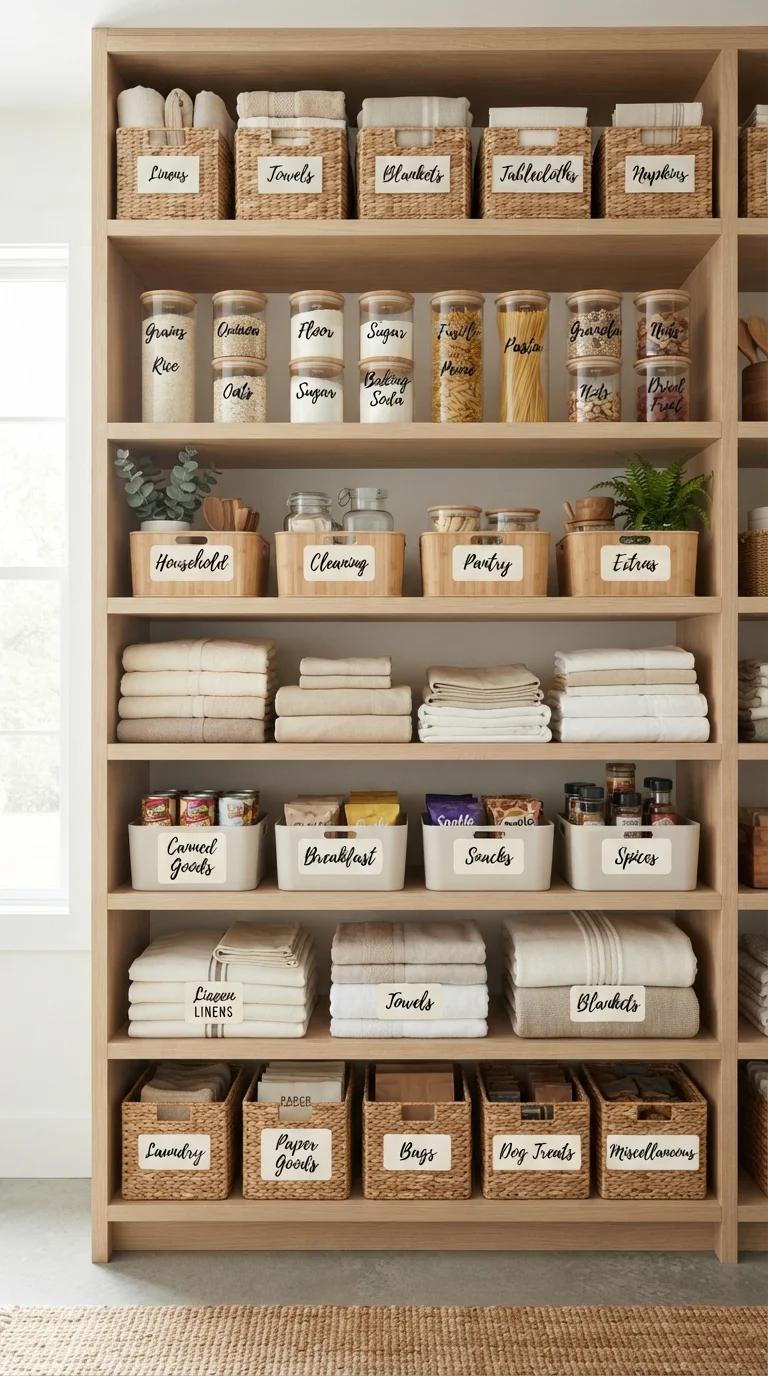
Transferring bulk or packaged goods into uniform containers, typically for pantry items like cereals, pasta, or flour. Decanting improves visibility, maximizes shelf space, and creates a consistent look.
Anchor Item
A large, fixed piece - such as a sofa, bed, or desk - that defines how a zone is laid out. Organizers plan storage and traffic flow around anchor items first.
One-In, One-Out Rule
A maintenance habit where every new item brought into the home is matched by removing an existing item of the same category. It caps collection sizes without requiring periodic purges.
Prime Real Estate
The storage locations that are easiest to access - eye-level shelves, front-of-drawer positions, and countertop zones. Organizers reserve prime real estate for frequently used items.
Clutter Tolerance
An individual's personal threshold for visual disorder before it causes stress or friction. Clutter tolerance varies widely between people and affects what organizing systems work in shared homes.
Corralling
Grouping related loose items inside a single container, tray, or bin so they can be moved, accessed, and returned as a unit. Corralling is one of the fastest ways to impose order on a chaotic surface.
Decision Fatigue
The mental exhaustion that results from making too many choices, which can stall decluttering progress. Organizing systems reduce decision fatigue by establishing clear default homes for every item.
If you are working through a whole-house declutter and want a sequenced plan for where to start, Decluttering a Whole House: What to Tackle First and Why It Matters provides a room-by-room framework that puts these concepts into action. For closet-specific terminology in context, the guide Closet Organization From the Ground Up walks through capsule closets and zone-building step by step.
In shared households, concepts like clutter tolerance take on added importance. Shared Spaces, Different Standards covers how to build organizing systems that account for different preferences under one roof.