Why a Shared Language Makes Organization Stick
Most organizing efforts fail not because of bad intentions but because the system only lives in one person's head. When you are the only one who knows where the batteries go or why the left drawer is different from the right drawer, the system collapses the moment someone else puts something away. That's where the vocabulary of organization - zones, bins, and labels - becomes genuinely useful.
These three concepts aren't decorating trends or products to buy. They are a shared logic that every person in a household can follow without needing to ask. When a space is zoned, contained, and labeled, it communicates its own rules. Maintenance becomes a matter of following the system rather than remembering it.
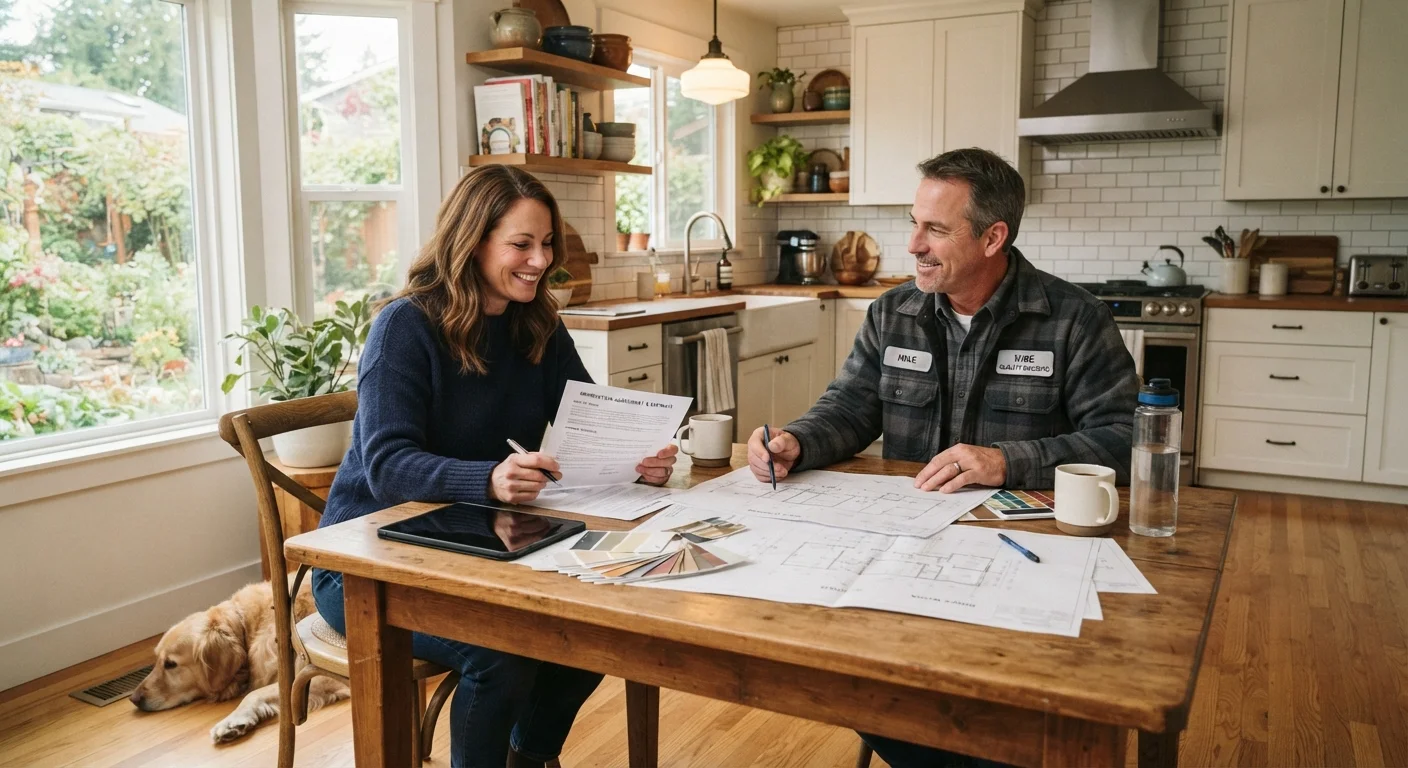
Before diving into each concept, it helps to do a quick audit of the spaces you want to tackle. Our home clutter assessment checklist walks you through identifying where clutter actually collects before you invest time or money in a solution.
1 in 4
American households can't park in their garage
According to the U.S. Department of Energy, roughly one in four households with a garage cannot use it for vehicles due to clutter and disorganization.
2.7 days
Time the average American spends searching for lost items annually
Research from household behavior studies estimates that adults spend significant time each year looking for misplaced objects - a problem that zone-and-label systems directly address.
40%
Of housework eliminated by reducing clutter
Professional organizers commonly cite research suggesting that reducing household clutter can cut the time spent on routine cleaning and tidying by roughly 40 percent.
Zones: Giving Every Activity Its Own Address
A zone is simply a defined area assigned to a specific purpose or category. In a kitchen, you might have a baking zone near the oven, a coffee zone by the counter outlet, and a snack zone in a lower cabinet within kids' reach. In a living room, a reading zone might anchor one corner, while a media zone organizes remotes, chargers, and streaming devices near the television.
The key principle is that zones should reflect how you actually use a space, not how you think you should use it. If the kids always do homework at the kitchen table, the homework supplies belong near the kitchen table - not at a desk in a bedroom no one uses for studying.
Effective zoning often requires some honest observation first. Walk through your home and notice where things naturally land. Bags near the door, mail on the counter, shoes in the hallway - these drift patterns reveal where zones are needed most. Organizing against natural behavior creates friction; organizing with it creates systems people actually maintain.
Bins: Making Categories Physical and Visible
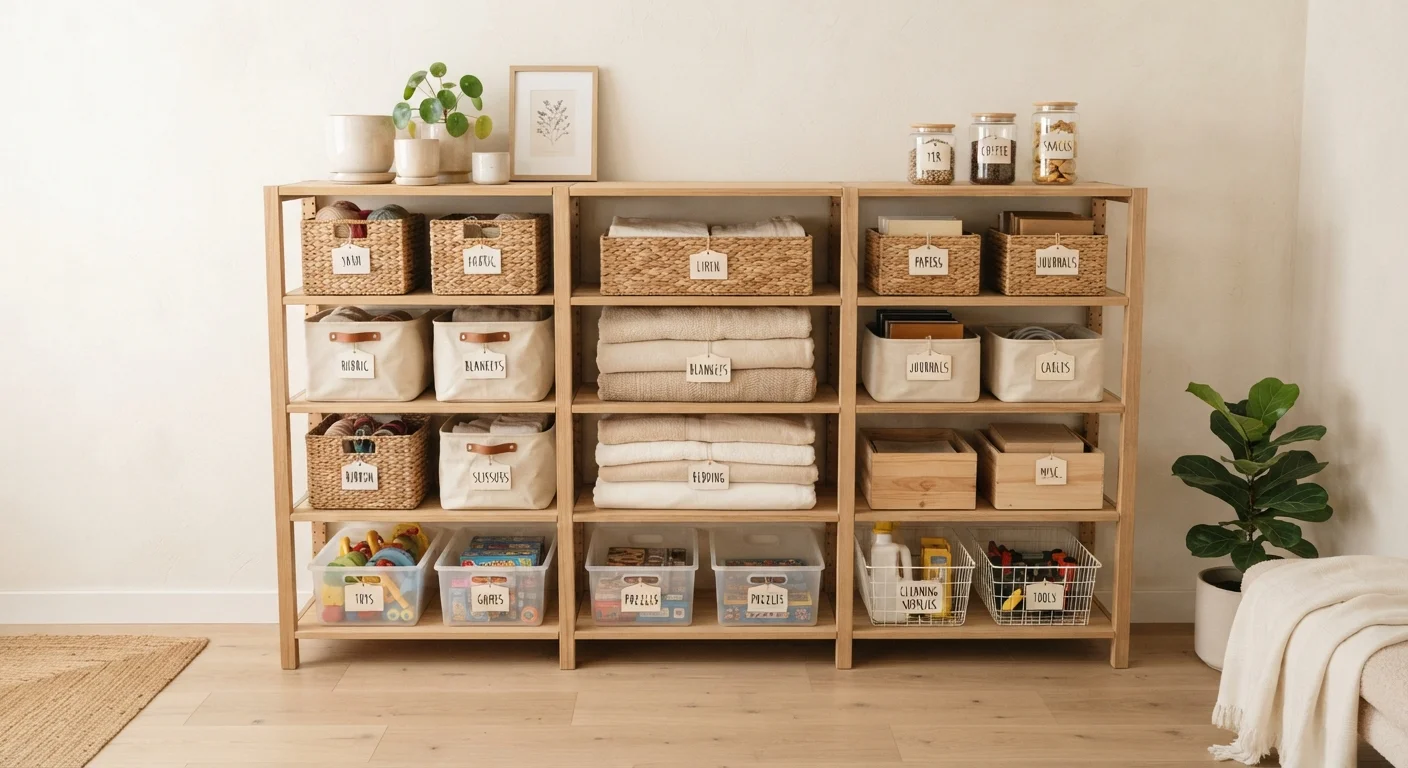
Once you have defined zones, bins give those zones structure. A bin is any container - basket, drawer insert, box, tray - that physically groups a category of items together. The container corrals the category so items don't spread, mix with unrelated things, or disappear into the back of a shelf.
Bins work best when the category inside them is narrow enough to be useful. A bin labeled 'office supplies' may still create confusion; a bin labeled 'pens and markers' tells you exactly what belongs there and what doesn't. The more specific the category, the faster you can find things and the easier it is to notice when something is out of place.
Size matters too. A bin that's too large fills up with overflow items that don't belong. A bin that's too small gets bypassed. A useful rule of thumb: a bin should hold the category comfortably with a little room, but not so much room that unrelated items can quietly move in.
For closets specifically, our closet organization guide covers how to choose and place containers for clothing and accessories from the floor up.
Start With One Zone Before Buying Anything
Resist the urge to buy bins and baskets before you know exactly what you're storing. Choose one zone - a single drawer, one shelf, or a corner of a room - define its category, measure the space, and then select containers that fit both the dimensions and the quantity of items. This prevents the common mistake of buying attractive containers that don't actually work for the space.
Labels: The Part That Makes Systems Self-Sustaining
Labels are what transform a personal system into a household system. Without labels, bins and zones require you to hold the whole map in your head - and to re-explain it every time someone new needs to find or return something. With labels, the space explains itself.
Labels don't have to be elaborate. A strip of masking tape and a marker is fully functional. What matters is that labels are specific, readable, and consistently placed. Labeling the front of bins at eye level in a pantry, the outside of opaque storage boxes in a closet, or the front edge of drawer dividers in a desk are all practical starting points.
For households with young children or people who prefer visual cues, picture labels alongside text can make systems more accessible. The goal isn't aesthetics - it's clarity. A label that communicates its meaning immediately to everyone who uses the space is doing its job.
If you want to explore the broader vocabulary professionals use when designing these systems, our home organization glossary covers terms from basic to advanced in plain language.
Putting It Together in Any Room
Applying zones, bins, and labels doesn't require starting over or buying a whole new set of containers. The sequence that tends to work best: define zones first (decide what activities happen in this space), then assign bins to each zone (group the items that support each activity), then label everything (so the system is legible to everyone).
This same logic scales from a junk drawer to a garage. A junk drawer can have three small trays - one for batteries, one for pens, one for small tools - each labeled. A garage can have shelving sections dedicated to gardening, auto supplies, and sports equipment, with labeled bins inside each section. The complexity changes; the underlying structure doesn't.
Maintenance is easier when the system is honest about how the space is actually used. Revisit zones periodically - especially after a move, a new family member, or a change in routine - and adjust as needed. A good organizing system isn't rigid; it evolves with the household it serves.