Why an Audit Comes Before Any Organizing
Most people approach clutter by buying storage bins, then wondering why nothing feels better afterward. The problem isn't the bins - it's that organizing clutter in place just means neater-looking clutter. An audit flips the sequence: you observe and document first, then decide what to do with the information.
Think of this checklist as a diagnostic tool. Walking through your home with fresh eyes and a notepad (or phone notes) lets you distinguish between three very different problems: too much stuff, too little storage, or a system that doesn't match how your household actually moves through a space. Each problem has a different solution, and mixing them up wastes time and money.
This audit is designed to take 30-60 minutes for a typical home. You're not decluttering during this step - you're observing. Resist the urge to start sorting mid-walk-through. Once you've completed the full checklist, you'll have a prioritized picture of where to focus. From there, the Room-by-Room Decluttering Roadmap gives you the structured next steps.
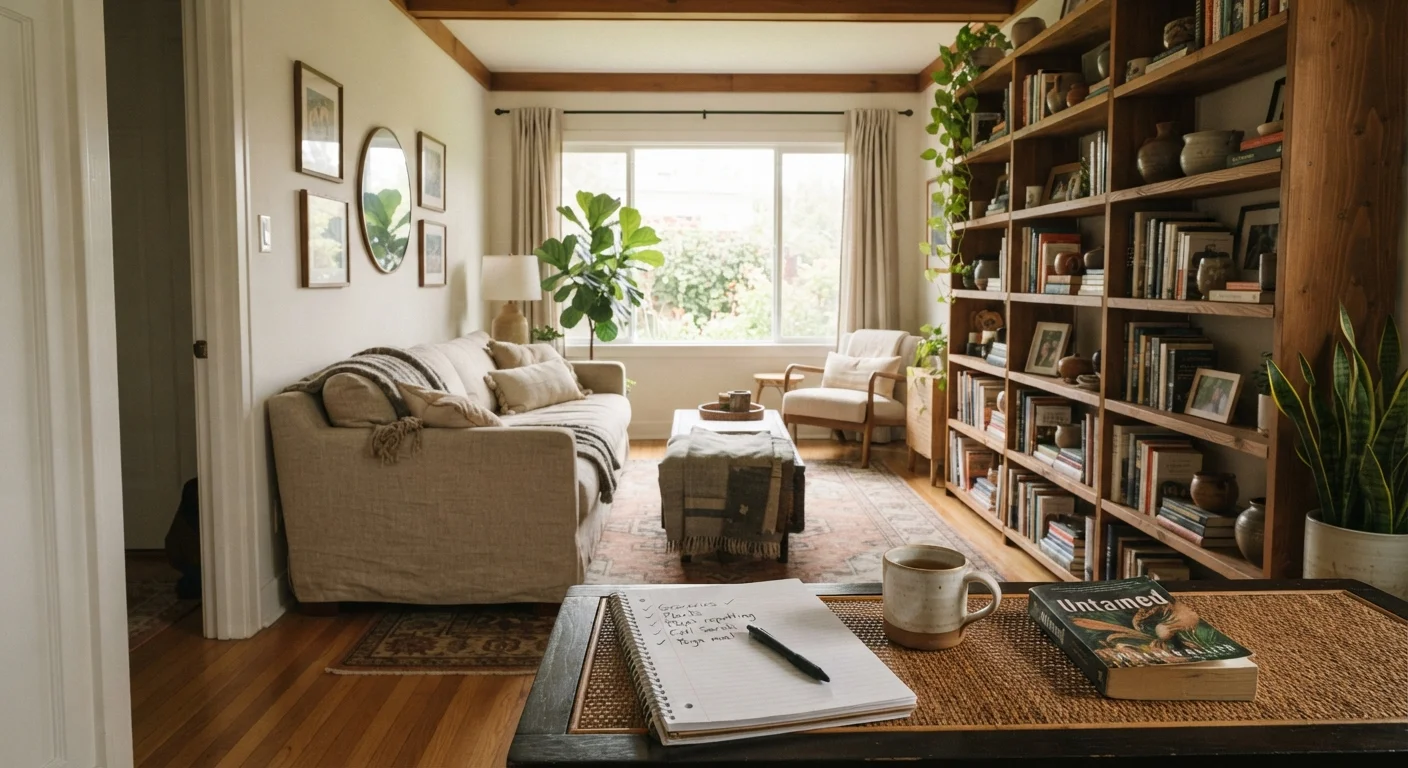
Notepad or Notes App
Record observations, severity ratings, and priority decisions room by room during the walk-through.
Camera or Phone
Photograph problem areas so you can reference them accurately when planning solutions later.
Tape Measure
Measure shelving, closets, and storage zones so any future storage purchases are sized correctly.
Colored Sticky Notes or Highlighters
Color-code severity ratings (Low/Medium/High) on a printed room list for a quick visual priority map.
How to Use This Checklist
Move through your home one room at a time. For each space, answer the questions in each group below honestly - not aspirationally. You're not describing how the room should look; you're documenting how it actually functions right now.
As you go, jot a quick severity rating for each room: Low (occasional friction), Medium (daily frustration), or High (unusable or overwhelming). This rating becomes your prioritization tool at the end.
If you share your home with others, consider doing the walk-through together or separately and comparing notes. Different people notice different friction points. The Shared Spaces guide offers practical frameworks for households where clutter tolerances differ.
Don't Let the Audit Become a Declutter Session
It's tempting to start sorting the moment you spot a problem area, but stopping mid-audit to reorganize means you'll never get the whole-home picture. Incomplete audits lead to partial plans - you fix one room without realizing it's feeding clutter into the next. Finish the full walk-through first, then return to each space with a dedicated plan.
After completing every room, review your notes and circle the two or three spaces rated High that you also use most frequently. Those become your first decluttering zones. If every room feels urgent, start with the main entry or kitchen - spaces that affect daily routines the most tend to yield the fastest visible improvement.
Preparation
Entry & Common Transition Areas
Kitchen & Pantry
Bedrooms & Closets
Living & Shared Spaces
Bathrooms
Storage Zones (Garage, Basement, Attic, Laundry)
After the Audit: Turning Notes Into a Plan
Once you've completed the walk-through, you should have a room-by-room snapshot: which spaces are functioning, which are struggling, and what's driving the problem in each. The next step is converting those observations into decisions - not purchases.
Before adding any storage product to a shopping list, ask yourself whether the real fix is reducing volume first. A closet that's bursting at the seams usually needs fewer items, not more shelving. For closets specifically, the Closet Organization From the Ground Up guide walks through how to assess usable space accurately before committing to any system.
If the audit revealed whole-home challenges rather than room-specific ones, the Decluttering a Whole House guide provides an end-to-end framework from initial sort through long-term maintenance. For homes with limited square footage, the Small Apartment, Big Clutter Problem guide offers strategies tailored to tight footprints where vertical space matters as much as floor space.
Avoid Buying Storage Before Reducing Volume
One of the most common and costly audit mistakes is using observations as a shopping list before deciding what to keep. A drawer that's overflowing with gadgets doesn't need a better organizer - it needs fewer gadgets. Every storage purchase made before a sorting decision risks spending money to manage items you'd otherwise let go. Complete a keep-or-release decision for each flagged area before you shop for any product.
Return to this checklist every three to six months. Clutter patterns shift with seasons, life changes, and habits. A short re-audit prevents small accumulations from growing into overwhelming projects.