Why Watering Advice Goes Wrong
Most gardeners learn to water by copying what a neighbor does or following a vague rule passed down over generations. The trouble is that many of these rules contradict how plants and soil actually work. Getting watering wrong - in either direction - is one of the most common reasons healthy-looking seedlings turn yellow, roots rot, or drought stress sets in despite regular effort.
The myths below are widespread enough that you have almost certainly encountered at least one of them. Each one is corrected with an explanation grounded in how plants absorb water and how soil holds it. For a deeper look at the single most important watering principle, see our guide to deep and infrequent watering.
Myth
Plants need water every single day to stay healthy.
Fact
Most garden plants do better with deep watering two to three times per week, or less, depending on soil type and weather.
Daily light watering keeps only the top inch of soil moist. Roots follow moisture, so they concentrate near the surface rather than growing deep. Shallow-rooted plants are more vulnerable to heat, drought, and physical disturbance. Watering less frequently but more deeply - until water reaches six to eight inches down - encourages roots to follow moisture into cooler, more stable soil layers. Sandy soils drain quickly and may need more frequent attention; heavy clay holds water longer and is easily overwatered on a daily schedule.
Myth
Watering in the sun will burn or scorch plant leaves.
Fact
There is no reliable scientific evidence that water droplets focus sunlight enough to burn healthy leaves under normal outdoor conditions.
This myth has circulated for decades, but controlled studies have not confirmed that leaf scorch is caused by water droplets acting as lenses during irrigation. Leaf scorch is almost always caused by heat stress, drought, wind, or disease - not midday watering. That said, morning is still the practical best time to water: it gives foliage time to dry before cooler evening temperatures arrive, which does reduce some fungal disease risk. Watering in the morning also reduces water loss to evaporation compared with afternoon sessions on hot days.
Myth
Wet leaves always lead to fungal disease.
Fact
Fungal infections depend on extended moisture, poor air circulation, and the presence of fungal spores - not brief leaf wetness alone.
Rain routinely wets leaves without triggering widespread disease in healthy, well-spaced plants. The real risk factors are water sitting on leaves for many hours (especially overnight), crowded planting that traps humid air, and soil conditions that already harbor pathogens. Avoiding evening overhead watering is reasonable advice, but the fear that any wet foliage invites disease can cause gardeners to underwater, which creates its own problems. Improving plant spacing and airflow is often more effective than obsessing over keeping leaves dry.
Myth
If a plant is wilting, it definitely needs water immediately.
Fact
Wilting can signal both underwatering and overwatering; adding water to a plant suffering from root rot will make things worse.
Roots that have been sitting in waterlogged soil begin to decay and lose the ability to take up water even when water is present - a condition commonly called root rot. The plant wilts because it is functionally dehydrated even though the soil is wet. Before watering a wilting plant, check the soil. If it is already damp or soggy, withhold water and improve drainage. Some plants also wilt temporarily in peak afternoon heat as a protective response and recover on their own by evening without any additional watering.
Myth
More water is always safer than less water.
Fact
Overwatering is one of the most common causes of houseplant and garden plant death, far outpacing damage from underwatering.
Soil needs air as well as water. Plant roots require oxygen to function, and consistently saturated soil drives out the air pockets roots depend on. Overwatered plants show symptoms that closely mimic drought stress - yellowing leaves, drooping, and stunted growth - which leads gardeners to add even more water and worsen the problem. Underwatered plants often recover quickly once watered; overwatered plants suffering from root rot may not recover at all. Erring on the side of slightly less water, then observing the plant's response, is generally the safer approach.
Putting It Into Practice
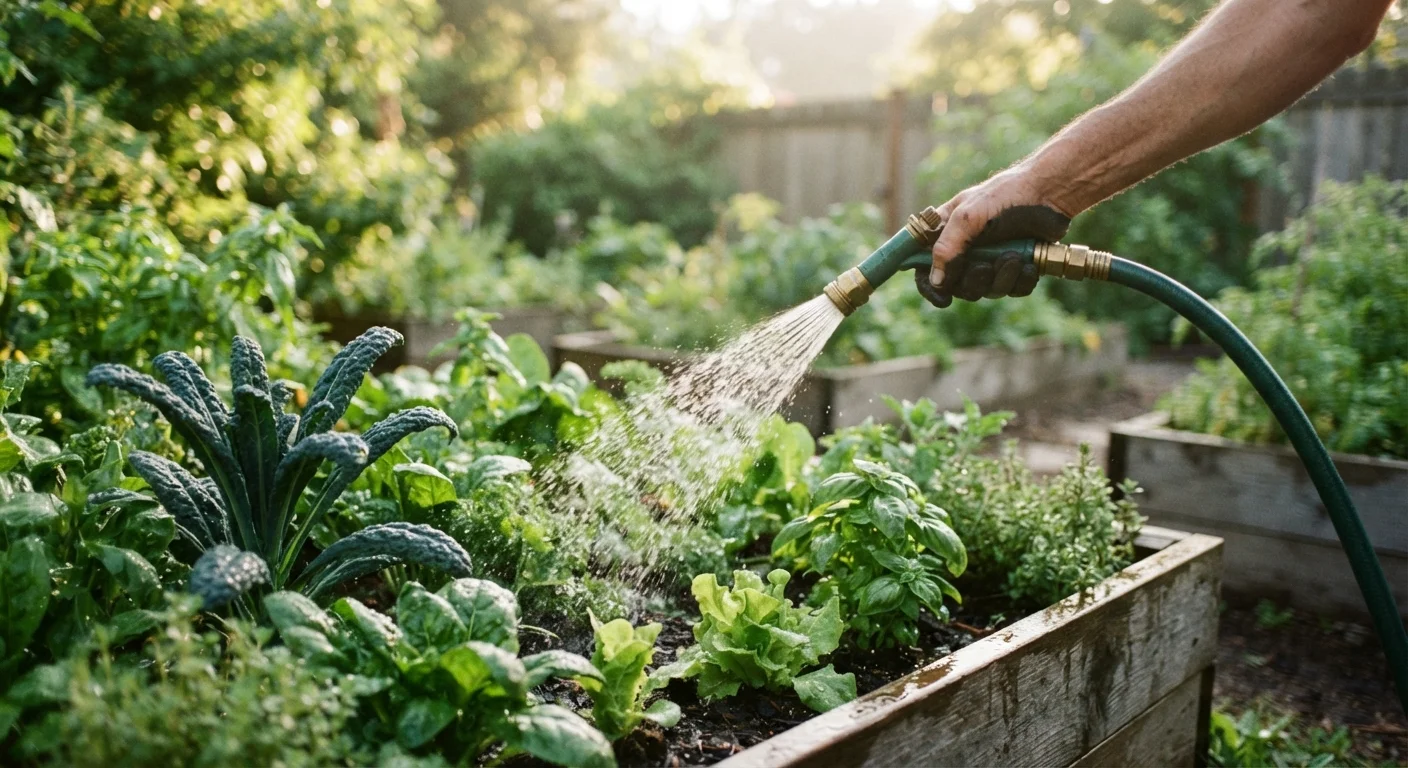
Correcting your watering habits does not require expensive tools or complicated schedules. The most reliable method is to check soil moisture before reaching for the hose: push a finger two inches into the soil near the root zone. If it feels dry at that depth, water thoroughly. If it still feels damp, wait another day and check again.
~50%
Outdoor water used on landscaping in the U.S.
According to the U.S. Environmental Protection Agency, approximately half of all residential outdoor water use goes to lawns and gardens, much of it applied inefficiently.
2×
Water loss from midday vs. morning irrigation
University extension programs generally estimate that watering during peak heat can roughly double evaporation loss compared with early-morning irrigation.
Choosing the right delivery method also matters. Drip irrigation and soaker hoses deliver water directly to the root zone, reducing surface evaporation and keeping foliage dry. Our comparison of drip irrigation and sprinkler systems can help you decide which suits your garden layout and plant types.
Once you are watering correctly, other parts of the garden ecosystem tend to improve as well. Healthy, consistently moist (not saturated) soil supports the beneficial organisms that break down organic matter, improve structure, and even help deter certain pests - a topic explored in our article on plants that naturally deter common garden pests.
Overwatering Signs Are Easy to Miss
Yellowing lower leaves, a sour or musty smell from the soil, and persistently soggy ground are the clearest signals of overwatering. If you notice these, stop watering and allow the soil to partially dry out before resuming. In severe cases, plants in containers may need to be repotted into fresh, well-draining soil to save the root system.