Why Shallow Watering Works Against You
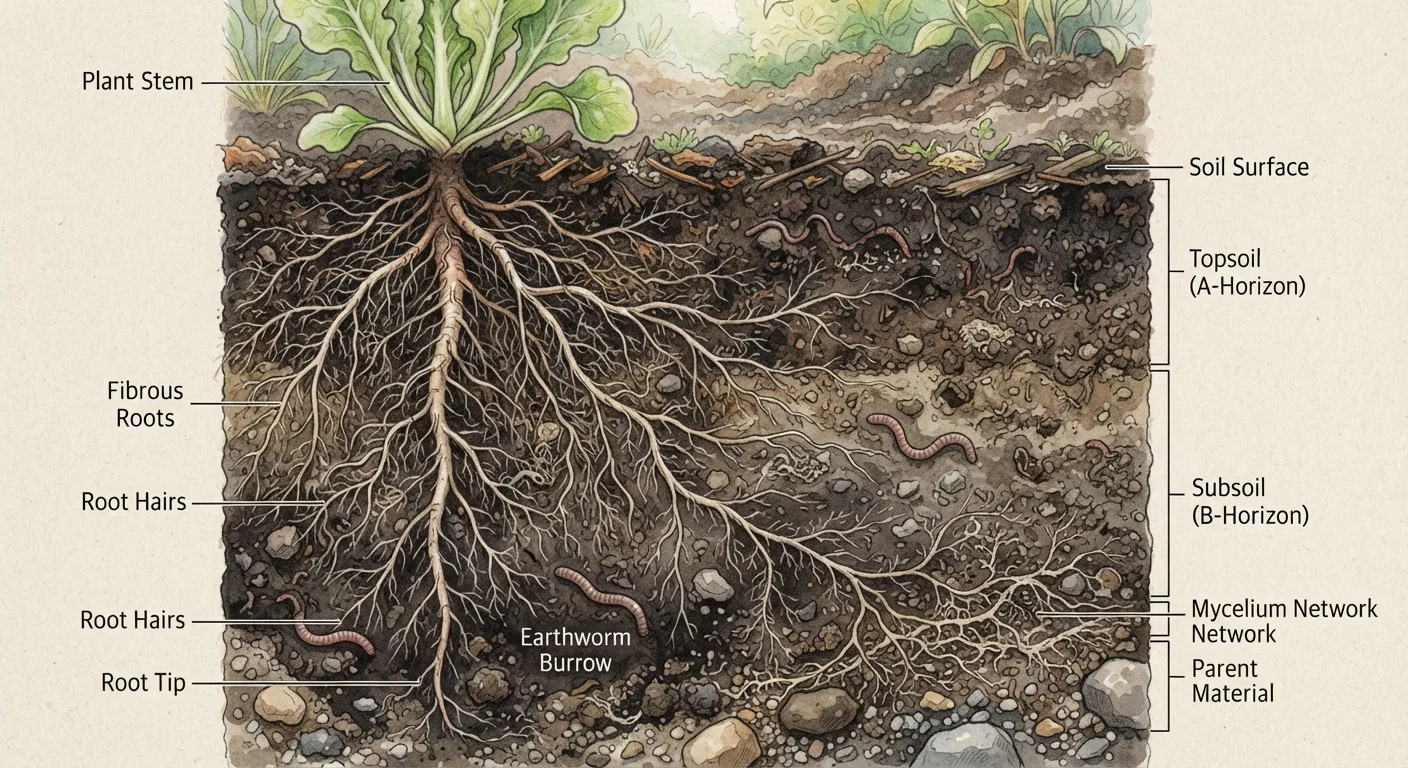
When you water a little every day, you're teaching your plants a bad habit. Roots follow moisture, so if water only penetrates the top inch or two of soil, that's exactly where roots congregate - crowded near the surface where temperatures swing wildly and soil dries out fastest.
Surface-dwelling roots leave plants fragile. During a hot afternoon or a stretch of dry days, that thin band of moist soil evaporates quickly, and shallow-rooted plants wilt fast. This cycle forces you to water even more frequently just to keep them alive - a feedback loop that exhausts both you and your plants.
Deep watering breaks this cycle. When water soaks down 6 to 12 inches into the soil, roots pursue it downward into zones that stay cooler and hold moisture far longer between rains. Those deeper roots also give plants better physical anchorage and broader access to soil nutrients. For a fuller picture of how soil composition plays into this, see our article on how soil pH affects plant health.
Best Practices for Deep, Infrequent Watering
Applying this principle correctly makes a real difference. These practices reflect what experienced gardeners and cooperative extension services consistently recommend.
Water slowly enough for moisture to penetrate 6-12 inches into the soil.
Fast watering causes runoff before water reaches root depth. Slow, steady application - whether by soaker hose, drip line, or a low-flow sprinkler - gives soil time to absorb moisture and lets it sink to where roots benefit most.
Use a screwdriver or soil probe to verify actual soil moisture depth after watering.
Guessing whether you've watered enough is one of the most common gardening mistakes. A simple 6-inch screwdriver pushed into the soil tells you immediately how far moisture has reached - if it moves easily through the full depth, you've done enough.
Water in the early morning, between roughly 6 a.m. and 10 a.m.
Morning watering reduces the amount lost to evaporation compared with midday watering, and it allows foliage to dry before nighttime temperatures encourage fungal issues. Roots are also most actively absorbing moisture during cooler morning hours.
Let soil dry out partially between watering sessions before irrigating again.
Consistently saturated soil restricts the oxygen roots need to function. Allowing the top few inches to dry between sessions signals roots to grow deeper in search of moisture - that's the adaptation you're cultivating.
Apply a 2-3 inch layer of organic mulch around plants to slow surface evaporation.
Mulch acts as insulation for the soil, keeping moisture in the ground longer between watering sessions. This extends the effective benefit of each deep-watering session and reduces how often you need to repeat the cycle.
If you're thinking about upgrading your watering setup, our comparison of drip irrigation versus sprinklers can help you choose a system that supports this approach naturally.
Quick Actions You Can Take This Week
You don't need new equipment or a major schedule overhaul to start watering more effectively. A few targeted changes can shift your plants onto a healthier path right away.
Common misconceptions can also undermine even a well-intentioned routine. Our article on garden watering myths addresses the most persistent ones with evidence-based clarity.