
The Real Definition - Without the Intimidation
When most people hear "budget," they picture sacrifice: giving up coffee, skipping restaurants, and living like every dollar is sacred. That mental image is wrong - and it's exactly why so many people never start.
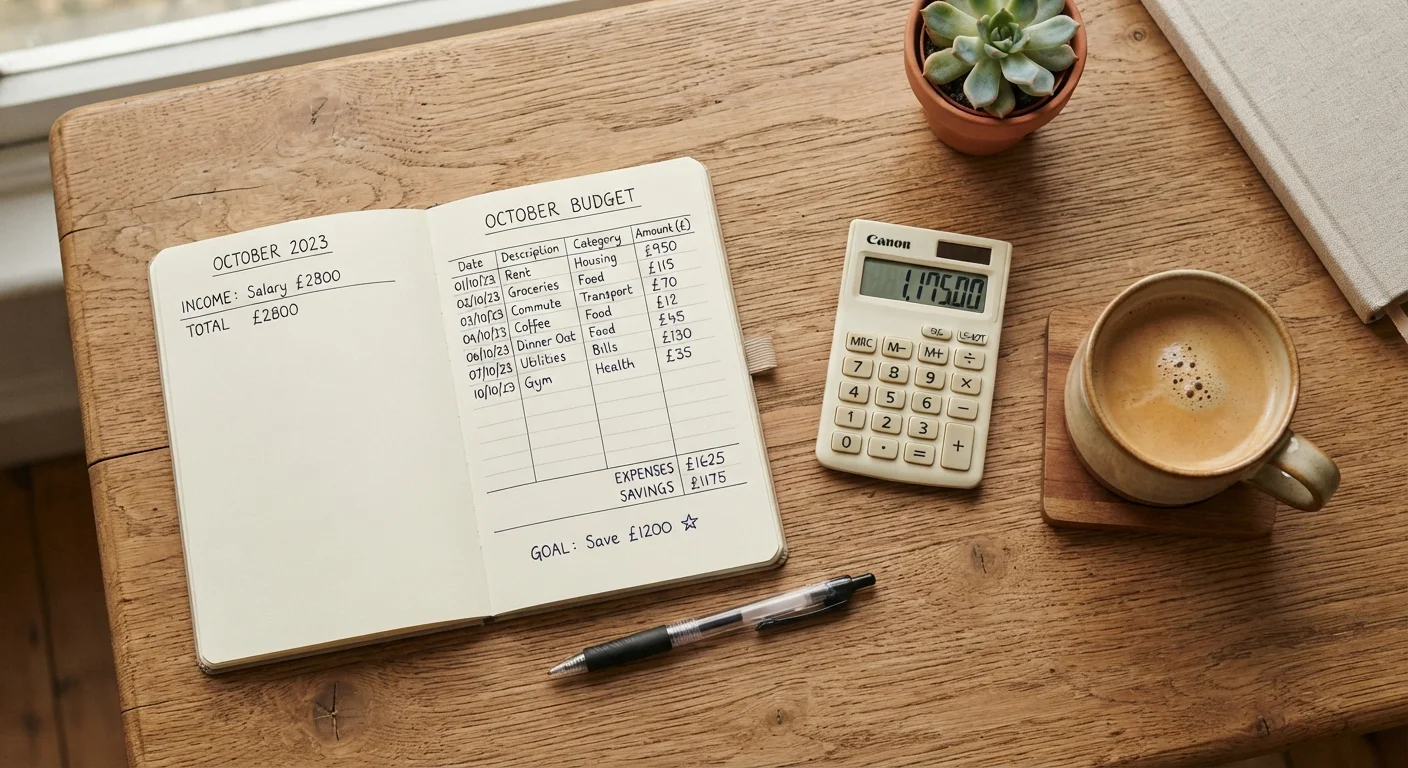
A monthly budget is simply a plan. You write down how much money you expect to bring in during the month, then decide in advance how that money will be used - rent, groceries, savings, and yes, spending on things you enjoy. That's it. No math degree required, no spreadsheet expertise needed.
The word "budget" shares a root with the old French word for a small leather pouch used to carry money. The idea was always about managing what you have, not punishing yourself for having it. If you've been avoiding budgeting because it sounded restrictive, common budgeting myths may be the real culprit.
Budget Formats: Any Will Work
There's no universally correct way to format a budget. Some people prefer a simple notebook with two columns; others use a spreadsheet or a free app. What matters is that the format is easy enough for you to return to consistently. The fanciest system you abandon is less useful than the simplest one you actually use.
What Goes Into a Monthly Budget
Every budget has two sides: money coming in and money going out. Here's what that looks like in practice:
- Income: Your take-home pay (after taxes), side income, freelance earnings, or any other regular cash that arrives in your account. Use your actual take-home amount, not your gross salary.
- Fixed expenses: Costs that stay the same every month - rent or mortgage, car payment, insurance premiums, loan minimums.
- Variable expenses: Costs that shift month to month - groceries, gas, utilities, dining out, entertainment. These need estimates, not exact numbers.
- Savings and debt payoff: Money set aside for goals, emergencies, or paying down balances faster. Treating savings like an expense - something you "pay" each month - is one of the most effective habits in personal finance.
The goal is for these categories to add up to your total income. If they don't, you adjust. That process of adjusting is where budgeting actually happens. For a plain-language guide to the terms you'll encounter, see key budgeting vocabulary every beginner should know.
~1 in 3
Americans who follow a formal household budget
According to Gallup polling data, fewer than one-third of American households maintain a detailed budget, despite widespread awareness of its benefits.
65%
Adults living paycheck to paycheck at some point
Multiple surveys from financial services research groups have found a majority of American adults report difficulty covering expenses between pay periods, suggesting widespread gaps in cash-flow planning.
$1,000+
Common emergency fund shortfall for US households
Federal Reserve consumer finance surveys have repeatedly found many US households could not cover a $1,000 unexpected expense without borrowing, highlighting the role budgeting plays in building financial resilience.
Why Most People Get Budgeting Wrong
The biggest misconception is that a budget is static - something you build once and follow perfectly. Real budgets are living documents. Expenses shift, unexpected costs come up, and your priorities evolve. A budget isn't a test you pass or fail; it's a tool you adjust.
The second misconception is that precision equals success. People spend hours trying to account for every dollar, burn out after two weeks, and quit. A budget with rough, honest estimates that you actually use beats a perfect spreadsheet you abandon.
Third, many beginners forget about irregular expenses - the ones that don't show up every month but are entirely predictable if you look at the calendar. Car registration, holiday gifts, and annual subscriptions catch people off guard because they weren't baked into the plan. Planning for irregular expenses is a skill that makes or breaks a budget over time.
Start With Last Month's Bank Statement
Instead of guessing what you spend, pull up your last one or two bank or credit card statements. Add up what you actually spent in each category. These real numbers make a far more honest starting point than estimates from memory, and they'll make your first budget much easier to stick to.
How to Start - Even If You've Never Done It Before
You don't need a special app or a financial background. Here's a straightforward starting point:
- Add up your monthly take-home income. Include every reliable source.
- List your fixed expenses. These are easy - the numbers don't change.
- Estimate your variable expenses. Look at two or three months of bank or card statements to find realistic averages.
- Set a savings target. Even a small, consistent amount matters more than a large, inconsistent one.
- Check the math. If expenses and savings exceed income, trim variable categories first.
- Track as the month goes on. Compare what you planned to what actually happened, then adjust for next month.
The format doesn't matter - a notebook works just as well as an app. What matters is doing it. The core principles behind every successful budget are more about consistency and honest expectations than any particular tool or method. And if you find the first month hard, that's normal - understand why budgets often fall apart in month two and how to prevent it.
This article is for general informational and educational purposes only and does not constitute personalized financial advice. Consider consulting a qualified financial professional for guidance specific to your situation.