What the Lifespan Data Generally Shows
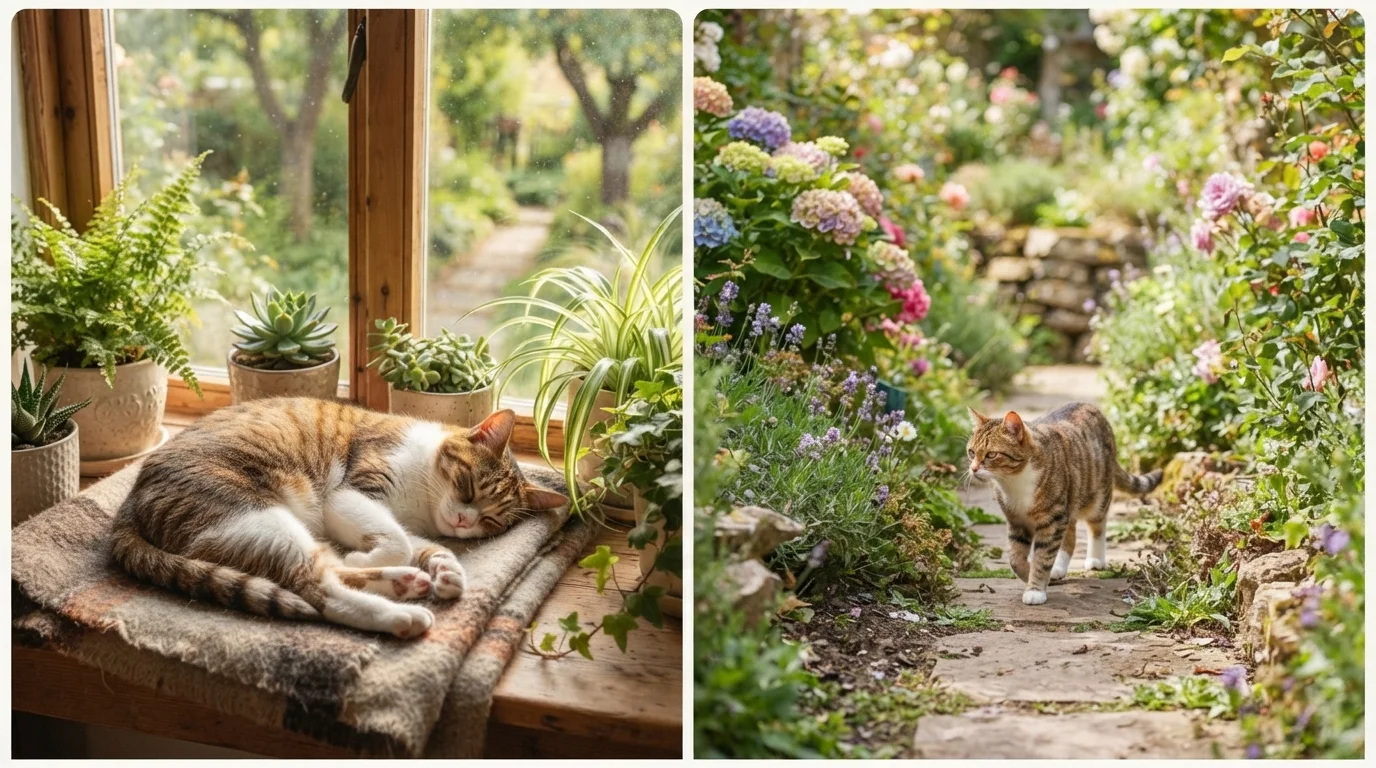
One of the most frequently cited differences between indoor and outdoor cats is lifespan. Veterinary organizations generally note that indoor cats live considerably longer on average — estimates often range from 12 to 18 years for indoor cats, compared to roughly 2 to 5 years for cats that roam freely outdoors. These figures vary by source and study, but the directional finding is consistent: indoor cats tend to live longer.
The reasons are fairly straightforward. Outdoor cats face hazards that are largely absent indoors: vehicle traffic, predation by dogs or wildlife, exposure to feline infectious diseases like FIV and FeLV through contact with other cats, ingestion of rodenticides or antifreeze, and injuries from territorial fighting. Each of these risks compounds over time.
For more context on how the indoor vs. outdoor choice affects your cat's health across its life, see our breakdown of health tradeoffs for indoor and outdoor cats.
| Criterion | Indoor Cat | Outdoor Cat |
|---|---|---|
| Average lifespan | 12–18 years (estimated) | 2–5 years (estimated) |
| Disease exposure risk | Low | High (FIV, FeLV, parasites) |
| Injury risk | Low | High (traffic, predators, fights) |
| Natural stimulation | Requires deliberate enrichment | High from roaming and hunting |
| Wildlife impact | Negligible | Significant (birds, small mammals) |
| Owner control over safety | High | Low to moderate |
| Veterinary cost patterns | Generally lower emergency costs | Higher injury and infection costs |
Enrichment: The Indoor Cat's Biggest Challenge
The most significant welfare concern for indoor cats is boredom and under-stimulation. Cats are natural hunters with strong instincts for stalking, chasing, and exploring. An indoor environment that doesn't account for these needs can lead to stress-related behaviors: excessive vocalization, destructive scratching, over-grooming, or aggression.
The good news is that enrichment is highly manageable. Puzzle feeders, rotating toys, cat trees near windows, and daily interactive play sessions can meaningfully address these instincts. Research in feline behavioral science supports the effectiveness of play-based enrichment in reducing problem behaviors.
Cats are also more trainable than many people assume. Incorporating short training sessions — teaching a cat to respond to its name, come when called, or use a cat door — adds mental stimulation and strengthens the human-animal bond. Our article on what research shows about cat training covers this in practical detail.
12–18 yrs
Typical indoor cat lifespan
Veterinary organizations commonly cite this range as the general life expectancy for well-cared-for indoor cats.
1.3–4B
Birds killed by cats annually in the US
A study published in Nature Communications estimated this range for bird mortality attributed to free-roaming cats in the United States.
2–5 yrs
Estimated outdoor cat lifespan
Multiple veterinary sources cite this significantly shorter range for unsupervised, free-roaming cats due to accumulated environmental hazards.
Environmental Impact and the Wildlife Question
Beyond your cat's own wellbeing, outdoor access raises a broader ecological concern. Peer-reviewed studies, including widely cited research published in Nature Communications, estimate that free-roaming cats in the United States kill billions of birds and small mammals annually. This makes unsupervised outdoor cats one of the leading human-associated threats to wildlife in North America.
It's worth noting that this impact is not a reflection of a cat being a "bad" animal — it's simply what cats do when they roam. The issue is scale and proximity to vulnerable native species. For owners who live near conservation areas, bird sanctuaries, or ecosystems with threatened species, keeping cats indoors or in a contained outdoor space is particularly worth considering.
Catios — enclosed outdoor structures that allow cats to experience fresh air and outdoor sights without roaming freely — are an increasingly popular solution that addresses both enrichment and environmental concerns simultaneously. For guidance on creating a safe indoor setup as a foundation, see our article on setting up a safe indoor environment for your pet.
The Catio: A Middle-Ground Option
A catio is an enclosed outdoor space — ranging from a window box to a large patio enclosure — that allows cats to experience outdoor sights, smells, and fresh air without unsupervised roaming. Many cat welfare advocates and veterinarians recognize catios as a practical compromise that supports enrichment while maintaining safety. Leash training is another option for cats that tolerate a harness, though it requires gradual, patient introduction.
Making the Right Call for Your Cat
There is no single answer that applies to every cat or every household. A cat that was socialized outdoors from an early age and lives in a quiet rural area presents a very different situation from an apartment-raised kitten in a busy city. Your cat's age, health status, temperament, and history all matter.
Veterinarians generally recommend keeping cats indoors as the default, particularly for kittens, cats with chronic health conditions, and those in urban environments. If your cat has a strong drive to be outside, working with a veterinarian or certified animal behaviorist to find supervised outdoor solutions is a reasonable middle path.
As cats age, their needs shift further — reduced mobility and immune function make the risks of outdoor exposure more significant. Our overview of how aging changes health needs in senior pets can help you think ahead as your cat gets older.
This article is for general informational purposes only and does not constitute veterinary advice. Always consult a licensed veterinarian for guidance specific to your cat's health and circumstances.