The Setup: Three Options, One Real Goal
You walk up to a counter and see three sizes: small for $4, medium for $7, and large for $8. The large suddenly seems like a steal compared to medium, so you size up — even though you came in wanting a small. That extra dollar between medium and large was engineered. The medium isn't priced to sell. It's priced to make the large look reasonable.
This is decoy pricing in its simplest form. The 'decoy' is the option that nobody is really supposed to buy. It exists only to shift how you perceive the other options — specifically, to make the retailer's preferred, higher-margin choice look like the obvious smart pick.
Retailers, subscription services, and software companies use this structure constantly. It's baked into menus, pricing tables, and product comparison pages — anywhere a lineup of options exists. Understanding the mechanics helps you see through it. For a related look at how comparison and anchoring work in high-stakes purchases, see why car buyers often overpay at dealerships.
~40%
Shift in preference caused by a decoy option
Research in behavioral economics, including work by Huber, Payne, and Puto, has documented that introducing a decoy option can shift consumer preference toward the target item by roughly 40% or more in controlled studies.
3
Typical number of tiers in a decoy pricing structure
Most decoy pricing setups involve exactly three options — the budget choice, the decoy, and the target — because three options generate the comparison effect without overwhelming the buyer with complexity.
How the Psychology Actually Works
People don't evaluate prices in a vacuum. We compare. When there are only two options — small and large — the decision feels binary and we rely on our own sense of need. Add a third option positioned just below the target in value, and suddenly we're not thinking about need at all. We're thinking about which deal looks better.
The decoy is designed to be 'asymmetrically dominated' — meaning it's clearly worse than the target option on at least one dimension, but not obviously worse than the cheap option. That positioning makes the target look like it beats the decoy on every measure that matters, pushing your brain toward it automatically.
This is closely related to price anchoring, where an initial number shapes every price judgment that follows. Pricing psychology runs deeper than most shoppers realize, and decoy pricing is one of its more sophisticated applications.
Recognizing the Pattern in the Wild
Decoy pricing shows up across industries, but the structure is consistent once you know what to look for:
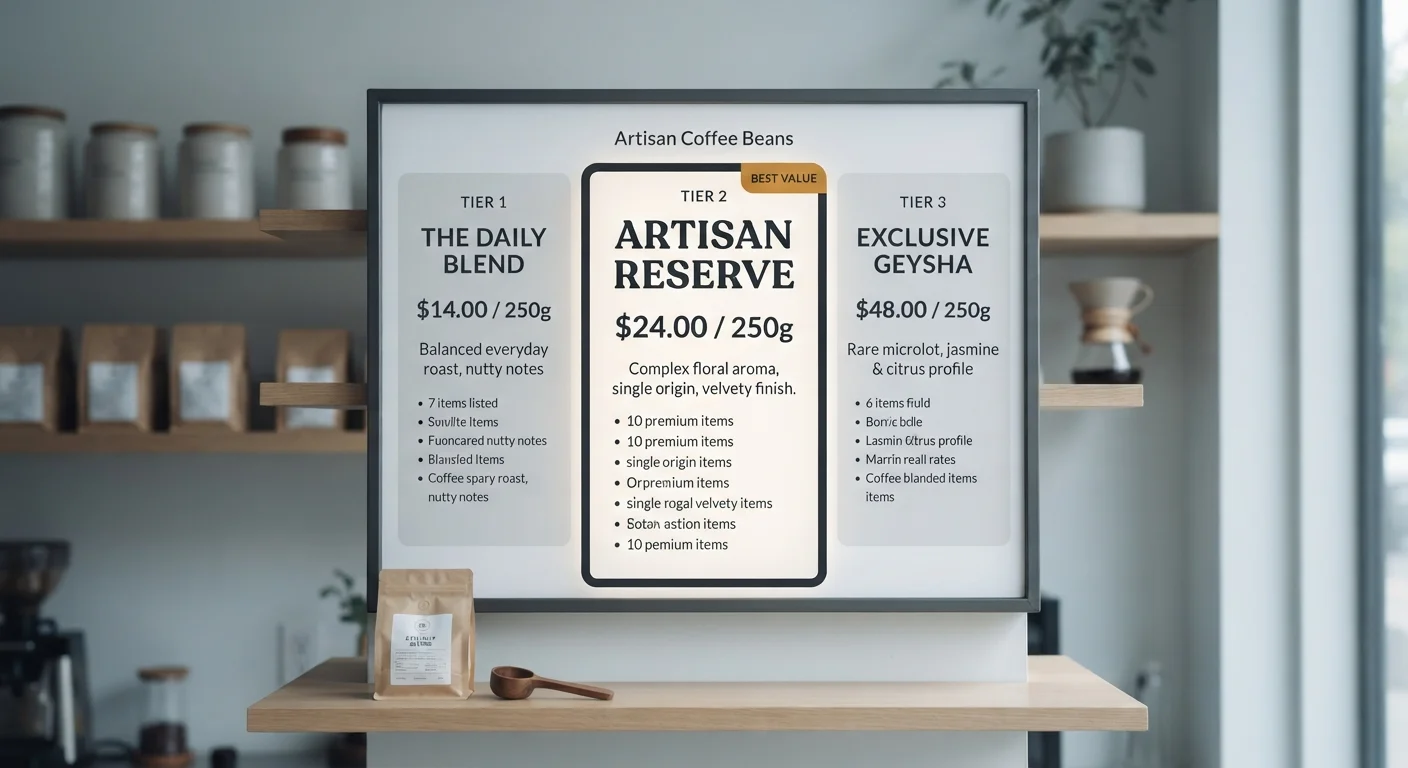
- Streaming and software subscriptions: A basic plan, a mid-tier with seemingly arbitrary limitations, and a premium plan. The mid-tier is often stripped of features specifically to make premium look essential.
- Fast food sizing: The classic small/medium/large drink or combo, where medium is priced close enough to large that large always wins the comparison.
- Airline seat classes: Basic economy is loaded with restrictions — no seat selection, no overhead bin, last to board — making standard economy look generous by contrast.
- Retail bundles: A single item at a high per-unit price, a large bundle at a lower per-unit price, and a medium bundle that's barely cheaper than the large but much more expensive per unit than either extreme.
The giveaway is almost always the middle option. If it feels like a worse deal than the higher option on almost every front, it was probably placed there for that reason. For a broader look at how sale pricing gets constructed, understand how retailers frame discounts to appear more compelling than they are.
The 'Ignore the Middle' Test
When you see three pricing tiers, mentally remove the middle option and ask whether you'd buy the higher tier on its own merits at that price. If the answer is no, the middle option may be doing its job — making the top tier feel more reasonable than it actually is. This simple mental exercise cuts through the comparison framing.
How to Make Decisions That Aren't Manipulated
The most practical counter to decoy pricing is to separate the evaluation from the comparison. Before you look at a pricing page or menu, ask yourself: What do I actually need here, and what's my ceiling? Then evaluate each option against that standard — not against each other.
A few habits help:
- Name your need before you see the options. If you're buying cloud storage, decide how many gigabytes you realistically use before you view the tiers. Don't let the lineup define your requirements.
- Check the per-unit value independently. For bundles or sizes, calculate cost per ounce, per month, or per feature yourself. Don't trust the comparison the seller has constructed.
- Ignore the badge. 'Most Popular' and 'Best Value' labels on mid-tier options are marketing copy, not independent assessments. They're often placed on the option the retailer most wants to sell.
- Walk away from the page. If you can, research pricing separately rather than deciding in the moment while looking at the retailer's designed comparison table.
Building these habits fits into a broader approach to smarter spending — one where you bring your own framework to a purchase rather than adopting the one the retailer built for you. If you want to go deeper on evaluating whether any price is genuinely good, spotting true value is a useful place to continue.