
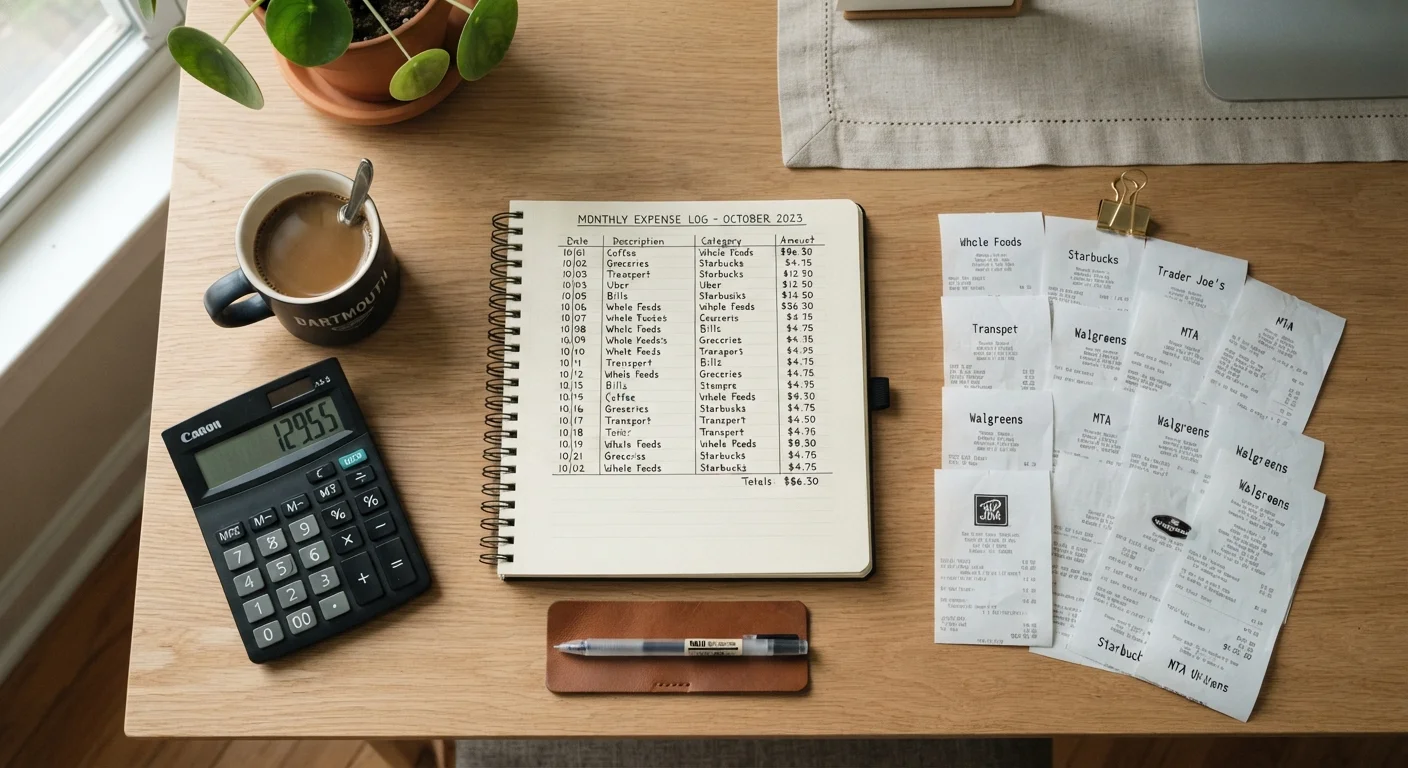
What a Spending Audit Actually Is
A spending audit is a structured, backward-looking review of where your money went over a defined period — typically one to three months. It's not about guilt or judgment. It's about getting an accurate picture of your real spending habits before you make any plan to change them.
Most people significantly underestimate what they spend in categories like dining out, entertainment, and subscription services. Without a deliberate review process, those gaps stay invisible. As spending awareness experts often note, you can't build an accurate budget without first knowing where your money actually goes.
Spending audit
A structured review of past transactions — organized by category — to understand where your money actually went during a set time period.
Budget
A forward-looking plan that sets spending limits by category for a future time period, typically a month.
Subscription creep
The gradual accumulation of small recurring charges — streaming, apps, memberships — that individually seem minor but collectively add up to a significant monthly cost.
Fixed vs. variable expenses
Fixed expenses stay the same each month (rent, loan payments); variable expenses fluctuate (groceries, entertainment, gas).
Spending leak
A recurring or habitual expense that drains money without delivering clear, proportional value to the buyer.
Think of the audit as the diagnostic step — the financial equivalent of checking what's in your fridge before making a grocery list.
Gathering Your Raw Data
Before you can analyze anything, you need the raw material. Collect the following for the past 60 days at minimum:
- Bank account statements — checking and savings
- Credit card statements — every card you use regularly
- Digital payment records — PayPal, Venmo, Cash App, and similar services
- Any paper receipts you've held onto
Most banks and credit unions let you download statements as PDFs or CSVs directly from your online account. If you prefer working on paper, print them out. The monthly budget setup checklist covers exactly which documents to pull together before you sit down to review your numbers.
Download Before You Forget
Bank and credit card portals often limit how far back you can access statements online — sometimes only 90 days without a special request. Download your statements as soon as you decide to do an audit. This avoids the frustrating situation of needing data that's no longer accessible without calling your bank.
One thing to verify: make sure you're capturing all payment methods. Many people forget a secondary card or a linked PayPal account, which creates blind spots in the audit.
Sorting and Categorizing Your Spending
Once your statements are in front of you, go line by line and assign each transaction to a category. Keep the categories broad enough to be manageable:
- Housing (rent or mortgage, utilities, insurance)
- Food (groceries separately from restaurants)
- Transportation (fuel, transit, rideshare, parking)
- Subscriptions and memberships
- Health and personal care
- Entertainment and hobbies
- Shopping (clothing, household, online orders)
- Miscellaneous
Highlight or color-code by category as you go, then total each group. This is where patterns emerge — and where most people encounter their first genuine surprise. For a deeper comparison of methods, see our look at tracking spending by hand vs. using an app.
Spotting the Leaks
"Leaks" are spending patterns that drain money without delivering proportional value — often because they're automatic, invisible, or so small they don't feel significant. Common examples include:
- Forgotten subscriptions: Streaming services, apps, and trial memberships that renewed without notice
- Convenience premiums: Delivery fees, single-use purchases, and impulse buys at checkout
- Duplicated expenses: Paying for two services that do the same thing
- Irregular but recurring costs: Annual fees, quarterly dues, and auto-renewing software licenses
Look for any charge you can't immediately explain. If you have to Google who a merchant is, that's a flag worth investigating.
Annual Charges Hide in Plain Sight
Don't limit your review to monthly transactions. Scroll through the full statement period and watch for annual subscription renewals — for software, clubs, or premium memberships — that may have hit quietly. These charges are easy to miss because they only appear once a year, yet they can represent significant annual spending when added together.
Also review your largest categories for proportion. If one category consumes an unexpectedly large share of your take-home income, that's worth naming — even if each individual transaction looked reasonable at the time. For a complementary lens on intentional spending, see smarter spending from the ground up.
What to Do with What You Find
The audit itself isn't the finish line — it's the foundation. Once you have your category totals and have flagged any leaks, you have three practical next steps:
- Cancel or pause what you don't use. Any subscription you haven't actively used in 30 days is a candidate.
- Flag categories that surprised you. Don't try to fix everything at once. Pick one or two categories to improve in the coming month.
- Feed these numbers into a budget. Your audit totals become the starting point for realistic spending limits. See our plain-English budget walkthrough if you haven't set one up yet.
Repeat the audit monthly — even a quick 15-minute version — to track whether your actual behavior shifts. Over time, the monthly financial reset checklist can help you build this into a sustainable habit. For a broader framework on managing what you find, explore the saving and debt hub.
This article is for general informational and educational purposes only and does not constitute personalized financial advice. For guidance tailored to your situation, consider consulting a qualified financial professional.