How Each System Actually Works
Before comparing the two, it helps to understand the mechanics behind each approach. Start with a spending awareness audit before committing to either system — you need real data on where your money goes before you can allocate it.
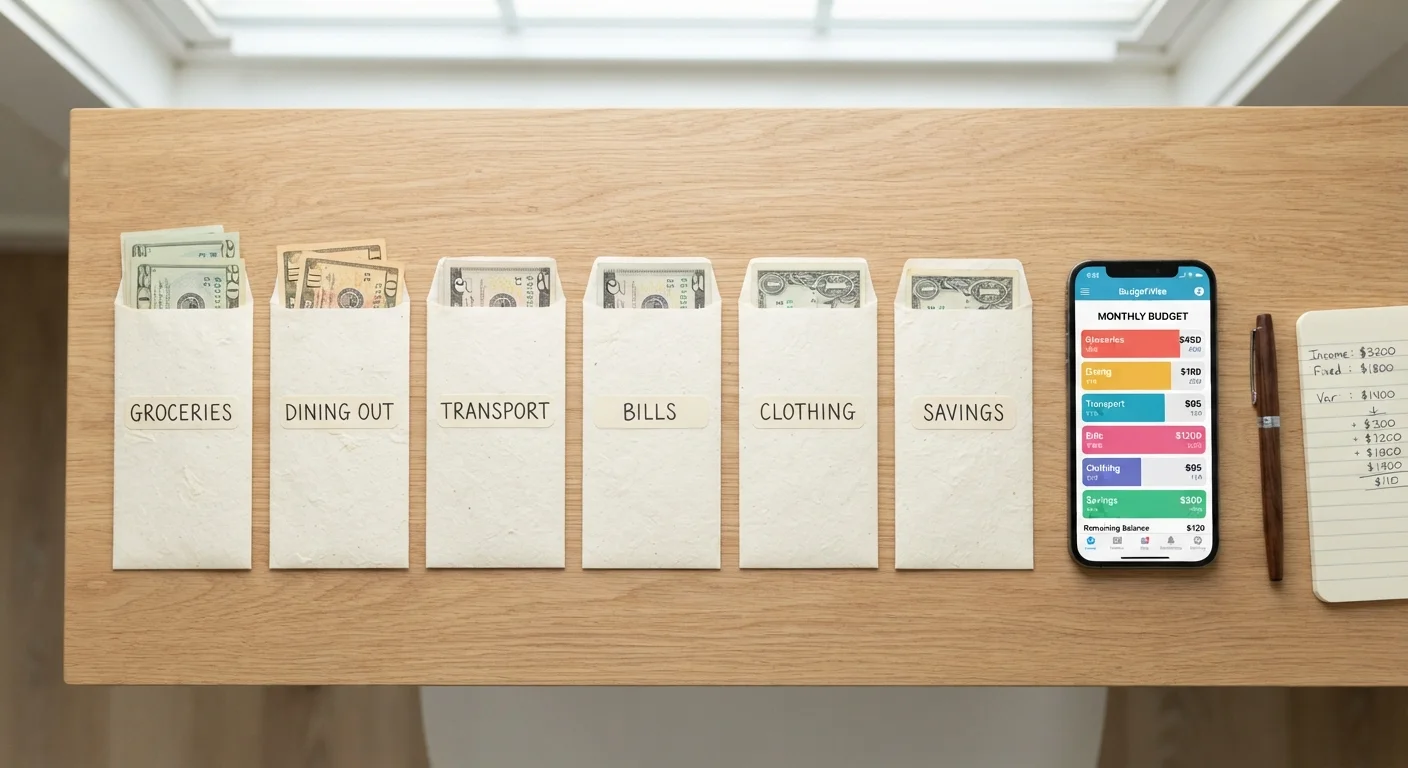
The cash envelope system works by withdrawing a fixed amount of cash at the start of each pay period and dividing it into labeled envelopes — one per spending category (groceries, gas, dining out, entertainment, and so on). You spend only from the relevant envelope. When it's empty, spending in that category stops until the next funding period. There is no app, no algorithm, and no automated anything. The constraint is physical.
Digital budgeting apps work by linking to your bank accounts, credit cards, and debit cards. They import transactions automatically, sort them into categories, and compare actual spending against the limits you set. When you approach or exceed a limit, the app sends an alert. The data stays accessible from your phone, and most apps produce reports on spending trends over time.
| Criterion | Cash Envelope System | Digital Budgeting Apps |
|---|---|---|
| Setup effort | Low — label envelopes, withdraw cash | Moderate — link accounts, set categories |
| Works for online spending | No — cash only | Yes — syncs card transactions |
| Spending friction | High — physical cash feels real | Low — alerts are easy to ignore |
| Subscription tracking | Manual workaround needed | Automatic via linked accounts |
| Data privacy risk | None — fully offline | Moderate — requires account access |
| Spending reports & trends | Manual only | Automated, detailed, historical |
| Shared household use | Requires coordination | Multi-user access available |
| Best for cash users | Yes — purpose-built for cash | No — limited cash tracking |
Where Each System Falls Short
Every budgeting method has structural weaknesses. Knowing them upfront prevents frustration later.
Cash envelopes break down in three common scenarios: online shopping (you can't pay with an envelope on a checkout screen), recurring subscriptions charged automatically to a card, and safety — carrying significant cash creates risk that a debit card does not. For households where most spending has already migrated to digital channels, maintaining a cash-only system requires constant manual workarounds.
Digital apps struggle when users don't stay engaged. An app that sends a spending alert does nothing if the alert is dismissed without review. Apps also require trust: linking financial accounts means granting third-party access to sensitive data. It's worth reviewing any app's privacy policy and understanding how your data is stored and shared before connecting accounts.
A Hybrid Approach Is Valid
You don't have to choose one system exclusively. Many people use cash envelopes for the two or three categories where they consistently overspend — dining out, for example — while relying on an app to track fixed expenses, bills, and savings contributions. This hybrid approach captures the psychological benefit of cash friction where it matters most, without the logistical burden of a fully cash-based lifestyle.
Neither system addresses the underlying spending behaviors that cause budget drift. For a structured way to identify those patterns before building any budget, see our Budgeting Basics hub for foundational guidance.
Choosing Based on Your Actual Behavior
The most important variable isn't the system — it's your behavioral profile. Research in consumer psychology consistently shows that spending friction matters: cash feels more "real" than a card tap, which is why people tend to spend less when handling physical money. If you've identified specific categories where you habitually overspend, a targeted envelope for just those categories (combined with an app for everything else) can address the problem without overhauling your entire financial life.
If you prefer data and structure, apps give you something envelopes cannot: a searchable history of every transaction, category averages over time, and the ability to model what a spending change would do to your monthly balance. That kind of reporting pairs well with frameworks like those covered in zero-based budgeting vs. the 50/30/20 method.
Before starting either system, do a personal spending audit to establish a realistic baseline. Budgets built on guesses rarely hold. For more on the manual vs. automated tracking trade-off, the comparison of tracking by hand vs. using an app covers the nuances in detail.
This article is for general informational purposes only and does not constitute personalized financial advice. Consult a qualified financial professional for guidance specific to your situation.