
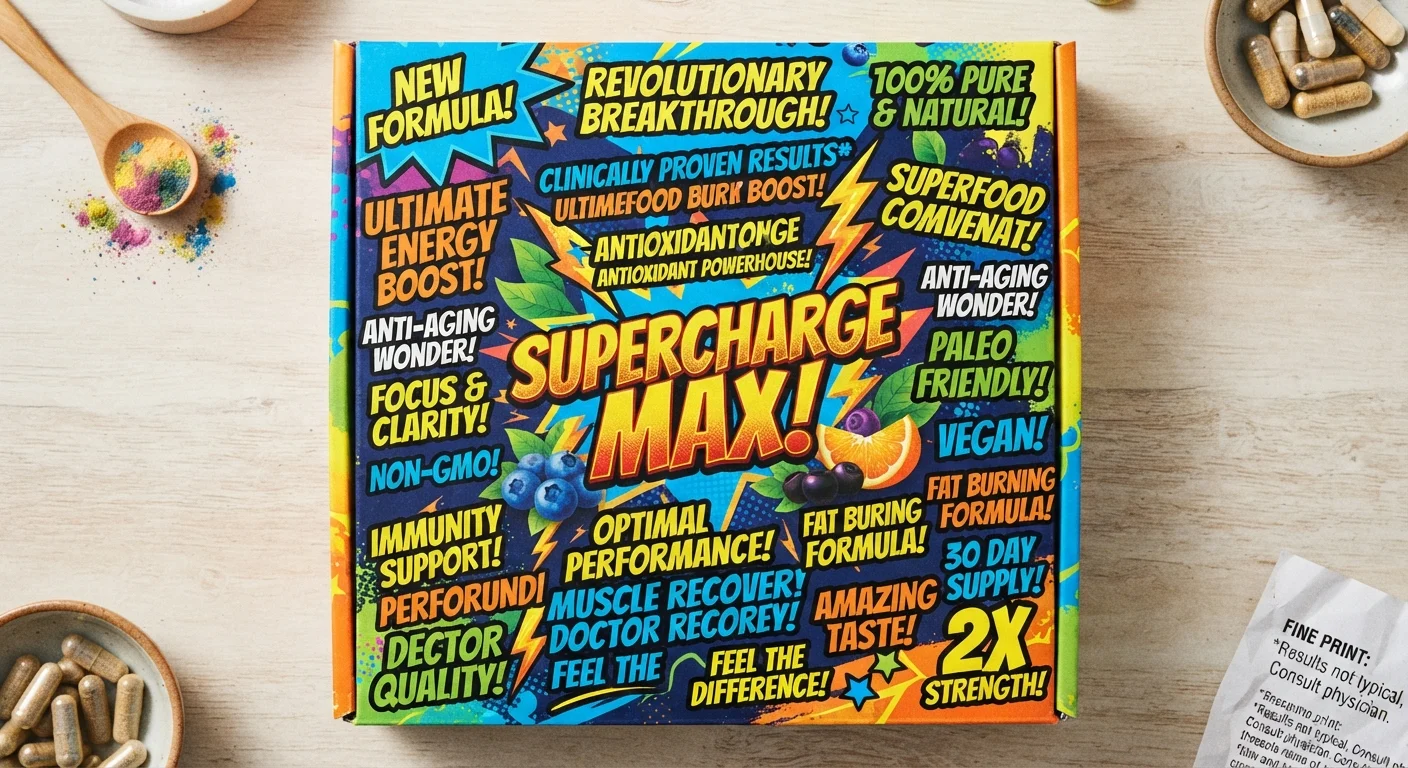
Why Buzzwords Work (Even When They Shouldn't)
Marketing language doesn't fool us because we're careless — it works because our brains are wired to use shortcuts when evaluating unfamiliar products. A word like "artisan" triggers associations with craft, care, and scarcity. That's useful when the word is accurate. The problem is that none of those associations are required to use the term.
Consumer psychology research has consistently shown that descriptive language — even vague or meaningless language — influences how people rate taste, quality, and willingness to pay. In one well-cited set of studies, renaming a dish with an evocative description increased both satisfaction ratings and perceived value, with no change to the product itself. Marketers have known this for decades.
The buzzwords covered in this article aren't illegal. In most cases, they aren't even technically false. They're simply undefined — which means they're free to mean whatever the seller needs them to mean at a given moment. Understanding that distinction is the foundation of smarter shopping. For a broader look at how packaging language operates, see our guide on reading product labels without getting fooled.
Myth
"Artisan" means the product was made by hand using traditional methods and special skill.
Fact
In most product categories, "artisan" has no regulated definition and can be applied by any manufacturer to any product.
The word artisan evokes small-batch production, skilled craftspeople, and premium ingredients. In practice, it is an unregulated marketing term in most U.S. product categories — including food, personal care, and home goods. A large-scale industrial bakery can legally label its output "artisan bread" with no obligation to change its process. The FDA does not define the term for food products, and no federal body enforces a craft-production standard for most goods that carry it. When evaluating a product labeled artisan, look instead at ingredient lists, production disclosures, or third-party audits.
Myth
"Clinical-strength" means a product has been tested in clinical trials and proven to outperform standard versions.
Fact
"Clinical-strength" is a marketing phrase, not a regulated claim. It doesn't require clinical trial data or independent verification.
This term appears most often on personal care products like antiperspirants, skin creams, and whitening treatments. It suggests medical-grade efficacy but carries no standardized meaning under U.S. consumer product regulations for most categories. A company can use it based on internal testing, reformulation, or simply as a tier name. Where a product has undergone genuine clinical testing, look for specific study references, published methodology, and independent replication — not just the phrase on the label. See what common label claims are actually allowed to say for more on how health-adjacent language is regulated.
Myth
"Professional-grade" means the product meets a higher standard used by industry professionals.
Fact
"Professional-grade" is self-defined by manufacturers with no required third-party testing or industry certification in most consumer categories.
The implication is that professionals use — and demand — this specific product or specification. In reality, the term is applied at the manufacturer's discretion across tools, cookware, cleaning supplies, and electronics. Genuine professional equipment often is meaningfully different from consumer versions: heavier-duty materials, higher duty cycles, serviceability, and different warranty terms. But those differences show up in spec sheets and construction details, not in the phrase "professional-grade" alone. When this matters to you, look for model numbers that are also sold through professional trade channels, and check measurable specifications.
Myth
"Natural" on a product label means it contains no synthetic ingredients or chemicals.
Fact
Outside of specific regulated categories, "natural" has no enforceable federal definition for most consumer products.
The FDA has a longstanding informal policy on "natural" for food — it generally means nothing artificial or synthetic was added — but the agency itself has acknowledged this definition is limited and contested. For personal care products and cleaning supplies, there is no federal standard at all. A product can call itself natural while containing highly processed ingredients, provided no outright false statement is made. Certifications from independent organizations with published ingredient standards offer more reliable signals than the word "natural" standing alone.
Myth
"Clinically proven" means a product's claims have been validated by rigorous, independent scientific research.
Fact
"Clinically proven" can legally refer to a single small study, an internal company test, or consumer perception surveys — not necessarily peer-reviewed trials.
This phrase sounds like it carries the weight of pharmaceutical-level evidence. In most consumer product advertising, it doesn't. "Clinically proven" typically means the company conducted or commissioned some form of structured test — the scope, sample size, methodology, and independence of that test are not specified by the phrase itself. Meaningful clinical evidence is usually citable: it appears in peer-reviewed journals, involves adequate sample sizes, uses blinded protocols, and is reproducible. If a product's website or packaging doesn't link to or identify a specific published study, the claim rests on marketing convention rather than scientific consensus.
What to Look for Instead
Replacing buzzword-scanning with a few concrete habits makes a measurable difference in purchase decisions.
- Third-party certifications: Look for marks issued by independent organizations with published testing criteria — not seals designed by the brand itself. These exist in categories ranging from organic food to electrical safety to energy efficiency.
- Ingredient and material disclosure: Regulated categories — food, cosmetics, cleaning products — require ingredient disclosure. A product that emphasizes its marketing language on the front but buries or omits specifics on the back is telling you something.
- Specification sheets: For tools, electronics, and appliances, manufacturer spec sheets list measurable performance data. Compare those numbers across options rather than relying on tier names.
- Return and warranty terms: Genuine confidence in product quality often shows up in generous, straightforward return policies and warranties. Vague or restrictive terms alongside premium positioning is worth noting.
Buzzwords aren't always a red flag — sometimes they're shorthand for something real. The goal isn't suspicion of all marketing language; it's knowing when a term is backed by something verifiable and when it's simply decorative. Our piece on what actually correlates with product quality covers that distinction in more depth.
~20%
Average price premium for "natural" label products
Research published in consumer behavior journals has found products labeled "natural" or "organic" command premiums often ranging from 15–25% over comparable unlabeled products, regardless of verified ingredient differences.
0
Federal agencies defining "artisan" for food
The FDA has not established a regulatory definition for "artisan" as applied to food products in the United States, leaving it entirely to manufacturer discretion.
None of this requires becoming a professional skeptic. A single habit — asking "what does this word actually guarantee?" before adding an item to your cart — goes a long way. And if the answer is "nothing in particular," that's useful information too. For more on recognizing when pricing and language patterns signal a problematic offer, see red flags that a deal is too good to be true.