
The Premium Pricing Illusion
When a product costs significantly more than its competitors, most shoppers assume there's a good reason — better materials, stricter manufacturing standards, longer lifespan. That assumption is understandable. It's also frequently wrong.
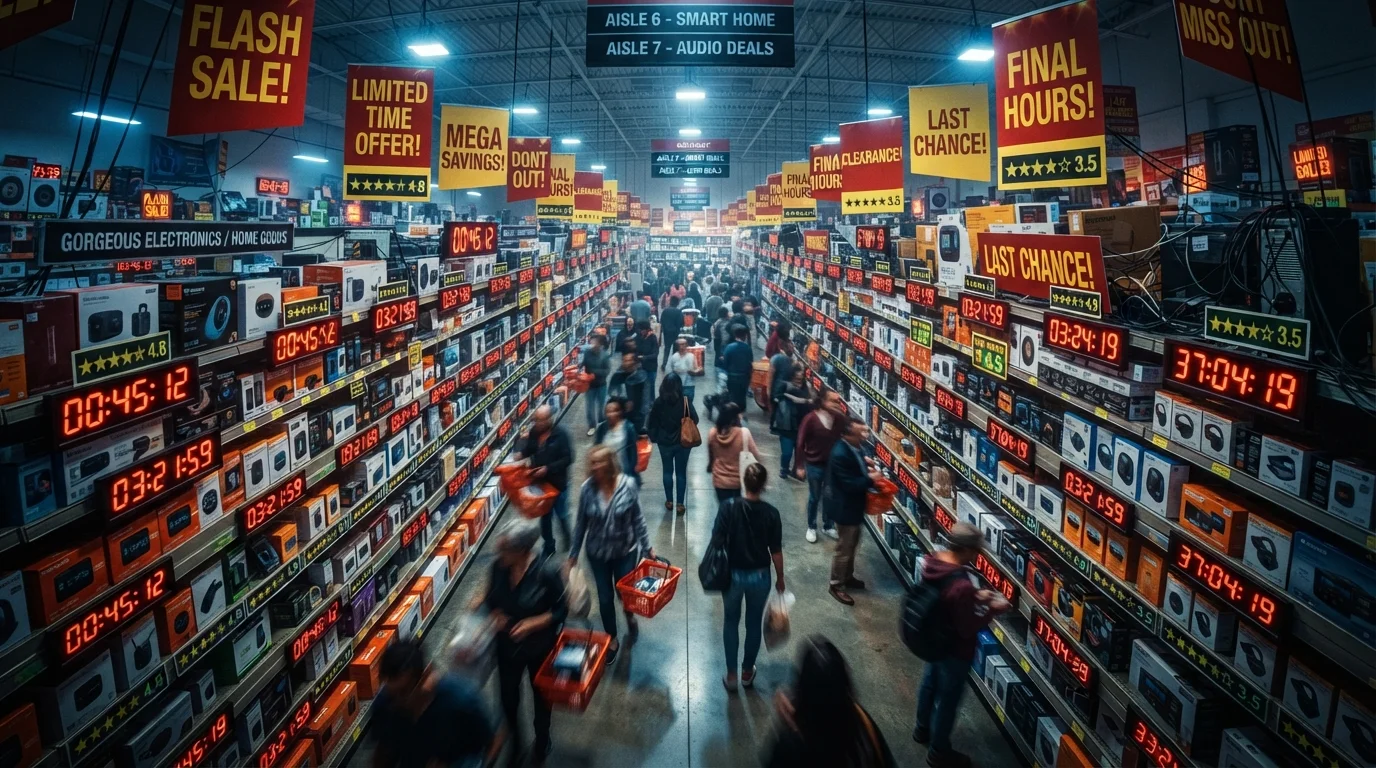
Pricing strategy in retail is driven by many factors that have nothing to do with functional quality: brand equity, packaging design, retail placement fees, celebrity endorsements, and advertising budgets. A product can carry a premium price purely because its manufacturer has invested heavily in perception, not performance.
This doesn't mean expensive products are never worth the money. Sometimes they genuinely are. The problem is that price alone is a poor guide to figuring out which is which. Understanding what signals actually correlate with quality — and what's just noise — is a skill that pays off across nearly every product category. For a deeper look at how language shapes what we think we're buying, see our plain-English breakdown of marketing buzzwords.
Myth
A higher price always means higher quality ingredients or construction.
Fact
Price reflects many factors unrelated to functional quality, including branding, packaging, and marketing spend.
Consumer research consistently shows weak correlation between price and independently verified performance in categories ranging from pantry staples to skincare. A significant portion of a product's retail price often goes toward advertising and retail placement rather than formulation or manufacturing. When independent testing organizations evaluate products across price tiers, mid-range items frequently match or outperform premium ones on measurable performance criteria.
Myth
If a product is marketed as 'professional-grade' or 'clinical-strength,' it meets a higher standard.
Fact
Terms like 'professional-grade' and 'clinical-strength' have no standardized regulatory definition in most product categories.
In the United States, most of these descriptors are purely marketing language — no government agency or independent body certifies that a consumer product lives up to them. A label reading 'professional-grade' can legally appear on a product that is functionally identical to a cheaper version. Shoppers are better served by looking for specific, verifiable claims: tested tensile strength, certified filtration ratings, or documented clinical trials with published results.
Myth
Premium packaging is a reliable sign of a premium product inside.
Fact
Packaging is a branding investment, not a quality guarantee — and it adds to the price you pay.
Elaborate packaging — heavy boxes, embossed logos, silk ribbons — costs money, and that cost is passed to the consumer. In some categories, a significant share of the retail price difference between a 'luxury' product and a store-brand equivalent is attributable to packaging and presentation alone, not to the contents. Evaluating the actual item specification rather than its wrapper is a more productive use of your research time.
Myth
Brand reputation is enough to guarantee consistent product quality over time.
Fact
Brand quality can shift significantly, especially after ownership changes, cost-cutting initiatives, or supply chain restructuring.
A brand that earned its reputation decades ago may have quietly reduced material quality, changed suppliers, or reformulated products since then. This is sometimes called 'brand coasting' — trading on historical goodwill while reducing production costs. Recent independent reviews and third-party test results are more relevant than a brand's historical prestige when making a current purchase decision.
Myth
Spending more upfront always saves money in the long run.
Fact
Longevity depends on design, materials, and maintenance — not price tier — and varies significantly even within premium lines.
The 'buy once, cry once' logic is appealing but unreliable as a blanket rule. Some expensive products do outlast cheaper alternatives; many don't. What actually predicts longevity is construction quality (jointery, weld quality, component grade), the availability of replacement parts, and whether the product can be repaired at a reasonable cost. A mid-range item with a solid repair ecosystem can deliver better lifetime value than an expensive product engineered for planned obsolescence.
What Actually Signals Genuine Quality
If price isn't a reliable indicator, what is? A few concrete signals hold up consistently across product categories.
~30–50%
Price premium attributable to branding, not product
Consumer economics research suggests a substantial portion of price differences between store-brand and national-brand equivalents reflects marketing expenditure rather than ingredient or material differences.
Frequent
Mid-range products outperform premium in blind tests
Independent testing organizations regularly find that mid-tier products match or beat premium-priced counterparts on objective performance measures across food, personal care, and household categories.
Material and construction specs. Look for published specifications — thread count ranges for textiles, gauge for cookware, IP ratings for electronics. These are measurable and comparable. Vague descriptors like 'premium materials' or 'high-quality components' are marketing copy; numeric specs are harder to fake.
Third-party testing and certifications. Organizations like NSF International, UL (Underwriters Laboratories), and the ASTM set verifiable standards that manufacturers must meet to earn a label. These certifications mean a product was tested by someone with no financial stake in the outcome — a meaningful difference from the manufacturer's own claims. Always check what body issued the certification and what it actually covers, since not all certifications are equal. Our article on reading product labels without getting fooled explains which label details actually matter.
Warranty terms and repairability. A manufacturer who stands behind a product offers a substantive warranty with clear, enforceable terms — not a 30-day limited guarantee buried in fine print. Repairability matters too: a product designed to be fixed rather than discarded signals confidence in its longevity. For more on evaluating post-sale terms, see our guide on warranty, return policy, and after-sale support.
Putting these signals together gives you a far more reliable picture than price alone. That's the practical core of what value actually means when you're spending your own money.