A practical checklist covering tires, fluids, lights, and more—so you catch small problems before they become roadside emergencies.
Key Takeaways
Tires are the single most critical item to inspect before any long drive.
Fluid levels - oil, coolant, and brake fluid - should always be checked cold and on level ground.
All exterior lights must be working before you leave; a burned bulb is an easy fix and a legal requirement.
An emergency kit in the trunk can make a breakdown far less dangerous.
Catching a small issue at home is almost always cheaper and safer than dealing with it on the road.
Why a Pre-Trip Check Is Worth 30 Minutes of Your Time
Most roadside emergencies - flat tires, overheating engines, dead batteries - don't appear out of nowhere. They develop from small, overlooked problems that a quick inspection would have caught. Running through this checklist before a long drive is one of the simplest ways to reduce your risk significantly.
This checklist is designed for everyday drivers, not mechanics. You don't need special tools for most of these items - just your eyes, your hands, and a few minutes of attention. For anything you're unsure about or that looks wrong, have a qualified mechanic take a look before you head out. If you're also planning the trip itself, our road trip planning guide covers the logistics side from route selection to rest stops.
Don't Skip This Step When You're Running Late
Time pressure before a trip is the most common reason drivers skip pre-trip checks - and one of the most common reasons they end up stranded. If you're short on time, prioritize tires, fluids, and lights at a minimum. A 10-minute check is far better than none at all, and pulling over on a highway shoulder is far more dangerous than leaving 15 minutes later.
What You'll Need
Before you start, gather a few basic supplies. Most drivers already have these items at home or in the car.
Required
Tire Pressure Gauge
Accurately measures tire inflation so you can adjust to the correct PSI before the drive.
Required
Flashlight or Work Light
Helps you inspect the engine bay, tires, and undercarriage in low-light conditions.
Required
Owner's Manual
Contains vehicle-specific fluid specifications, locations, and acceptable ranges for your exact model.
Required
Tread Depth Gauge or Quarter
Gives a quick, reliable read on whether your tire tread is still within a safe operating range.
Optional
Microfiber Cloth and Glass Cleaner
Used to clean the windshield interior and exterior for maximum visibility on the road.
Optional
Emergency Roadside Kit
Provides essential supplies - jumper cables, flares, first-aid items - if something goes wrong during the trip.
The Full Pre-Trip Checklist
Work through each group below systematically. The must items are non-negotiable - don't skip them under time pressure. Should items are strongly recommended for any drive over a couple of hours. Nice-to-have items add an extra layer of preparation that can make a real difference if something goes wrong far from home.
Tires
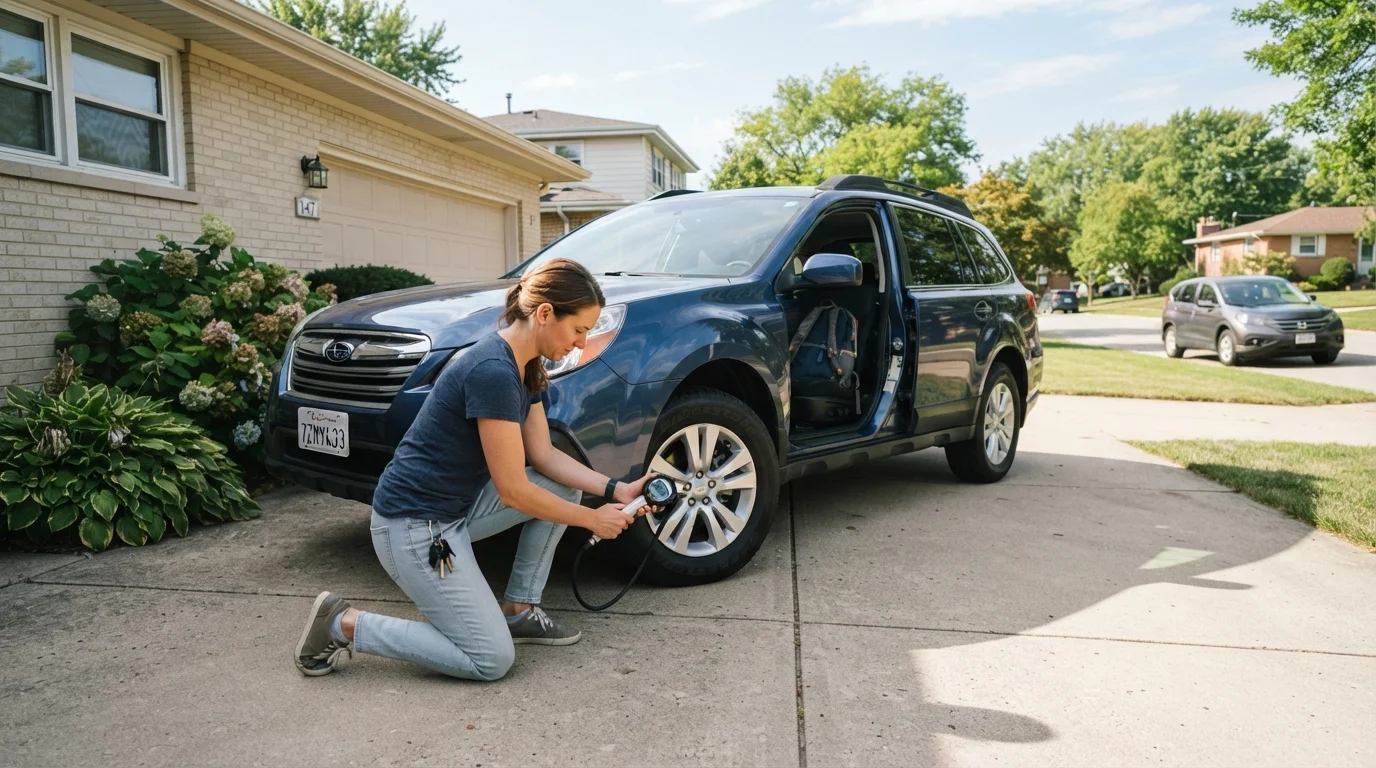
Check tire pressure on all four tires (including the spare) using a pressure gauge, and inflate to the PSI listed on the sticker inside your driver's door - not the number on the tire sidewall.Must
Inspect each tire's tread depth by inserting a quarter into a tread groove - if you can see the top of Washington's head, the tire is due for replacement.Must
Look for visible cracks, bulges, or embedded objects (nails, screws) in the sidewall and tread.Must
Confirm the spare tire is inflated and that the jack and lug wrench are present and accessible.Should
Fluids
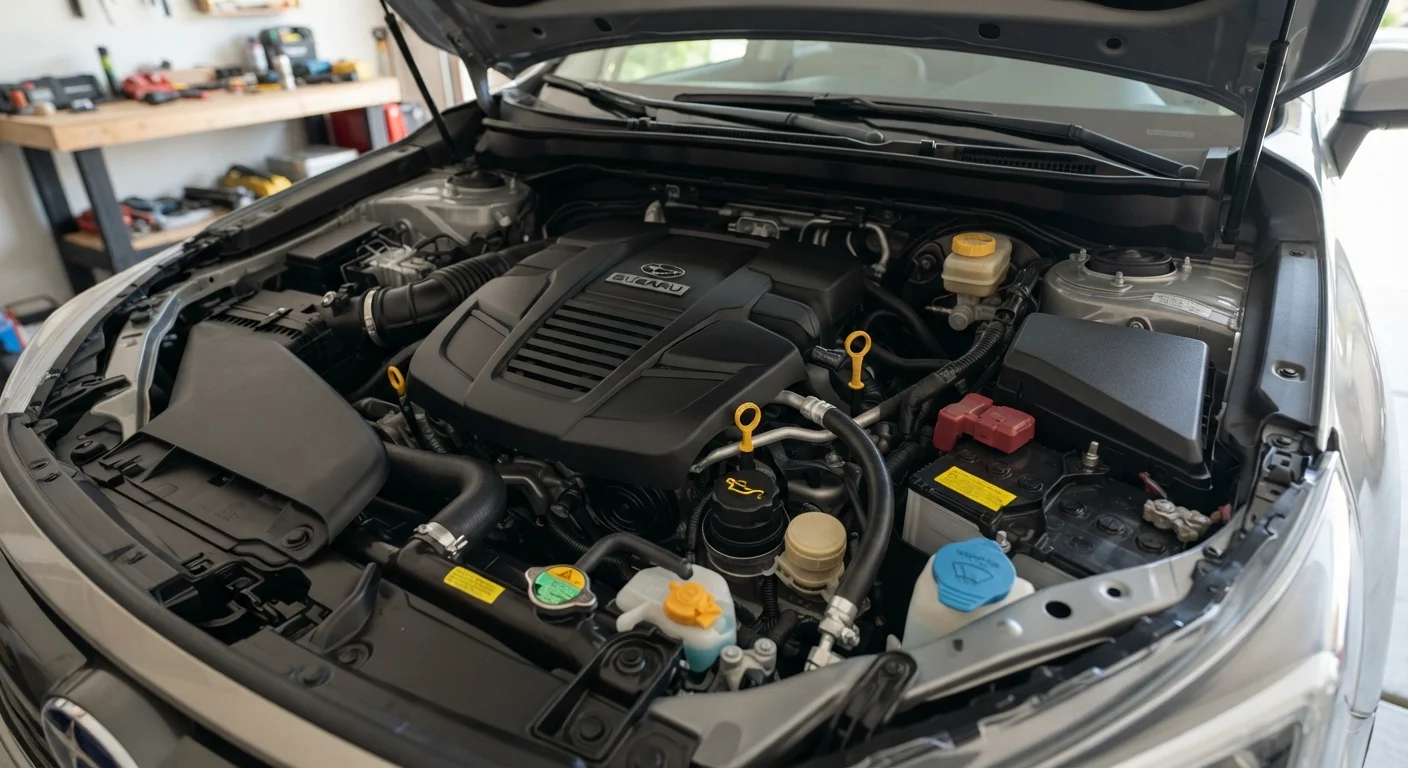
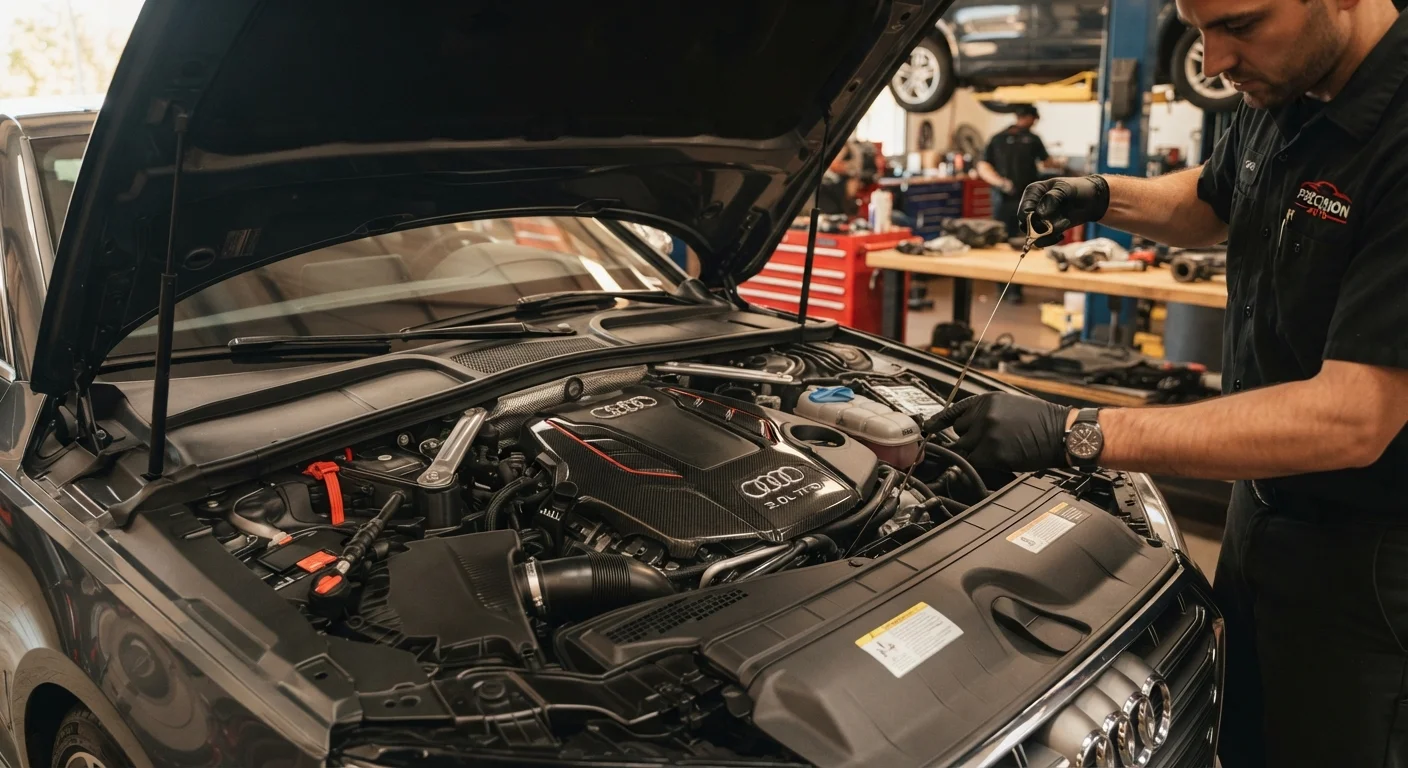
Check engine oil level using the dipstick with the engine cold - the oil should fall between the MIN and MAX marks and appear clean, not gritty or milky.Must
Inspect the coolant (antifreeze) reservoir level; it should sit between the LOW and FULL lines on the translucent tank.Must
Verify brake fluid level in the reservoir under the hood - if it's near or below the MIN line, have a mechanic inspect the brakes before driving.Must
Check windshield washer fluid and top it off if needed - visibility can deteriorate quickly on highways without it.Should
Inspect power steering fluid and transmission fluid if your vehicle allows access; consult your owner's manual for location and procedure.Nice to have
Lights and Visibility
Walk around the car and verify that headlights (low and high beam), taillights, and brake lights are all functioning.Must
Test turn signals and hazard lights - all four corners should flash at the same speed.Must
Clean the windshield inside and out, and check wiper blades for streaking or skipping; replace blades that leave smears.Should
Confirm reverse lights and license plate lights are working - these are easy to miss and commonly result in traffic stops.Nice to have
Under the Hood and Belts
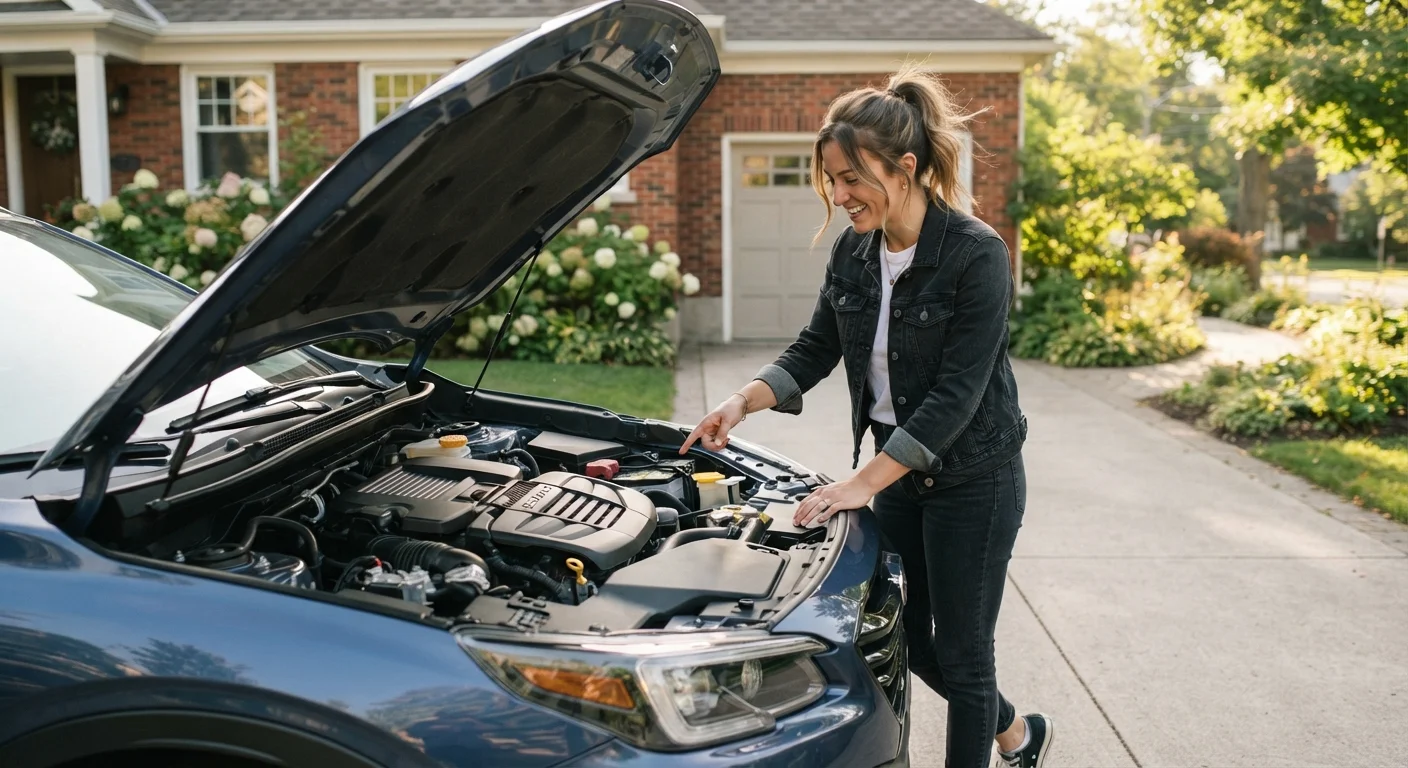
Visually inspect the serpentine belt (the main drive belt) for fraying, cracking, or glazing - a snapped belt can disable steering, charging, and cooling simultaneously.Should
Listen for any unusual sounds when you start the engine: squealing, knocking, or grinding are warning signs that warrant a mechanic's attention before departure.Must
Check battery terminals for corrosion (white or bluish crust); clean gently or have the battery tested if the car has been slow to start recently.Should
Emergency Preparedness
Pack a basic emergency kit: jumper cables (or a jump starter pack), a flashlight with fresh batteries, road flares or reflective triangles, and a first-aid kit.Should
Ensure your phone is fully charged and that you have a car charger or power bank for the trip.Should
Carry a physical copy of your route or download offline maps - cellular service can be unreliable in rural stretches.Nice to have
Confirm your vehicle registration, insurance card, and roadside assistance information are in the glove box and current.Must
Brake Concerns Mean Stop - Not Slow Down
If your brake fluid is consistently low, your brake pedal feels spongy or sinks toward the floor, or you hear grinding when you brake, do not drive until a qualified mechanic has inspected the system. Brakes are the most critical safety system on your vehicle. No trip is urgent enough to drive on compromised brakes.
If your dashboard lights up with any warning symbols when you start the car, check our guide to dashboard warning lights before deciding whether it's safe to proceed. And for everything that happens once you're on the highway, our highway safety guide is a practical companion read.
For broader vehicle upkeep between trips, the car maintenance hub covers routine care in more detail, including seasonal checks that complement this pre-trip routine.
Cars & Driving Editorial Team is the collective byline for our editorial team and contributor network. Articles published under this byline or an editorial pen name are researched, written, and reviewed according to our editorial standards for clarity, consistency, and independence before publication.
The content provided on our blog site traverses numerous categories, offering readers valuable and practical information. Readers can use the editorial team’s research and data to gain more insights into their topics of interest. However, they are requested not to treat the articles as conclusive. The website team cannot be held responsible for differences in data or inaccuracies found across other platforms. Please also note that the site might also miss out on various schemes and offers available that the readers may find more beneficial than the ones we cover.