Entering the Highway: Merging with Confidence
The on-ramp is where many highway crashes begin. The goal of an acceleration lane is exactly what the name implies: bring your vehicle up to the speed of highway traffic before you merge, not after. Attempting to merge at 40 mph into 70 mph traffic forces other drivers to brake or swerve - both hazardous outcomes.
As you accelerate, signal early, check your mirrors, and glance over your left shoulder to identify a gap. Aim to enter the gap smoothly without forcing anyone to adjust. If traffic is heavy and no gap opens, briefly slow to search for one - but never come to a complete stop unless the ramp itself is gridlocked. A stopped vehicle on a live merge lane is an extreme hazard.
Before You Merge: Speed Is Everything
Use the full length of the acceleration lane to match highway traffic speed. Drivers who merge too slowly create dangerous speed differentials that compress stopping distances for everyone behind them. Aim to reach highway speed at least 200 feet before the merge point.
Before your next long trip, review the pre-trip safety checklist to make sure your tires, mirrors, and lights are road-ready before you reach the on-ramp.
Lane Discipline and Following Distance
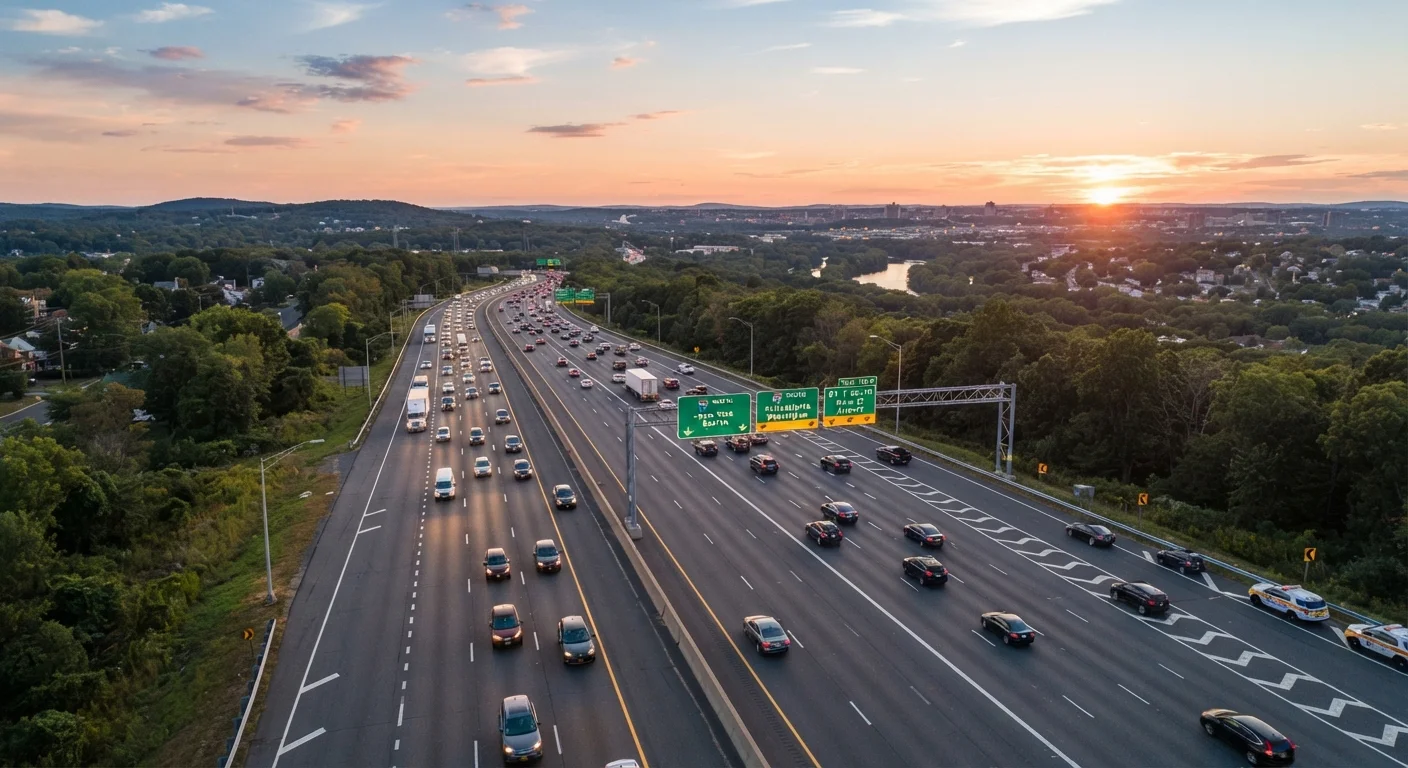
On American highways, the left lane is a passing lane - not a cruising lane. Traveling slowly in the left lane disrupts traffic flow and, in many states, is a traffic violation. The basic rule: drive in the right lane, use the left to pass, then return right.
Following distance is one of the most underestimated safety factors on the highway. The widely accepted standard is the 3-second rule: pick a fixed point ahead, watch when the car in front passes it, and count three full seconds before you reach the same point. At highway speeds, this gives you roughly 300 feet of stopping distance. In rain, fog, or heavy loads, extend that gap to 4-6 seconds. See our guide on driving in rain, snow, and ice for how weather changes the equation further.
3 sec
Minimum highway following distance
The 3-second rule is the standard recommendation from the National Safety Council for maintaining safe gaps at highway speeds.
~38%
Of fatal crashes occur on highways
According to NHTSA traffic safety data, a substantial share of fatal motor vehicle crashes in the U.S. takes place on major roads and interstates.
2 hrs
Recommended maximum drive time before a break
Major road safety organizations, including AAA, advise stopping at least every two hours to counter the effects of driver fatigue on long highway trips.
Safe Passing and Highway Speed
Passing on the highway carries real risk if done carelessly. Before moving left, check your mirrors and your blind spot, signal, and confirm the left lane is clear well ahead - not just immediately behind you. Accelerate steadily past the vehicle, then signal right and return to the right lane only after you can see the passed vehicle fully in your rearview mirror.
Avoid the common mistake of speeding dramatically to pass. A controlled pass at 5-10 mph above the vehicle you're overtaking is sufficient and far safer than a high-speed surge. Understand that posted speed limits are legal maximums, not suggested targets - and your safe speed should always account for traffic density, weather, and road conditions. For a deeper look at how road signs govern your decision-making, see what road signs are actually telling you.
Managing Blind Spots and Large Vehicles
Semi-trucks and large commercial vehicles have four significant blind spots: directly in front of the cab, directly behind the trailer, and along both sides - particularly the right side, which extends across nearly two full lanes. A reliable rule of thumb: if you cannot see the truck driver's face in their side mirror, they almost certainly cannot see you.
When passing a semi, do so decisively and in the left lane only. Avoid pacing alongside a truck for extended periods. Trucks also require substantially more stopping distance than passenger vehicles - allowing them extra space ahead prevents you from being caught in an emergency braking situation with nowhere to go. Your own mirrors should be properly adjusted before every highway trip; the bumper-to-bumper maintenance reference covers mirror and safety system checks as part of routine upkeep.
Handling a Breakdown or Emergency
If your vehicle begins to malfunction - unusual vibration, a warning light, smoke, or a blowout - the priority is to exit the travel lanes as quickly and safely as possible. Signal, check mirrors, and steer toward the right shoulder. Do not brake hard during a blowout; instead, grip the wheel firmly, ease off the accelerator, and let the vehicle slow naturally before steering toward safety.
Once stopped, get as far off the road as possible - beyond the fog line and ideally past the guardrail if you can safely do so. Turn on your hazard lights immediately. If you must exit the vehicle, do so from the passenger side away from traffic. Stay behind the guardrail rather than standing near your car. Call for help rather than attempting highway repairs in a live traffic zone.
Stay Out of the Travel Lane During a Breakdown
Standing beside a stopped vehicle in or near a travel lane is one of the most dangerous positions a driver can be in. Emergency responders consistently report that secondary collisions - drivers striking breakdown scenes - cause serious injuries. Move well beyond the shoulder's edge, remain behind any barrier, and wait for professional roadside assistance.
Driver Fatigue and Sustained Alertness
Fatigue impairs reaction time, judgment, and lane-keeping ability - effects that research consistently compares to alcohol impairment at certain levels of sleep deprivation. Highway monotony accelerates drowsiness even in well-rested drivers. The standard guidance is to stop for a break every two hours or 100 miles, whichever comes first.
Warning signs include frequent yawning, drifting between lanes, missing exits, and difficulty recalling the last few miles. If these appear, stopping at the next rest area or exit is the correct response - not opening a window or turning up the radio, which provide only momentary relief. Plan your stopping points before you leave using tools like a well-structured itinerary; the anatomy of a well-planned road trip walks through building a rest-stop strategy into your route from the start. Driving after dark adds another dimension of risk - see our guidance on night driving habits to adjust your approach accordingly.