The Core Difference Between Seeding and Sodding
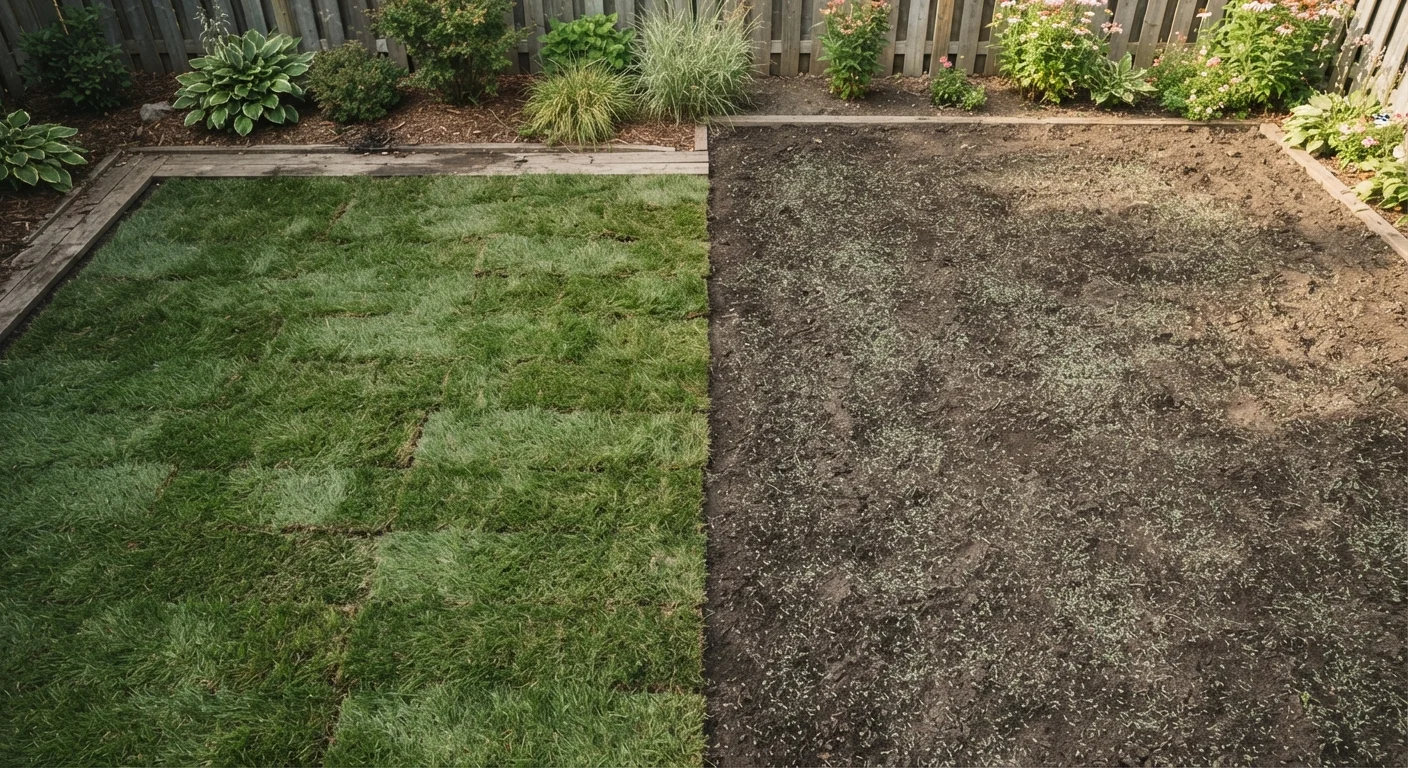
Starting a lawn from grass seed means broadcasting seed over prepared soil and waiting for germination, root development, and enough growth to fill in bare spots. It's the slower road, but it gives you access to a wide range of grass species and blends matched to your region, soil type, and sun exposure.
Sod is grass that has already been grown - typically for 12-18 months - on a farm, then cut into rolls or slabs with a thin layer of soil attached to the roots. You lay it directly over your prepared ground, and the existing roots knit into your soil over the following weeks. The lawn looks finished on day one.
Both methods are legitimate, and both can produce a healthy, long-lasting lawn. The right choice depends on your budget, timeline, yard conditions, and how much ongoing attention you can provide early on. See our seasonal prep guide to understand what soil work should happen before you commit to either approach.
| Criterion | Grass Seed | Sod |
|---|---|---|
| Upfront material cost | Low | High (3-5× seed) |
| Time to usable lawn | 6-12 weeks | 2-3 weeks |
| Grass variety selection | Very wide | Limited by local supply |
| Erosion control | Poor until established | Good from day one |
| Daily effort at install | Moderate (frequent watering) | High (installation labor) |
| Best timing | Fall or early spring (cool-season) | Spring-summer (warm-season) |
| Weed competition risk | Higher during germination | Lower (dense mat blocks weeds) |
| Root depth long-term | Often deeper | Slightly shallower initially |
Cost, Effort, and Timeline: What to Realistically Expect
Grass seed is considerably cheaper per square foot than sod - often by a factor of three to five when comparing material costs alone. However, seeding demands more sustained effort: you'll water lightly and frequently (sometimes twice a day) for several weeks, protect the area from foot traffic, and manage weeds that compete with young seedlings.
Sod requires a larger initial investment but less day-to-day management after installation. Watering is still essential in the first two to three weeks while roots anchor into your soil, but the window of intense care is shorter. If you're hiring labor for installation, sod projects also take longer per square foot to install than spreading seed.
Timing affects both approaches. Cool-season grasses - such as fescue, bluegrass, and ryegrass - establish best when seeded in late summer to early fall or in early spring. Warm-season grasses like Bermuda, zoysia, and St. Augustine root most successfully when sodded or seeded in late spring through midsummer. Starting outside these windows reduces your chances of successful establishment regardless of the method you choose. Our month-by-month lawn care reference can help you plan around your region's growing calendar.
3-5×
Sod's typical cost premium over seed
Landscape industry estimates generally place installed sod at three to five times the cost of seeding an equivalent area, though regional pricing varies.
6-12 weeks
Weeks before a seeded lawn tolerates traffic
University extension programs commonly recommend keeping foot traffic off newly seeded lawns for at least six weeks to allow adequate root development.
2-3 weeks
Weeks for sod roots to anchor in soil
Most turf specialists indicate sod achieves initial rooting in 14-21 days under consistent watering and moderate temperatures.
Soil Prep, Watering, and Long-Term Results
Neither method succeeds without proper ground preparation. For both seed and sod, that means removing debris and existing weeds, tilling the top 4-6 inches of soil, amending with compost if your soil is compacted or nutrient-poor, grading to ensure drainage away from structures, and finishing with a light raking to create a smooth, fine-textured surface.
Skipping soil prep is the most common reason new lawns fail - sod may look fine for a few weeks but then thin out as roots can't penetrate compacted ground, while seed germinates poorly in hard or crusted soil.
Once established, a seeded lawn often develops a deeper, more extensive root system than sod because the grass grows naturally into your native soil from the start. Sod occasionally shows a visible layering effect where the farm soil meets your native soil, which can briefly slow deep rooting - though this typically resolves within one growing season.
For ongoing lawn health, watering method matters as much as establishment technique. See our sprinkler vs. drip irrigation comparison to choose the right setup once your lawn is established.
A Note on Local Sod Availability
Sod farms typically grow only the grass varieties that perform well in their region, which means your options may be limited to two or three types locally. If your yard has deep shade, unusual soil conditions, or you want a specific species like fine fescue or centipede grass, seed may be your only realistic path to the variety you need. Call local nurseries or extension offices to find out what's available as sod in your area before making a final decision.