What Defines a Perennial vs. an Annual
The distinction is rooted in biology, not just gardening preference. An annual completes its full life cycle - germinating, growing, flowering, setting seed, and dying - within a single growing season. Once frost arrives, the plant is gone. Common examples include marigolds, zinnias, petunias, and impatiens.
A perennial, by contrast, lives for more than two years. The above-ground growth typically dies back in fall, but the root system survives winter and sends up new growth each spring. Coneflowers (echinacea), black-eyed Susans, hostas, and daylilies are all familiar perennials.
There is also a middle category worth knowing: biennials like foxglove and hollyhock take two years to complete their life cycle, flowering in the second year before dying. Most gardeners don't need to plan specifically around biennials, but it helps to recognize them when reading plant tags.
One important caveat: whether a plant behaves as a perennial in your garden depends on your climate. Many plants sold as annuals in northern states are actually tender perennials - plants that survive year-round in frost-free climates (USDA Zones 9-11) but can't withstand freezing winters elsewhere. Always check your local hardiness zone before assuming a plant will return.
| Criterion | Perennials | Annuals |
|---|---|---|
| Lifespan | 3+ years; returns each spring | One growing season only |
| Bloom duration | Often 2-6 weeks per season | Continuously from planting to frost |
| First-year performance | Modest; establishing roots | Strong; blooms prolifically |
| Upfront cost | Higher per plant | Lower per plant or from seed |
| Long-term cost | Lower; can be divided | Higher; must repurchase annually |
| Replanting required | No; returns on its own | Yes; every spring |
| Design flexibility | Lower; established plants stay put | High; start fresh each year |
| Climate dependency | Must match hardiness zone | Works in any zone for one season |
How Each Type Grows and Performs Over Time
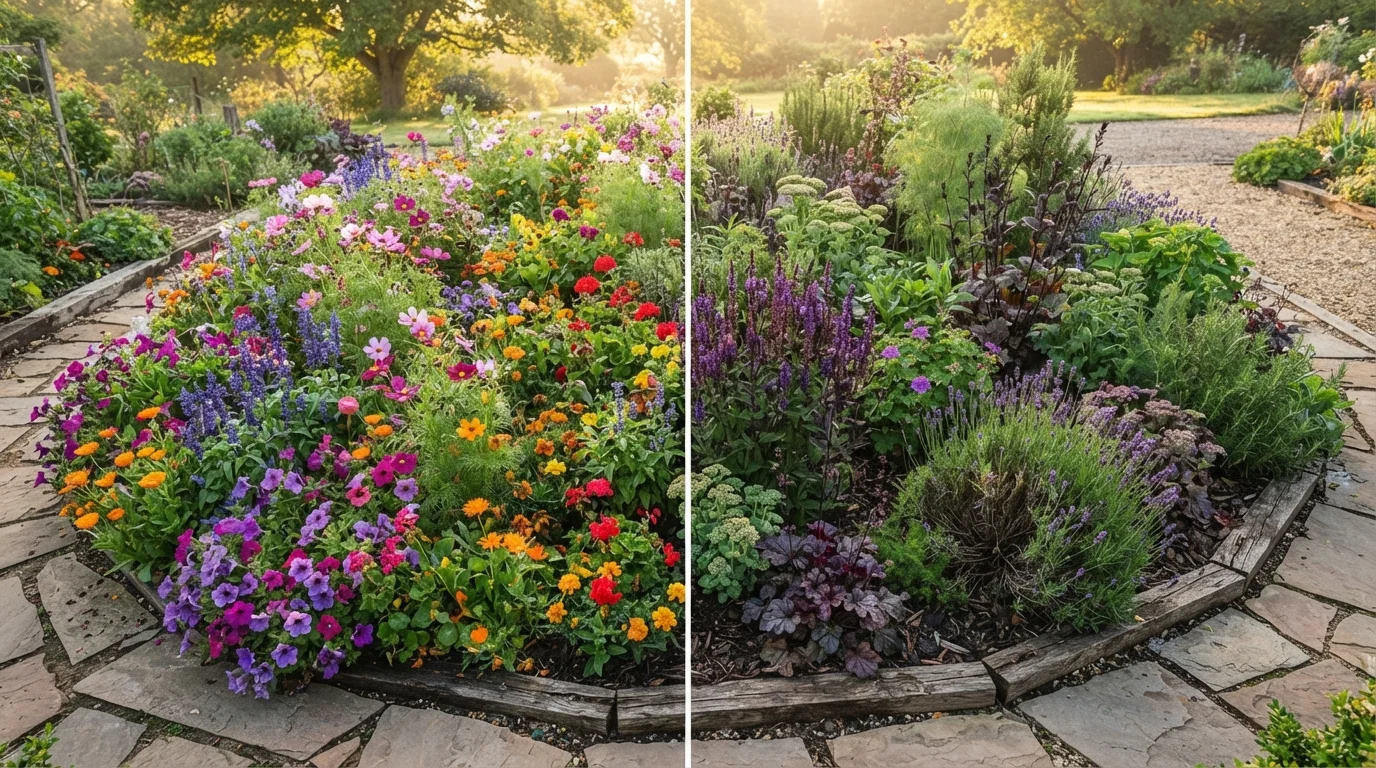
Annuals prioritize reproduction: because they have only one season to complete their life cycle, they channel energy into producing as many flowers and seeds as possible. This is why annuals tend to bloom heavily and continuously for months. Deadheading - removing spent flowers before they set seed - encourages annuals to keep blooming rather than slowing down. The tradeoff is that you start from scratch each spring, either buying transplants or starting seeds indoors.
Perennials operate on a longer timeline. In their first year, they focus on establishing roots rather than putting on a dramatic floral display - a pattern sometimes described as "sleep, creep, leap." You may see modest growth in year one, more in year two, and a fully established, spreading plant by year three. Their bloom windows are often shorter than annuals (typically two to six weeks), but they return reliably and can be divided every few years to create free new plants for other parts of the garden.
3 years
Typical perennial establishment period for full spread
Gardening extension services commonly describe the perennial growth pattern as 'sleep, creep, leap' - three seasons to reach mature size.
13
USDA Plant Hardiness Zones across the continental US
The USDA Plant Hardiness Zone Map, maintained by the US Department of Agriculture, divides the country into zones based on average annual minimum winter temperatures.
For a deeper look at how to prepare your garden beds before planting either type, see our spring garden prep checklist - it covers soil amendment, timing, and tool readiness.
Mixing Perennials and Annuals for a Reliable Garden
The most effective home gardens typically use both. A practical approach is to plant perennials as the structural backbone - choosing varieties with staggered bloom times so something is always flowering - then use annuals to fill color gaps during the stretches when perennials aren't at their peak.
For example, early-blooming perennials like bleeding heart may fade by midsummer, leaving bare space. Planting heat-loving annuals like zinnias or cosmos nearby fills that void without disturbing the perennial roots. This layered strategy also helps suppress weeds by keeping the soil covered throughout the season.
When planning any mixed bed, consider these factors:
- Bloom timing: Map out when each perennial flowers so you can identify gaps to fill with annuals.
- Height: Place taller plants at the back of a border so shorter plants aren't shaded out.
- Water needs: Group plants with similar irrigation requirements together. Our guide to drip irrigation vs. sprinklers can help you choose a watering system that works for mixed plantings.
- Soil preparation: Both types perform best in well-amended soil. If you're also growing food nearby, the soil advice in Your First Vegetable Garden applies to flower beds as well.
The goal is a planting plan that offers reliable beauty each season without requiring you to replant everything from scratch every year. Start with a few dependable perennials in your zone, add a handful of annuals for color, and adjust each spring based on what performed well.
Check Plant Tags Before You Buy
Plant tags at the nursery include critical information: the plant's common and botanical name, sun and water requirements, mature size, and - crucially - whether it is an annual, perennial, or tender perennial. Look for the USDA hardiness zone range listed on perennial tags. If your zone falls outside that range, the plant may not survive your winters, regardless of how it's marketed. When in doubt, ask nursery staff or consult your local cooperative extension service for regionally specific planting guidance.