
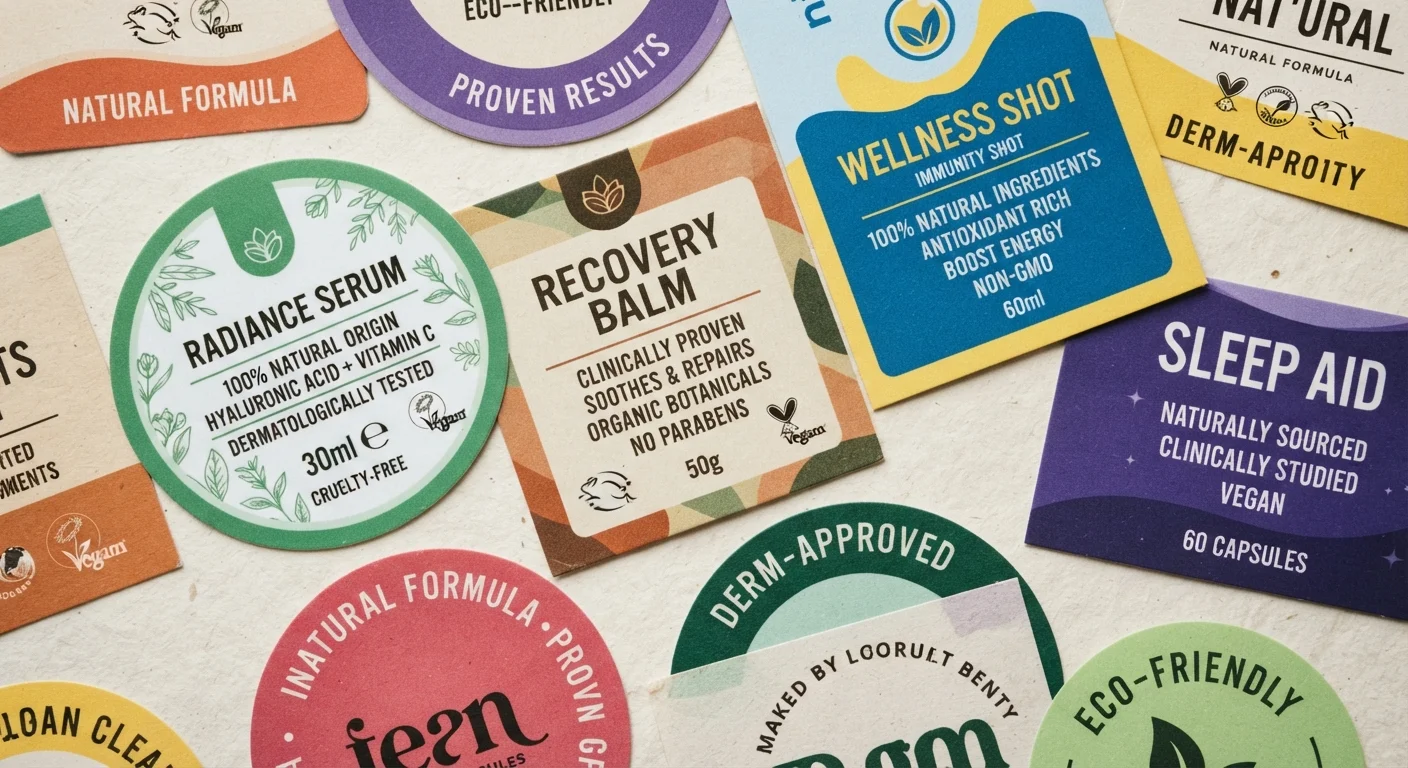
Why Label Claims Are Often Less Meaningful Than They Look
The front of a product package is prime real estate for marketing, not consumer protection. Manufacturers know that certain words — "natural," "pure," "clinically proven" — trigger trust. What most shoppers don't realize is that many of these terms are either loosely defined, entirely unregulated, or phrased in ways that are technically accurate but practically misleading.
Regulatory oversight varies significantly by product category. The U.S. Food and Drug Administration (FDA) governs food, drugs, and cosmetics. The Federal Trade Commission (FTC) polices advertising claims more broadly. The U.S. Department of Agriculture (USDA) covers meat and poultry labeling. But gaps exist in every category, and the burden of enforcement is reactive — meaning many misleading claims stay on shelves for years before anyone challenges them.
Understanding which claims are regulated, which are vague by design, and which are outright puffery can save you money and prevent you from overpaying for a perceived benefit that isn't there. See also: how to read product labels without getting fooled by the front of the box.
| Regulator for food label claims | U.S. Food and Drug Administration (FDA) |
| Regulator for advertising claims | Federal Trade Commission (FTC) |
| Most tightly regulated food label | USDA Organic certification (U.S. Department of Agriculture) |
| "Natural" definition for food | No formal FDA regulatory definition established (FDA Consumer Update) |
| "Hypoallergenic" standard for cosmetics | No federal standard exists (FDA) |
| Enforcement model | Reactive — agencies respond to complaints rather than pre-approving most claims |
A Plain-English Breakdown of Common Label Claims
Below are some of the most widely used label terms, what they actually mean under current U.S. rules, and what they do not guarantee.
Natural
For food, the FDA has not established a formal regulatory definition, though it generally allows the term when no artificial or synthetic ingredients have been added. It says nothing about how the product was grown, processed, or whether it is nutritious or safe.
Clinically Proven
This phrase has no standardized legal meaning. A company can use it if they conducted any study — including small, industry-funded, or unpublished trials — that produced a favorable result. It does not mean the claim survived peer review or regulatory scrutiny.
Organic
For food and some personal care products, USDA Organic certification requires meeting specific federal production standards. It is one of the more tightly regulated label claims, but the rules vary depending on the percentage of organic ingredients — '100% Organic,' 'Organic,' and 'Made With Organic' are not equivalent.
Hypoallergenic
No federal standard defines this term for cosmetics or personal care products. The FDA has noted that there is no basis for consumers to assume hypoallergenic products are less likely to cause reactions for them specifically.
Up To
A qualifying phrase that sets only the maximum possible outcome, not a typical or average result. "Up to 50% off" or "lasts up to 12 hours" legally requires only that the stated figure be achievable under some conditions.
Free-Range
For poultry, the USDA requires that birds have been allowed access to the outdoors. The regulation does not specify the size of the outdoor area, how long birds must have access, or what conditions outside must look like.
Dermatologist Tested
Means a dermatologist participated in some form of testing, but does not indicate the outcome, the test size, or whether results were reviewed independently. It conveys process, not a standard of safety or efficacy.
Puffery
A legal term for exaggerated, subjective claims that no reasonable consumer would take literally — such as 'the world's best coffee.' Courts and the FTC generally do not treat puffery as actionable false advertising.
For a deeper look at how these tactics show up in advertising and pricing language, the plain-English translation of marketing buzzwords is worth reading alongside this guide. And if you shop for food specifically, what food labels are actually telling you covers the nutrition facts panel in similar detail.
Pet Food Labels Follow Similar Patterns
The same skepticism useful for food and personal care labels applies when buying pet products. Terms like 'grain-free' and 'natural' are used loosely on pet food packaging too. For a category-specific breakdown, see what pet food ingredients really mean.
Practical Steps to Look Past the Label
Once you know what label claims can and can't promise, a few habits shift the way you shop:
- Flip to the back. Ingredients lists, supplement facts panels, and nutrition labels are more tightly regulated than front-of-package claims. The front sells; the back informs.
- Look for third-party certifications. Seals from independent certifying bodies — not seals invented by the manufacturer — represent external verification. Research the certifying organization before trusting the seal.
- Read the fine print on "up to" claims. "Save up to 40%" or "lasts up to 30 days" means the stated figure is the ceiling, not the average. Most users will experience less.
- Check the unit price, not the package claim. A "value size" isn't always cheaper per ounce. Retailers count on shoppers skipping this math.
The fine print retailers hope you never read covers where similar deceptive framing shows up in return policies and subscription terms — the same skepticism that applies to labels applies there too.