What Depreciation Actually Means for Your Wallet
When most people calculate car costs, they think about the monthly payment, insurance, and gas. What rarely makes the list is depreciation - yet it's typically the single largest expense of owning a vehicle. It's invisible on paper month to month, but it shows up as a real financial loss when you go to sell or trade in.
Here's the core idea: if you buy a new vehicle for $35,000 and sell it three years later for $22,000, you've absorbed $13,000 in depreciation. That's money you spent on the car that you'll never get back. Spread over three years, that's roughly $4,300 per year - often more than fuel costs.
Understanding depreciation changes how you approach every vehicle decision, from whether to buy new or used, to how long to hold onto a car before replacing it. For a deeper look at how purchase decisions connect to long-term costs, see our cost-per-use framework.
15-25%
Value lost in the first year of ownership
Industry valuation data consistently shows new vehicles experience their steepest decline within the first 12 months.
~50%
Value remaining after three years
Many new vehicles retain roughly half their original purchase price by the end of the third year, with wide variation by model and brand.
#1
Largest single cost of car ownership
Automotive cost-of-ownership analyses from sources like AAA consistently rank depreciation above fuel, insurance, and maintenance combined.
How Depreciation Unfolds Over Time
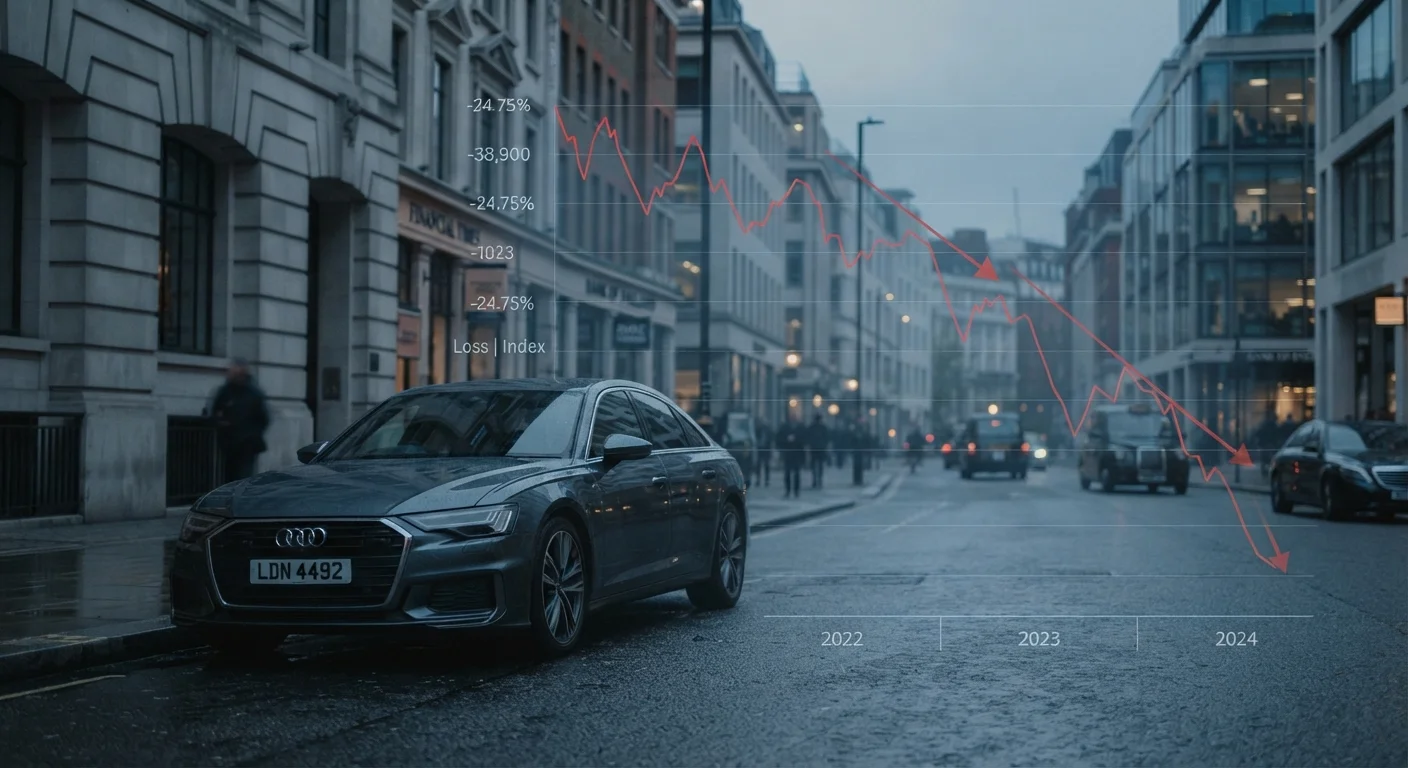
Depreciation isn't linear. The loss is front-loaded - meaning the sharpest drop happens in the earliest years of ownership and then gradually levels off.
- Year 1: Most vehicles lose 15-25% of their purchase price.
- Years 2-3: Value continues to fall, often reaching 40-50% of the original price by the end of year three.
- Years 4-5: The rate of loss slows, and older vehicles tend to stabilize in value.
This curve is why buying a vehicle that's already 2-3 years old is a common strategy for reducing the financial hit. The previous owner absorbed the steepest part of the curve. If you're navigating the buying process for the first time, our guide on the car-buying process from lot to keys walks through what to expect at every stage.
What Drives Depreciation - and What You Can Control
Several factors influence how quickly a specific vehicle loses value. Some are beyond your control; others you can actively manage.
Factors You Can't Control
- Brand and model reputation: Some manufacturers consistently command stronger resale values due to reliability perception and long-term market demand.
- Vehicle category: Pickup trucks and certain SUVs historically retain value better than luxury sedans or sports cars.
- Economic conditions: Gas price spikes can quickly tank demand - and resale values - for large SUVs and trucks.
- New model releases: When an automaker releases a significantly updated model, older versions often drop in value.
Factors Within Your Control
- Mileage: Lower annual mileage preserves value. Most valuation guides use 12,000-15,000 miles per year as a benchmark.
- Maintenance records: A documented service history signals reliability to future buyers and supports a higher resale price.
- Condition: Dents, worn interiors, and deferred maintenance all drag down what a buyer will pay.
- Color and configuration: Neutral colors and popular trim levels tend to attract more buyers, supporting value.
If you're weighing where to buy your next vehicle, our comparison of private sellers vs. dealerships covers how price, protection, and transparency differ between the two options.
Request a Vehicle History Report
When buying used, always request a vehicle history report to check for accident records, title issues, and odometer readings. Accident history is one of the fastest ways a vehicle loses value - and sellers aren't always upfront about it. A clean history report supports your negotiating position and protects your future resale value.
Using Depreciation to Make Smarter Ownership Decisions
Once you understand how depreciation works, several practical insights follow naturally.
Hold the car longer. The per-year cost of depreciation shrinks the longer you own a vehicle. A car that depreciates $15,000 over 10 years costs $1,500 per year in lost value. Sell after two years and you may absorb that same $15,000 in a fraction of the time.
Be realistic about trade-in timing. Trading in every two to three years is the most expensive ownership pattern from a depreciation standpoint. Dealers know this, and the pricing at trade-in reflects it. See why buyers often overpay at dealerships for more on how these dynamics play out.
Consider total cost, not just sticker price. A less expensive vehicle with poor resale value may cost more in total ownership than a pricier model that holds value. Factor depreciation into your comparison when choosing between options.
Maintain the vehicle diligently. Beyond mechanical reliability, good car maintenance habits directly support resale value - a well-documented service history is one of the most effective tools for minimizing depreciation loss at sale time.
This article provides general educational information about vehicle depreciation and is not financial or investment advice. Individual results will vary based on vehicle type, market conditions, and other factors. Consult a qualified financial professional for guidance specific to your situation.