
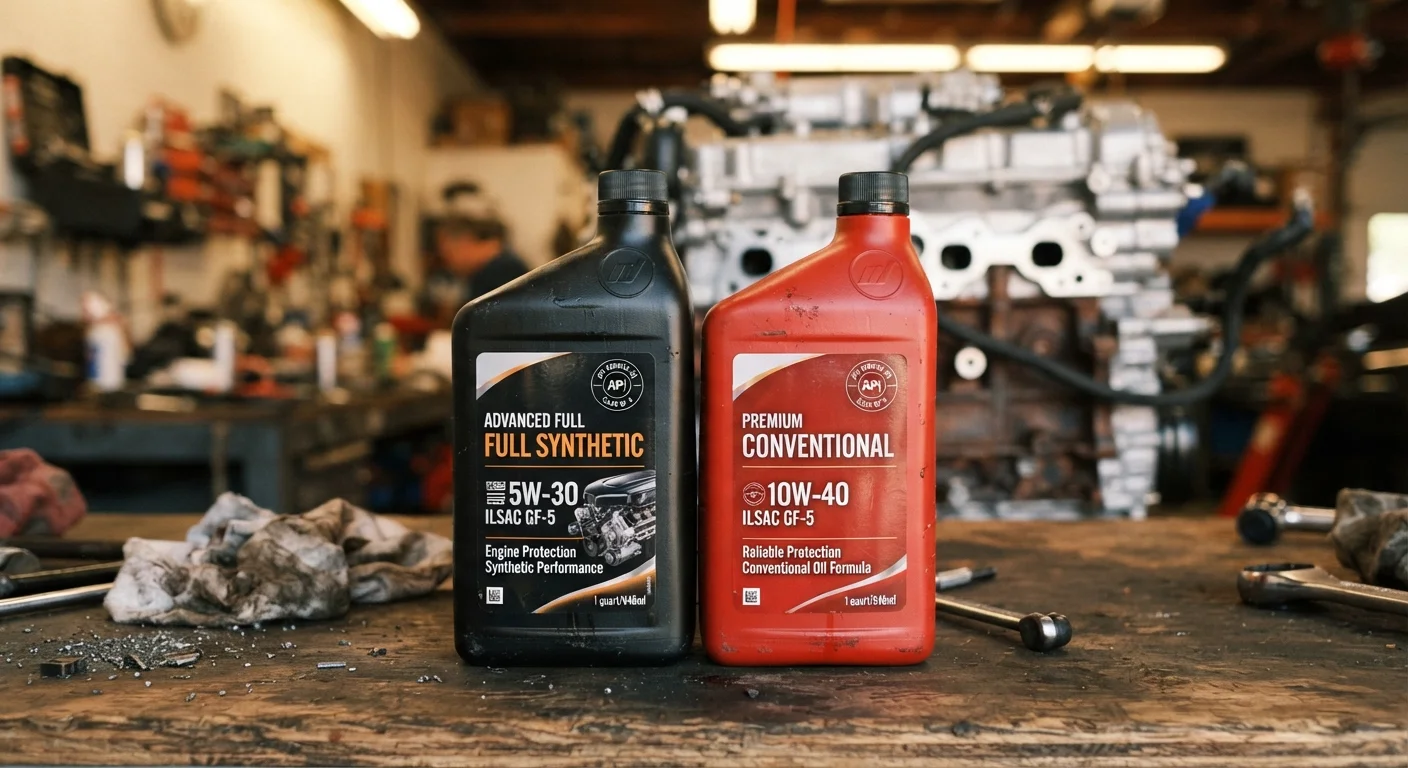
What Makes These Two Oils Different
Motor oil does two fundamental jobs: it lubricates moving metal parts to reduce friction and helps carry heat away from the engine. Both synthetic and conventional oils accomplish this, but they're made very differently - and that distinction matters in real-world driving.
Conventional motor oil is refined directly from crude petroleum. The refining process removes many impurities, but some molecular inconsistencies remain. Those inconsistencies can affect how the oil behaves under stress, particularly at temperature extremes.
Synthetic motor oil is chemically engineered - either built from scratch using chemical compounds or derived from a more intensively processed petroleum base. The result is a more uniform molecular structure that resists breakdown more effectively, flows better in cold weather, and maintains viscosity (its thickness and flow rate) better in high heat.
A third category, synthetic blend, mixes both types and sits somewhere in between on both performance and price. It's a practical middle ground some drivers find useful, though it doesn't fully replicate the performance ceiling of full synthetic.
| Criterion | Synthetic Motor Oil | Conventional Motor Oil |
|---|---|---|
| Source | Chemically engineered or highly processed | Refined from crude petroleum |
| Typical change interval | 7,500-10,000+ miles (verify with manual) | 3,000-5,000 miles (verify with manual) |
| Cold-weather performance | Flows readily at low temperatures | Thickens more in cold; slower initial flow |
| Heat resistance | Strong viscosity stability under high heat | More susceptible to thermal breakdown |
| Cost per quart | Higher upfront cost | Lower upfront cost |
| Suitability for older engines | Compatible with most; check high-mileage engines | Traditionally suited to older engine designs |
| Modern engine requirement | Often required by manufacturer specification | May not meet specs for newer engines |
Performance, Longevity, and Change Intervals
One of the most practical differences between these oil types is how long they last. Conventional oil typically holds up for roughly 3,000 to 5,000 miles under normal driving conditions before it begins to degrade meaningfully. Synthetic oil is engineered to remain stable for longer - commonly 7,500 to 10,000 miles or more, depending on the formulation and your vehicle.
However, the only authoritative source for your vehicle's oil change interval is your owner's manual. Manufacturers test their engines with specific oil types and set intervals accordingly. Following that guidance - rather than a generic rule of thumb - is the most reliable approach. For a deeper look at how oil degrades and what your oil life monitor actually measures, see our guide to oil change intervals.
It's also worth noting that driving conditions affect oil life regardless of type. Short trips, stop-and-go traffic, towing, and extreme temperatures all accelerate oil degradation. A driver whose vehicle sees mostly highway miles will likely get more out of each oil fill than someone doing frequent short urban trips.
5,000-10,000+
Miles between synthetic oil changes (typical range)
Exact intervals vary by manufacturer specification; always consult your owner's manual rather than relying on general estimates.
2-4×
Higher cost per quart of synthetic vs. conventional
Longer change intervals with synthetic can offset the higher per-quart price over the course of a year for many drivers.
Cost, Compatibility, and What Your Manual Actually Says
Synthetic oil typically costs more per quart than conventional - sometimes significantly so. But because synthetic can go longer between changes, the annual cost difference often narrows when you account for fewer service visits. Whether it represents an overall savings depends on your vehicle, driving patterns, and where you get the oil changed.
A persistent myth is that switching from conventional to synthetic will cause leaks in older engines. For the vast majority of vehicles, this isn't accurate - modern synthetic oils are compatible with standard engine seals. That said, very high-mileage engines with pre-existing seal wear may behave differently, so it's worth consulting a qualified mechanic before switching if your vehicle has significant miles on it. Our article on common car maintenance myths addresses this and other widely repeated misconceptions.
The clearest guidance available to any driver is sitting in the glove box: your owner's manual. It specifies the viscosity grade (such as 5W-30 or 0W-20) and often the oil type your engine requires. Some modern engines - particularly those with variable valve timing or turbocharging - are designed specifically for full synthetic. Running conventional oil in those engines can compromise performance and, over time, engine health. Our guide to reading your owner's manual explains what to look for and why it matters.
Consistent oil maintenance, regardless of which type you use, is a cornerstone of long-term vehicle health. For the broader picture on why upkeep pays off, see the long-term case for consistent vehicle upkeep.
When Your Manual Specifies a Type, Follow It
Some engines - particularly turbocharged, direct-injection, or those with advanced variable valve timing - are engineered specifically for full synthetic oil. Using conventional oil in these engines, even temporarily, can increase wear and potentially void warranty protections. If your manual specifies a particular oil type or viscosity grade, treat that as a requirement rather than a suggestion. A licensed mechanic can help clarify your options if you're uncertain.