Why These Moments Are So Dangerous
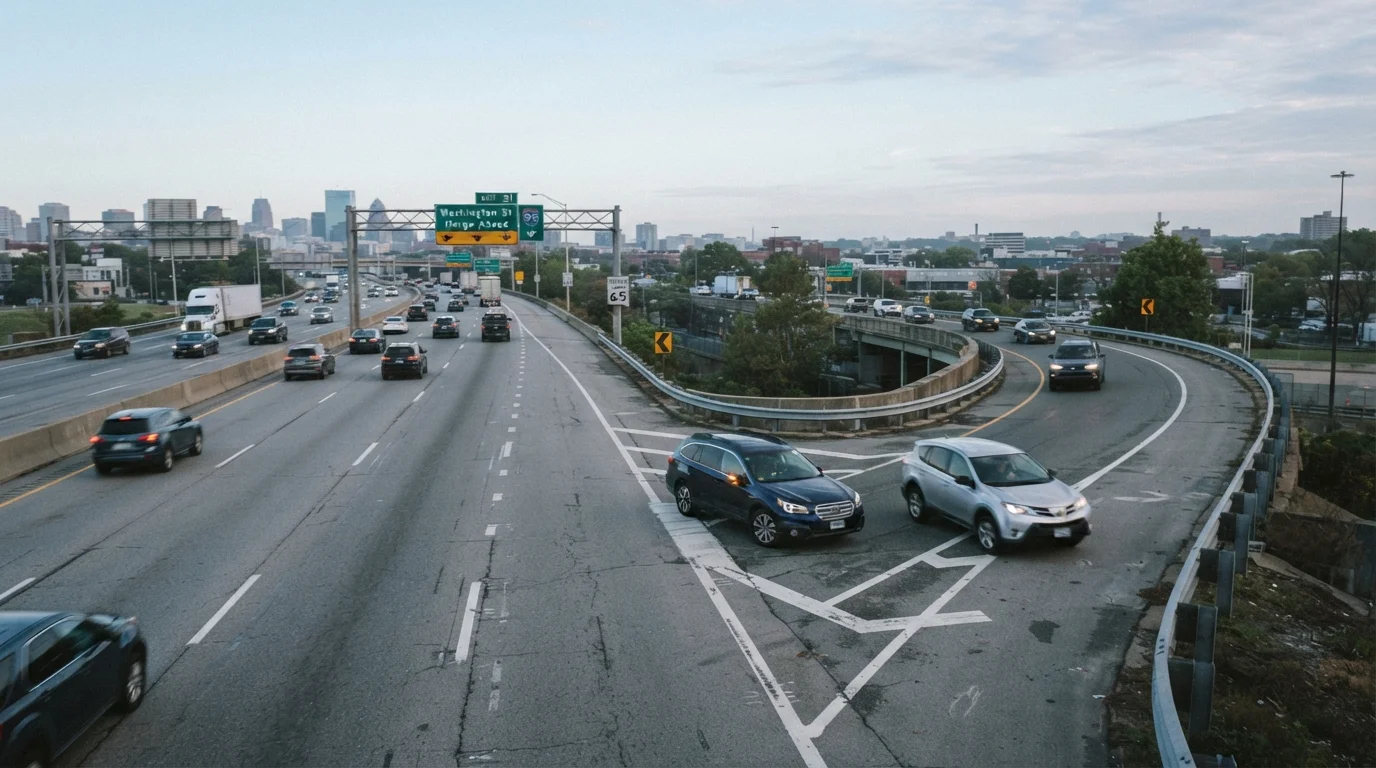
Merging and lane changes require drivers to do several things at once: monitor their own speed, track surrounding vehicles, judge gaps accurately, and communicate intent - all within a window of a few seconds. That cognitive load is exactly why these maneuvers account for a disproportionate share of highway incidents.
Unlike rear-end crashes, which often involve a clear chain of events, sideswipe and merge collisions tend to catch both drivers off guard. One vehicle drifts, the other has nowhere to go, and the contact happens before either person has time to react. Understanding the specific errors that lead to these moments is the first step toward avoiding them.
For a broader look at highway safety as a whole, see A Driver's Complete Guide to Staying Safe on the Highway.
~33%
Of all crashes involve lane changes or merging
The National Highway Traffic Safety Administration (NHTSA) has consistently identified lane-change maneuvers as a leading crash scenario in pre-crash typology studies.
2-3 sec
Minimum recommended following distance
Traffic safety organizations widely recommend the two-to-three second rule as a baseline for maintaining safe spacing, with greater distances in adverse conditions.
The Most Common Mistakes - and How to Fix Them
The errors below aren't rare or reckless - they're habits that develop gradually and feel routine until something goes wrong. Each one is correctable with a small, deliberate adjustment.
Failing to check blind spots before changing lanes.
Why it happens: Drivers often assume a quick mirror glance covers everything. Mirrors have fixed angles and leave zones - particularly beside the rear quarter panels - completely invisible.
Signaling too late - or not signaling at all - before a lane change or merge.
Why it happens: Many drivers signal simultaneously with moving, treating it as an announcement rather than a request. Others skip it entirely when traffic feels light.
Merging onto a highway at a speed significantly below the flow of traffic.
Why it happens: Cautious drivers sometimes brake or hesitate on the on-ramp, either because they're uncertain about gaps or because they're watching the merge point instead of building speed.
Changing multiple lanes in a single move.
Why it happens: Drivers realize late that they need to be in a far lane and attempt to cut across two or more lanes at once to make up for lost time.
Tailgating or closing gaps during a lane change without accounting for stopping distance.
Why it happens: Drivers often pull into a new lane and immediately close in on the car ahead, not realizing the gap they entered was already the minimum safe following distance.
Blind Spots Are Larger Than You Think
Every vehicle has zones beside and behind it that mirrors simply cannot cover. This is especially pronounced in SUVs, trucks, and vans. Before any lane change, a quick over-the-shoulder glance - not just a mirror check - is the only reliable way to confirm the space is clear. Relying on mirrors alone is one of the most common factors in sideswipe collisions.
It's also worth noting that distraction compounds every one of these errors. A driver who is partially focused elsewhere when initiating a lane change is less likely to complete a proper blind-spot check. For more on how partial attention affects driving safety, see Distracted Driving Myths That Give Drivers False Confidence.
Building Habits That Hold Up Under Pressure
Good lane-change technique isn't something most drivers practice deliberately - it tends to be learned once and then gradually eroded by the shortcuts that feel harmless in light traffic. The goal is to build a routine consistent enough that it holds even when conditions are stressful or unfamiliar.
Don't Match the Flow of Bad Habits
On highways where everyone seems to change lanes without signaling or merge at high speed, it can feel normal to do the same. Peer behavior on the road is not a reliable safety standard. Maintain your own signaling, spacing, and checking habits regardless of what surrounding traffic does - your risk doesn't decrease just because others are taking the same shortcut.
A few practical anchors worth reinforcing:
- Mirror setup matters before you drive. Adjust side mirrors before pulling out, not while moving. A correctly aimed mirror reduces blind-spot size significantly.
- Use the signal-check-move sequence every time. Signal first, then check, then move. Reversing that order defeats the purpose of signaling.
- Speed consistency reduces conflict. Unpredictable speed changes during merges force other drivers to brake or swerve. Why Speeding Is Riskier Than Most Drivers Assume explores how speed variation contributes to crash risk beyond just raw velocity.
- Night and poor-visibility conditions demand extra margin. Blind spots are harder to clear when visibility is reduced. Night Driving Habits That Significantly Reduce Your Risk covers adjustments that apply directly to merge and lane-change situations after dark.
These habits aren't about being overly cautious - they're about making the predictable moves that other drivers can read and respond to. Predictability is one of the most underrated safety tools on any highway.