What Each Approach Actually Involves
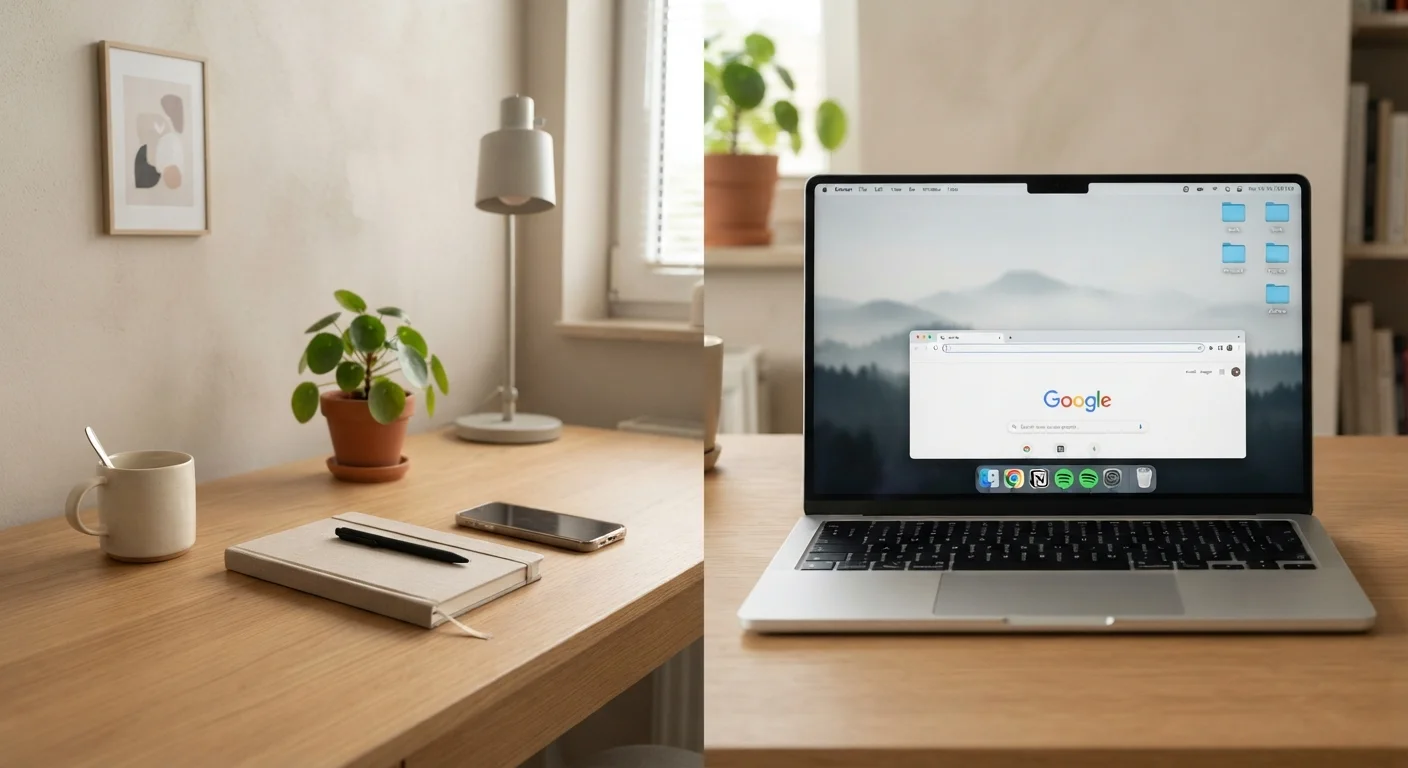
Physical decluttering is the process of evaluating every tangible object in your home - furniture, clothing, kitchen tools, paper - and removing what no longer serves you. The goal is a living space where everything has a purpose and a designated place. For a structured way to move through each room, see our room-by-room decluttering roadmap.
Digital minimalism applies the same logic to your screens: emails, files, apps, subscriptions, photos, and notifications. The aim is to reduce digital noise so your devices work for you rather than pulling your attention in a dozen directions at once.
Both share a common philosophy - intentional ownership - but the methods, timelines, and skills involved differ meaningfully.
| Physical Decluttering | Digital Minimalism | |
|---|---|---|
| Primary focus | Objects, furniture, paper, clothing | Files, apps, emails, subscriptions, photos |
| Visibility of clutter | Immediately visible and tangible | Largely invisible; felt as friction |
| Motivational feedback | High - results are instant and sensory | Lower - gains are functional, not visual |
| Reversibility | Low - donated items are gone | Perceived as high - encourages over-archiving |
| Tools required | Bins, labels, storage solutions | Cloud storage, folder systems, app audits |
| Maintenance frequency | Weekly tidying, seasonal review | Weekly inbox check, monthly file review |
| Common pitfall | Organizing without removing items | Archiving instead of deleting |
Where They Overlap
The most important insight is that physical and digital clutter feed each other. A disorganized home often reflects (and reinforces) disorganized digital habits. Bills that go unopened in a pile on the counter are the same problem as unread emails sitting in an inbox - both signal a missing system for incoming information. Our article on stopping paper clutter before it piles up explores exactly this overlap.
The mindset shift needed is also identical: move from reactive accumulation to intentional curation. You stop asking "Should I get rid of this?" and start asking "Does this earn its place in my life?" That question works equally well for a kitchen gadget and a smartphone app.
Link Your Habits Across Both Worlds
When you sit down to sort a physical category - say, your home office desk - pair it with a 10-minute digital equivalent like clearing your downloads folder or unsubscribing from three email lists. Linking the two habits reinforces the same mindset and makes both feel like a single, unified routine rather than two separate chores.
Where They Differ - and Why That Matters
Physical clutter is immediate and sensory. You see the pile, you feel the cramped room, and clearing it produces a visible, satisfying result. That tactile feedback is motivating. Digital clutter, by contrast, is largely invisible - a phone can look perfectly sleek while hiding 4,000 unorganized photos and 60 unused apps draining battery and attention.
This invisibility makes digital clutter easier to ignore and harder to feel urgency about. It also means digital organizing requires more self-awareness: you have to notice the friction (slow device, constant notification interruptions, time lost searching for files) before the problem feels real. Once you recognize those signals, you can treat them with the same priority you'd give a cluttered closet.
Another key difference is permanence. Donating a physical item is final. Deleting a digital file can feel reversible - and that perceived reversibility leads many people to archive rather than delete, recreating the same congestion in digital form. Building a firm deletion habit, much like the one-in-one-out principle for physical belongings, helps break this cycle.
Building a Practical System for Both
The most sustainable approach treats physical and digital organizing as parallel habits rather than one-time projects. Here's a simple framework:
- Start physical. Tackle one room or category at a time. The visible progress builds momentum. If you're not sure where to begin, our guide to decluttering a whole house walks through exactly that sequence.
- Mirror the habit digitally. Once a room is clear, apply the same session to its digital equivalent: clear your downloads folder when you organize your desk, unsubscribe from emails when you sort mail.
- Schedule maintenance. A 10-minute weekly review - physical tidy-up plus inbox and file check - prevents backslide more effectively than annual purges. Learn why efforts stall without these habits in our piece on why decluttering never seems to stick.
- Set entry rules. Before a new physical item enters your home, ask if it has a place. Before a new app or subscription, ask if it replaces something existing.
These systems work in rented studios as readily as in large homes - for tailored strategies in compact spaces, see storage strategies for small apartments.