What Each System Actually Does
Cruise control locks your vehicle's speed at a set point, removing the need to hold constant throttle pressure with your foot. Standard systems maintain exactly the speed you program - they do not respond to traffic, road surface changes, or curves. Adaptive cruise control (ACC), a more advanced variant, uses sensors to detect the vehicle ahead and automatically adjust speed to maintain a set following distance.
Manual throttle simply means you control accelerator input directly with your right foot, modulating speed continuously in response to everything happening around you. It's not a technology - it's the default state of driving that cruise control temporarily replaces.
The safety question isn't which one is inherently better. It's which one is appropriate for the conditions you're actually in. Most drivers underestimate how narrow the ideal window for cruise control really is. For a broader look at highway driving habits, see our complete highway safety guide.
Where Cruise Control Has a Clear Advantage
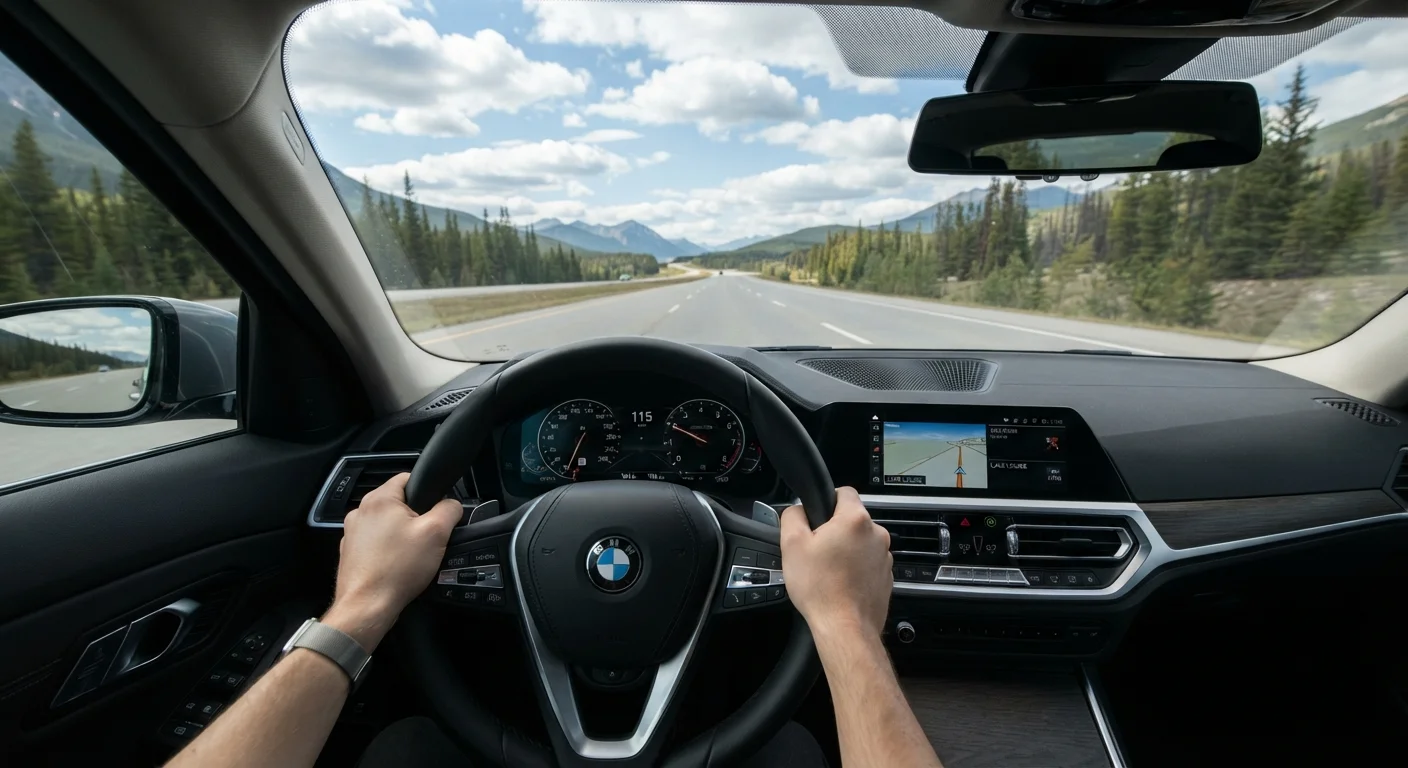
On long, flat, dry interstate stretches with light traffic, cruise control offers genuine safety benefits that often go underappreciated.
- Speed consistency: Research from highway safety authorities has consistently found that speed variation - not just high speed - contributes to collision risk. Cruise control eliminates the gradual, unconscious speed creep that affects nearly all drivers on long trips.
- Fatigue reduction: Maintaining constant throttle pressure is a small but real source of driver fatigue. Reducing that physical load over a four-hour drive matters, especially for older drivers or those with leg discomfort.
- Speeding prevention: Drivers distracted by conversation or audio frequently accelerate without realizing it. A locked speed setting prevents this. As our speeding risk explainer details, even modest speed increases meaningfully raise crash severity.
ACC adds a further layer: by maintaining a gap to the vehicle ahead, it reduces the risk of rear-end collisions during gradual traffic slowdowns - one of the most common highway crash types.
| Criterion | Cruise Control | Manual Throttle |
|---|---|---|
| Best road conditions | Dry, flat, straight highways | All conditions, especially variable ones |
| Wet or icy roads | Significant safety risk | Recommended - full driver control |
| Driver fatigue over long trips | Reduces leg fatigue | Higher physical demand over long hauls |
| Speed consistency | Precise, automatic | Subject to unintentional drift |
| Response to traffic changes | Delayed (disengagement lag) | Immediate |
| Hilly or winding roads | Can overspeed on descents | Driver anticipates and adjusts |
| Distracted speeding prevention | Strong - speed is locked | Depends entirely on driver attention |
When Manual Throttle Is the Safer Choice
Cruise control's limitations become genuine hazards in several common scenarios. Drivers who understand these boundaries are significantly better positioned to avoid crashes.
Wet, Icy, or Snowy Roads
This is the most critical limitation. When cruise control disengages on a slippery surface - triggered by wheel spin or a speed drop - the sudden change in power delivery can cause the vehicle to skid or fishtail. Many manufacturers explicitly warn against cruise use on slippery roads in their owner's manuals. (For more on adjusting your technique in bad weather, see our wet and icy road driving guide.)
Curves and Hilly Terrain
Standard cruise control accelerates on downhill grades to maintain the set speed, which can carry dangerous momentum into curves. Manual throttle lets you begin slowing before you reach the bend - not as a reaction to it.
Dense or Unpredictable Traffic
Merging vehicles, sudden braking, and shifting lane patterns require split-second responses. Lane changes and blind-spot situations are already high-risk moments; adding the brief lag of cruise disengagement to that equation only increases exposure.
~40%
Highway crashes involving rear-end collisions
According to the National Highway Traffic Safety Administration, rear-end crashes are among the most common collision types on U.S. highways, often linked to speed mismanagement in traffic.
3-4×
Increased crash risk in wet conditions without adjustment
The Federal Highway Administration estimates that wet pavement contributes to roughly 70% of weather-related crashes annually, underscoring the importance of appropriate speed control strategies.
Practical Guidelines for Choosing Between Them
A useful mental checklist before engaging cruise control on any trip:
- Is the road surface dry and clear? If there's any moisture, ice, or loose debris, keep your foot on the pedal.
- Is traffic light and predictable? If you're already modulating speed every 30 seconds to account for other vehicles, cruise control isn't helping.
- Is the road reasonably straight and flat? Rolling hills or winding sections call for continuous manual adjustment.
- Are you alert? Cruise control can encourage a false sense of passivity. You still need to steer, scan, and be ready to brake or swerve at any moment.
Your vehicle's owner's manual will often include manufacturer-specific guidance on cruise control use and terrain limitations. Reading that manual is one of the simplest ways to understand your specific system's capabilities and warnings.
Switching between cruise and manual isn't a sign of indecision - it's the mark of a driver who understands that conditions change and tools have limits.
Adaptive Cruise Control Is Not Autonomous Driving
ACC systems that maintain a following gap are a safety improvement over fixed-speed cruise, but they are not self-driving features. They can struggle with cut-in vehicles, stopped traffic, or poor sensor visibility in rain and snow. Drivers must remain fully alert, hands on the wheel, and ready to intervene at any moment. No current production vehicle sold in the U.S. is certified for unsupervised autonomous operation on public roads.