Why Speed Limits Aren't Just Arbitrary Numbers
It's easy to view a speed limit sign as a bureaucratic rule - something to comply with to avoid a ticket. But speed limits are the result of engineering analysis, crash data review, and observations of actual driver behavior on a given road. When a limit is set, engineers look at factors like sight distance (how far ahead a driver can see), road curvature, intersection density, and surrounding land use - whether the road runs through a school zone, a residential neighborhood, or an open rural corridor.
The posted number represents a judgment about what speed is reasonably safe under normal, ideal conditions. That word - ideal - is crucial. It assumes dry pavement, clear visibility, and alert, sober drivers. Change any of those variables, and the limit that felt appropriate can become dangerously optimistic. As this breakdown of speeding risk explains, the physics of speed mean that even modest increases in velocity create dramatic increases in crash severity.
How Road Design Shapes Your Behavior Without You Realizing It
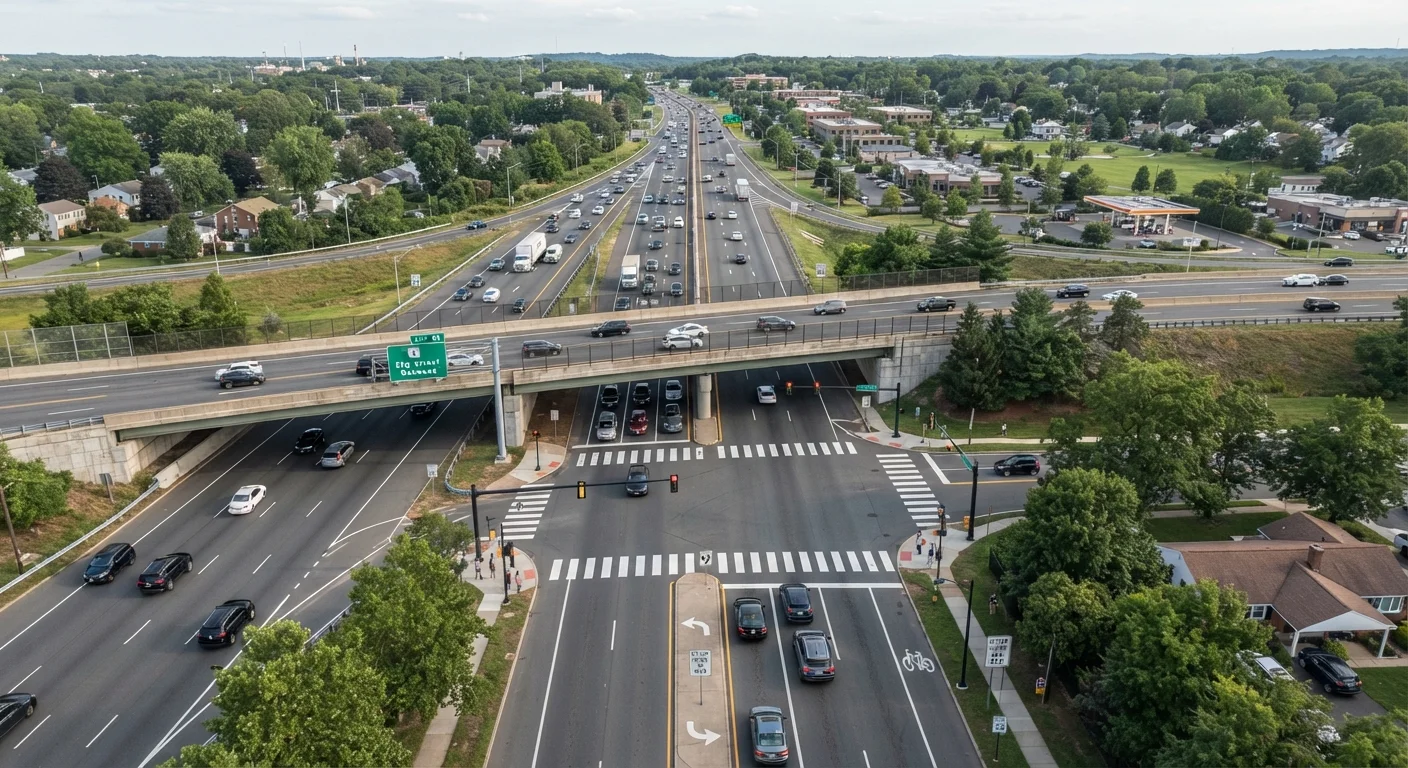
Roads communicate with drivers constantly - not through words, but through geometry. A wide, straight highway with broad shoulders sends a clear message to your brain: this environment is expansive and forgiving, you can move through it quickly. Narrow residential streets with parked cars and tight turns send the opposite signal. This is not a flaw; it's by design. Traffic engineers deliberately use physical cues to influence driver speed.
The problem arises when the road's design cues and the posted limit pull in opposite directions. A newly widened road in an older residential neighborhood, for example, may carry a 25 mph limit but feel, to most drivers, like a 40 mph road. The environment is louder than the sign. This is why cities increasingly invest in traffic calming measures - narrowing lanes, adding roundabouts, installing raised crosswalks - to bring the physical experience of the road into alignment with its intended speed. See how intersection design specifically affects safety in our guide to roundabouts, four-way stops, and yield signs.
Adjust Your Speed for Actual Conditions
The posted speed limit applies under normal, ideal conditions. When visibility drops, pavement is wet, traffic thickens, or you're in an unfamiliar area, slow down proactively - don't wait for conditions to become obviously dangerous. A few mph of margin can dramatically increase your stopping distance and reaction time.
Sight lines matter especially at night. Roads that feel comfortable at 45 mph in daylight may be genuinely dangerous at that speed after dark, when headlights can't illuminate hazards far enough in advance. Adjusting your speed after sunset is one of the most practical safety habits you can build.
The Human Variable: Where Drivers Actually Have Control
Speed limits and road design define a framework, but driver behavior determines outcomes. Two drivers on the same road, with the same posted limit, can make very different decisions - about following distance, speed relative to conditions, attention level, and how they respond to other drivers around them.
One consistent finding in traffic safety research is that the gap between legal and safe is often created by context, not just speed. A driver doing exactly 65 mph on a congested highway in a rainstorm may be in more danger than one doing 55 mph on a clear highway. Adjusting to actual conditions - not just the posted number - is a foundational safe driving skill. This connects directly to why following distance matters so much: speed and spacing are inseparable.
Emotional State Affects Driving Decisions
Aggressive driving often emerges when drivers feel that road conditions or other drivers aren't matching their expected pace. Understanding the escalation from frustration to dangerous behavior is worth examining - our article on tailgating and road rage patterns walks through how these situations typically develop and how to interrupt them. Staying aware of your own reactions is as important as tracking your speedometer.
Aggressive driving often emerges when drivers feel that road conditions or other drivers aren't matching their expected pace. Understanding the escalation from frustration to dangerous behavior is worth examining - our article on tailgating and road rage patterns walks through how these situations typically develop and how to interrupt them.
Staying aware of your own reactions is as important as tracking your speedometer. Emotional state is a genuine factor in how drivers interpret and respond to road conditions.
Putting It All Together: Driving the Road in Front of You
The practical takeaway is straightforward: treat the speed limit as a ceiling, not a target. Read the road design around you and ask whether it matches your speed. If a road is pulling you faster than the limit - or faster than conditions warrant - that's a signal to consciously recalibrate. For highway driving specifically, where speed differentials between vehicles create significant risk, our complete highway safety guide covers the full range of decisions you'll face.
Drivers who understand the relationship between limits, design, and behavior don't just follow rules mechanically - they develop the judgment to recognize when a road is more dangerous than it appears, and adjust accordingly. That's the core of genuinely safe driving.