What Mulch Actually Does for Your Garden
Mulch is any material laid on top of soil to protect and improve it. That simple definition covers a surprisingly wide range of benefits that affect nearly every part of a garden's health.
The most immediate effect is moisture retention. Bare soil loses water to evaporation quickly, especially in warm weather. A mulch layer slows that loss, which means less frequent watering and more consistent hydration for roots. University extension research consistently shows that mulched beds can retain significantly more soil moisture than bare beds under comparable conditions.
Mulch also acts as a physical barrier against weeds. By blocking sunlight from reaching the soil surface, it prevents most weed seeds from germinating. The weeds that do push through are far easier to pull because the soil beneath stays loose and moist.
Finally, mulch moderates soil temperature. It keeps soil cooler in summer heat and helps insulate roots during cold snaps. This stability reduces plant stress and supports stronger growth, which is especially helpful for perennials and newly planted shrubs. If you're planning beds around perennials, see our guide on perennials vs. annuals for planting context that pairs well with a mulching strategy.
Organic vs. Inorganic Mulch: The Core Difference
Every mulch type falls into one of two broad categories: organic or inorganic. Understanding this distinction helps you match the material to your goals.
Organic mulches are made from once-living materials - wood chips, straw, shredded leaves, grass clippings, or compost. Their defining feature is that they break down over time, adding organic matter to the soil as they decompose. This improves soil structure, encourages beneficial microbes, and can gradually raise the fertility of your beds. The trade-off is that they need periodic replenishment, typically once a year or every other year depending on the material.
Inorganic mulches - gravel, crushed stone, rubber chips, and landscape fabric - do not decompose. They last longer and are often used in areas where permanence matters, such as pathways, slopes prone to erosion, or decorative plantings around structures. However, they offer no soil-health benefit and can make it difficult to amend the soil beneath them later.
2-3 inches
Ideal mulch depth for most garden beds
This depth range is widely recommended by cooperative extension services across the U.S. as effective for weed suppression and moisture retention without suffocating roots.
25-50%
Reduction in soil moisture loss with mulch
Studies from university extension programs indicate that organic mulch can reduce evaporative water loss from soil by roughly 25-50% compared to bare soil in warm conditions.
6 inches
Minimum clearance from tree trunks
The International Society of Arboriculture recommends keeping mulch at least 6 inches from tree trunks to prevent bark decay and pest damage.
For most home gardeners growing vegetables, flowers, or mixed shrub beds, organic mulch is the practical default because it feeds the soil while it works.
Common Mulch Types and Where Each Works Best
Within the organic and inorganic categories, the specific material you choose shapes how a mulch performs in practice.
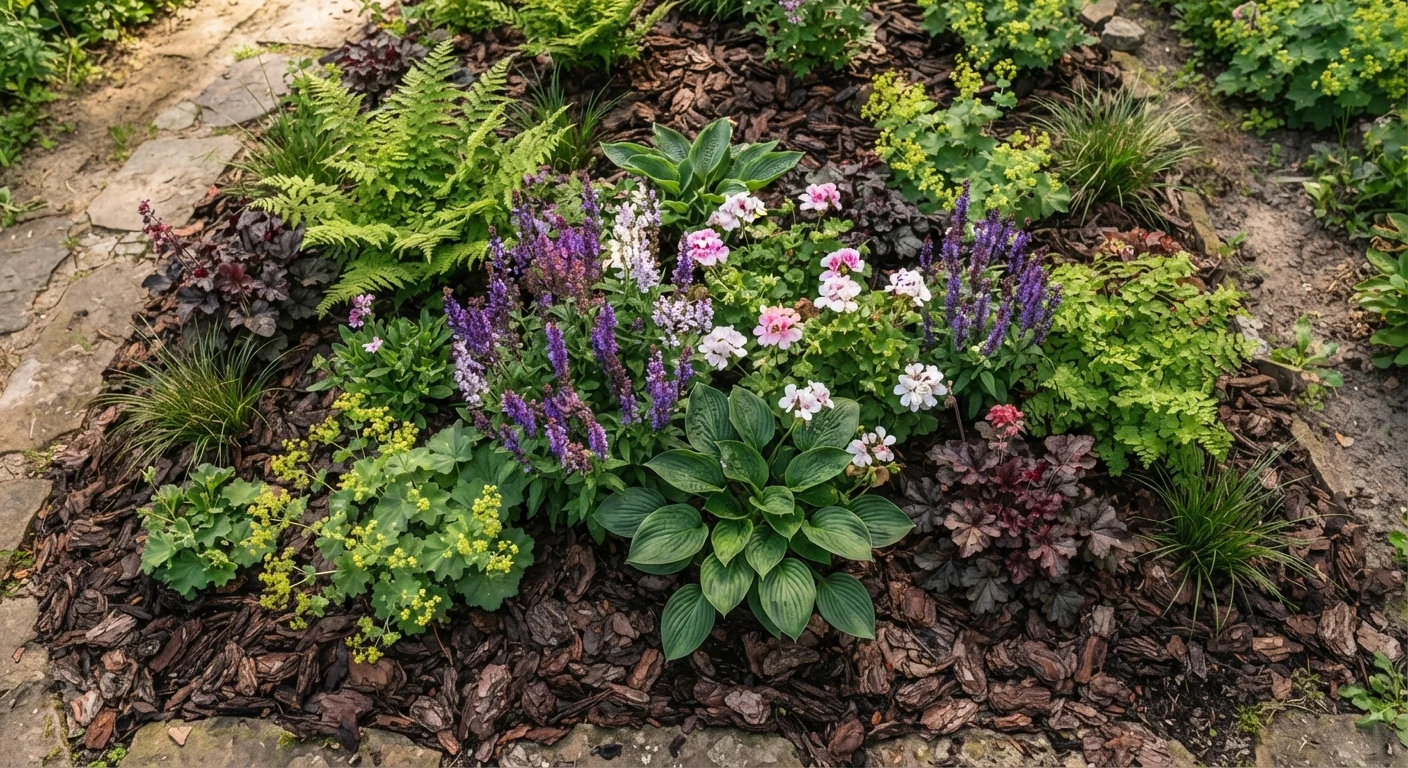
- Wood chips and bark: One of the most widely available options. Bark nuggets and shredded hardwood mulch break down slowly, making them well-suited for permanent beds around trees, shrubs, and perennials. They look tidy and hold their position reasonably well.
- Straw: A popular choice for vegetable gardens because it's inexpensive, easy to move around plants, and breaks down within a single season, adding organic matter. Make sure to use seed-free straw, not hay, to avoid introducing weed seeds.
- Shredded leaves: Free if you have trees on your property. Shredded leaves break down faster than whole leaves (which can mat together and repel water) and are excellent for garden beds. They pair well with a home composting system - our article on composting at home explains how to make your own free soil amendment from kitchen and yard scraps.
- Grass clippings: Best used in a thin layer (no more than an inch) so they don't form a dense, smelly mat. Work well between vegetable rows.
- Gravel and stone: Suited for drought-tolerant plantings, rock gardens, or high-traffic paths. They do not improve soil but provide long-lasting coverage with minimal maintenance.
When buying bagged wood mulch, check whether it has been aged or composted before purchase. Aged mulch has already begun breaking down and is less likely to cause temporary nitrogen tie-up near vegetable plants or annuals.
Fresh wood chips can temporarily pull nitrogen from the soil surface as soil microbes work to decompose them, which can slow plant growth in nutrient-sensitive beds.
Run your lawn mower over a pile of fallen leaves to shred them before spreading as mulch. Whole leaves tend to mat into a dense layer that sheds water rather than letting it pass through to the soil.
Matted whole leaves create an impermeable layer that defeats the purpose of mulching - shredding them allows water and air to move through while still providing all the other benefits.
When and How to Apply Mulch
Timing and technique matter as much as which material you choose. Applied at the wrong time or in the wrong way, even good mulch can cause problems.
Spring is the primary mulching season for most gardeners. Apply after the soil has begun to warm - mulching too early over cold soil traps cool temperatures and slows plant emergence. A good spring mulch application is a natural part of overall garden preparation; our spring lawn and garden prep checklist covers where mulching fits within a full seasonal workflow.
Fall mulching is also valuable. Applying a fresh layer before the first hard frost helps insulate perennial root systems and moderates the freeze-thaw cycles that can heave shallow-rooted plants out of the ground.
For application technique, follow these straightforward steps:
- Clear weeds and debris from the area before laying mulch.
- Water the soil if it is dry - mulch locks in moisture, so starting with dry soil is a missed opportunity.
- Spread mulch 2-3 inches deep. Thinner layers allow weeds through; thicker layers can restrict oxygen and water movement.
- Keep mulch at least 2-3 inches away from plant stems and 6 inches away from tree trunks.
For raised beds, the same depth and spacing rules apply. If you're weighing bed types, our look at raised beds vs. in-ground planting addresses how soil management differs between the two approaches.
Mistakes to Avoid When Mulching
A few common errors can undercut the benefits mulch is supposed to provide.
Never Pile Mulch Against Plant Stems or Trunks
Direct contact between mulch and bark creates persistently moist conditions that invite fungal rot and attract bark-chewing insects and rodents. Always maintain a clear gap - at least 2-3 inches from stems, and 6 inches from tree trunks. This single habit protects plants more than almost any other mulching practice.
Volcano mulching - piling mulch high against a tree trunk in a cone shape - is the single most damaging practice. It traps moisture against bark, invites fungal disease, and creates habitat for rodents that gnaw on tree bases. Always keep a clear gap around trunks.
Over-mulching beyond 4 inches creates a thick mat that can repel rainfall rather than absorbing it, suffocate shallow roots by limiting oxygen, and encourage the growth of nuisance molds. Two to three inches is the effective sweet spot for most materials.
Mulching on top of weeds without removing them first gives established weeds a moist, protected environment to continue growing. Pull or cut them down before you lay the mulch layer.
Using fresh, uncomposted wood chips directly around tender plants can temporarily draw nitrogen out of the soil as the chips begin to decompose - a process sometimes called nitrogen tie-up. Aged or composted wood chips are a safer choice near actively growing vegetables or annual flowers.
Combining good mulching habits with attention to seasonal lawn care rhythms - addressed in our month-by-month lawn care reference - gives you a complete picture of how to support healthy outdoor spaces year-round.