Why the Choice Matters More Than You Might Think
The decision between raised beds and in-ground planting is one of the foundational choices you'll make as a gardener. It affects how much you spend upfront, how much labor you put in each season, which plants thrive, and how your garden handles challenges like drainage problems, soil compaction, or pests. If you're just starting out, see our beginner's guide to growing vegetables for a broader overview of getting started.
Neither approach is right for every yard, every gardener, or every plant. Understanding the honest trade-offs helps you invest your time and money where it will do the most good.
The Case for Raised Beds
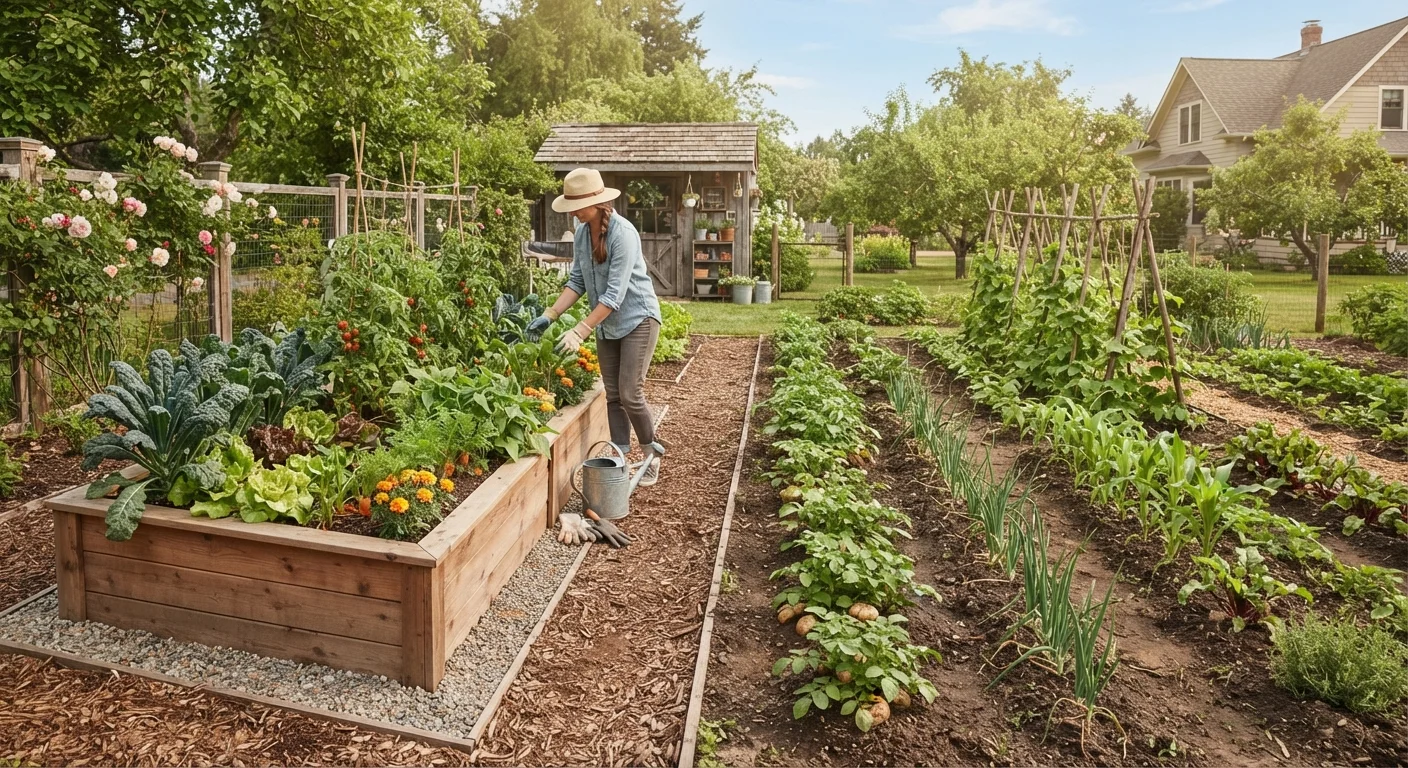
Raised beds - frames built above ground level and filled with a custom soil mix - became popular for good reason. They solve several common gardening problems at once.
Complete control over soil quality from the start
You fill raised beds with a custom mix suited to what you're growing, bypassing whatever poor, compacted, or contaminated native soil exists on your property. This makes raised beds especially valuable in urban yards where native soil has often been heavily disturbed.
Excellent drainage reduces root rot risk
Raised beds drain freely by design, which prevents the waterlogged conditions that damage roots and invite fungal disease. This is a significant advantage in regions with heavy clay soil or frequent rain.
Warmer soil means earlier planting in spring
Soil in a raised bed warms up faster than ground-level soil after winter, often allowing planting two to four weeks earlier in temperate climates. That head start can meaningfully extend a short growing season.
Reduced physical strain for gardeners
A bed built 12 to 24 inches tall eliminates the need to kneel or crouch for extended periods, making gardening more accessible for people with back, knee, or mobility challenges.
Fewer weeds in the first seasons
Starting with imported growing mix rather than native soil typically means far fewer weed seeds to contend with, reducing maintenance time during the first few growing years.
One underappreciated benefit is weed suppression. Because you fill a raised bed with imported growing mix, you start with far fewer weed seeds than native soil typically carries. Ergonomically, the elevated height reduces how far you have to bend, which matters a great deal over a full growing season. For watering strategy, raised beds pair particularly well with drip irrigation - learn more in our comparison of drip irrigation and sprinklers.
The Drawbacks of Raised Beds
The advantages come with real costs and limitations that are worth knowing before you commit.
Significant upfront cost for materials
Building and filling raised beds - lumber or composite boards, hardware, and a quality growing mix - can cost hundreds of dollars per bed. This is a real barrier compared to the relatively low startup cost of improving native soil in-ground.
Soil dries out faster, demanding more frequent watering
The same drainage that protects roots can work against you during dry spells. Raised beds may need watering every one to two days in summer heat, compared to less frequent irrigation for in-ground plots.
Frame materials deteriorate and need replacement
Untreated wood typically lasts four to eight years before rotting, meaning the bed must eventually be rebuilt. Even longer-lasting materials require periodic inspection and maintenance.
Limited depth restricts some plants
Standard raised beds are 12 inches deep - adequate for most vegetables, but insufficient for deep tap-rooted crops like parsnips or for established perennial shrubs that need unrestricted downward growth.
The most significant issue for many gardeners is moisture management. Because raised beds drain quickly - one of their selling points - they can dry out rapidly during hot summers, requiring more frequent watering than in-ground plots. The frame material also matters: untreated wood eventually rots, while composite or metal options cost more initially. Over time, the growing mix needs replenishment as it settles and nutrients deplete.
A Note on Wood and Safety
If you're building a raised bed for food crops, avoid treated lumber that uses older preservative formulas. Modern pressure-treated lumber sold in the U.S. uses copper-based preservatives considered safe for garden use by most regulatory agencies, but opinions vary among gardeners. Cedar and redwood are naturally rot-resistant alternatives that require no treatment. When in doubt, line the interior with a food-safe barrier fabric before filling.
The Case for In-Ground Planting
Planting directly into the ground is how most food and ornamentals have been grown throughout history - and it still makes sense for a wide range of situations.
The most obvious advantage is cost. There is no frame to build or buy, no special soil to import in bulk. You work with and improve what's already there. For plants with deep or spreading root systems - fruit trees, shrubs, many perennials - in-ground planting gives roots the room to develop naturally without hitting the walls of a confined bed. Perennial plants particularly benefit from this freedom; if you're thinking through plant selection, our article on perennials vs. annuals explains how root depth and longevity factor into the decision.
In-ground soil also retains moisture more evenly, which means less frequent watering in many climates. The native soil ecosystem - earthworms, beneficial fungi, microorganisms - is already present and working. Improving native soil through composting and mulching builds long-term fertility that raised bed growing mix requires you to replicate artificially.
For gardeners preparing a new plot, thorough soil preparation is essential regardless of method. Our spring prep checklist covers soil testing and amendment before the growing season begins.
When In-Ground Planting Falls Short
In-ground planting does have real limitations. Heavy clay soil drains poorly and compacts under foot traffic or rain, creating conditions that suffocate roots. Sandy soil drains too fast and holds few nutrients. Amending large areas of native soil takes time and repeated effort over multiple seasons - there's no quick fix.
Soil-borne diseases and persistent weed seeds are harder to manage in the ground because you can't simply swap the growing medium. Pests like root-knot nematodes or voles can also be more difficult to address. For root vegetables especially, rocky or heavily compacted soil limits what you can grow without significant preparation. Watering deeply and consistently matters even more in the ground - our guide to deep, infrequent watering explains why surface watering habits can undermine in-ground plant health.
How to Decide - or Combine Both
A practical framework: start by assessing your native soil. If a simple soil test reveals severe compaction, high clay content, or contamination, a raised bed will get you growing faster with less frustration. If your soil is reasonably workable and your budget is limited, in-ground improvement is the more sustainable path.
Many experienced gardeners use both: raised beds for annual vegetables and herbs that benefit from consistent, controlled conditions, and in-ground planting for trees, shrubs, and perennials that need deeper soil access and long-term establishment. There's no rule requiring you to choose just one.
12-24 in.
Typical raised bed depth for vegetables
Most vegetable roots develop fully within 12 inches of soil depth, though deeper beds are recommended for root crops like carrots and parsnips.
2-4 weeks
Earlier spring planting possible in raised beds
Because raised bed soil is elevated and exposed on all sides, it warms faster than ground-level soil after winter, providing a meaningful head start in temperate climates.
6.0-7.0
Ideal soil pH range for most vegetables
Raised beds allow gardeners to dial in pH precisely with purchased growing mix, whereas in-ground gardeners must amend native soil over time to reach the same target range.